| At a Glance | |
| Common Name | Xerographica Air Plant, King of Air Plants |
| Plant Type | Epiphytic bromeliad (tillandsia) |
| Light Required | Bright indirect with some gentle direct sun |
| Soil / Medium | No soil — mounted on wood, cork, or rock |
| Difficulty | Easy to Intermediate |
| Mature Size | 30–60cm diameter |
| Toxicity | Non-toxic to cats, dogs, and humans |
| Native Habitat | Mexico, Guatemala, and El Salvador |
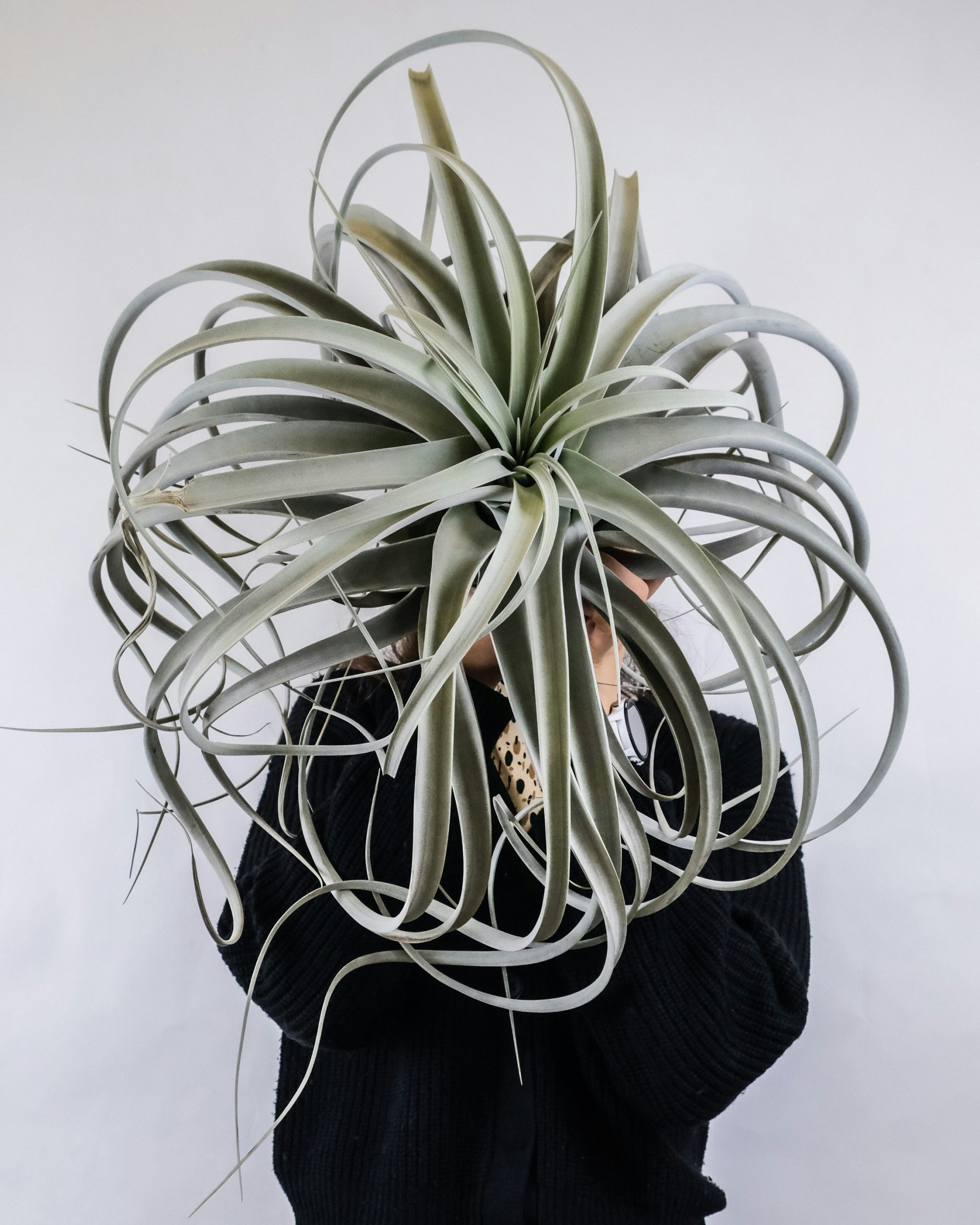
Tillandsia xerographica is the largest and most architectural of the air plants, native to the dry forests of Mexico, Guatemala, and El Salvador. Like all tillandsias, it absorbs water and nutrients through its leaves rather than its roots — the roots exist only to anchor the plant. It is one of the most striking plants you can grow without soil, but it is slower-growing and more drought-tolerant than the smaller, greener tillandsias typically sold in UK shops.
Light Requirements
Bright indirect light is ideal. Xerographica tolerates more light than most air plants and benefits from a few hours of gentle direct sun, particularly morning light. Avoid harsh midday summer sun, which can scorch the leaves.
In lower light the plant stays alive but barely grows. A position near a bright window or under a moderate grow light keeps it in good condition.
Soil & Growing Medium
No soil required. Xerographica is grown mounted on wood, cork bark, rock, or displayed in a bowl or on a stand. The roots grip the mount but do not absorb nutrients or water. If the plant comes potted in soil, remove it from the soil — prolonged contact with moist compost will rot the base.
Watering
Misting two to three times per week works for smaller air plants but xerographica, with its tight, curling leaves that trap water, benefits from dunking: submerge the whole plant in room-temperature water for 20-30 minutes every one to two weeks, then shake off excess water and place upside down for an hour to drain before returning to its position.
Water trapped in the central crown causes rot. Always ensure the plant is dry within four hours of watering. Use rainwater or filtered water — tap water contains minerals that accumulate on the leaves and cause unsightly white deposits.
Temperature & Humidity
Xerographica prefers 15-27°C and does not tolerate frost. It handles lower humidity than most air plants, which is one reason it is more practical for UK homes. It originates from drier forest environments than the humidity-loving green tillandsias.
Fertilising
Feed once a month during the growing season by adding a very small amount of bromeliad or air plant fertiliser to the soaking water — a quarter of the recommended dose is sufficient. Tillandsias are adapted to nutrient-poor conditions and over-fertilising causes more harm than under-fertilising.
Grow Light Compatibility
Xerographica adapts well to grow lights. A moderate full-spectrum LED on a 12-hour cycle keeps it in good condition in low-light spaces. It does not need high light intensity.
Toxicity
Tillandsia xerographica is non-toxic to cats, dogs, and humans.
Pruning
Remove dead or damaged outer leaves by pulling them away gently. After flowering, the parent plant will slowly die back and produce pups — remove and mount these separately once they are about a third of the parent plant’s size.
Propagating
Xerographica produces offsets (pups) after flowering. Allow them to reach about a third the size of the parent, then twist or cut away carefully and mount on a new surface. Pups can take several years to reach flowering size.
Indoor Setup Notes
Xerographica is one of the most displayable houseplants available — no pot, no soil, no mess. It suits contemporary interiors and works well as part of a display of mixed tillandsias. The silvery, curling leaf structure is architectural year-round, not just when in flower. The flower spike, when it eventually appears, is a tall pink and purple structure that lasts for several months.
Potting & Repotting
Not applicable — xerographica is mounted, not potted. If you want to change the mount, simply remove the plant and reattach it with a small amount of air plant-safe adhesive or wire. Do not use copper wire, which is toxic to tillandsias.
Common Pests & Problems
- Rotting base or crown: Water trapped in the centre after watering. Always shake out excess water and allow to dry within four hours. Place upside down to drain after soaking.
- Brown, crispy leaf tips: Underwatering or very low humidity. Increase watering frequency.
- White deposits on leaves: Mineral build-up from tap water. Switch to rainwater and rinse the leaves occasionally.
- Mealybugs: Rare but possible. Treat by soaking in diluted neem oil solution.
FAQ
Does an air plant need soil?
No. Tillandsias absorb everything through their leaves. The roots are only for anchoring. Growing one in soil is actively harmful — the moist compost will rot the base.
How do I know if my air plant needs water?
The leaves curl more tightly and feel lighter than usual when the plant is thirsty. After watering, the leaves relax and the plant feels slightly heavier.
Will xerographica grow in a terrarium?
Only if the terrarium is open-topped and has good air circulation. Closed terrariums trap humidity and do not allow the plant to dry out sufficiently between waterings, which causes rot.
How long does it take xerographica to flower?
Several years — xerographica is a slow-growing species. A flowering-size plant sold in a shop may be three to five years old. After flowering, the parent plant slowly dies but produces pups that will eventually flower themselves.