| At a Glance | |
| Common Name | Nerve Plant, Mosaic Plant, Net Plant |
| Plant Type | Tropical creeping perennial |
| Light Required | Medium indirect light; no direct sun |
| Soil / Medium | Rich, moisture-retentive but well-draining potting mix |
| Difficulty | Intermediate — humidity is the critical requirement |
| Mature Size | 10-15cm tall; spreads to 30cm+ |
| Toxicity | Non-toxic to cats, dogs, and humans |
| Native Habitat | Tropical rainforests of South America (Peru, Bolivia) |
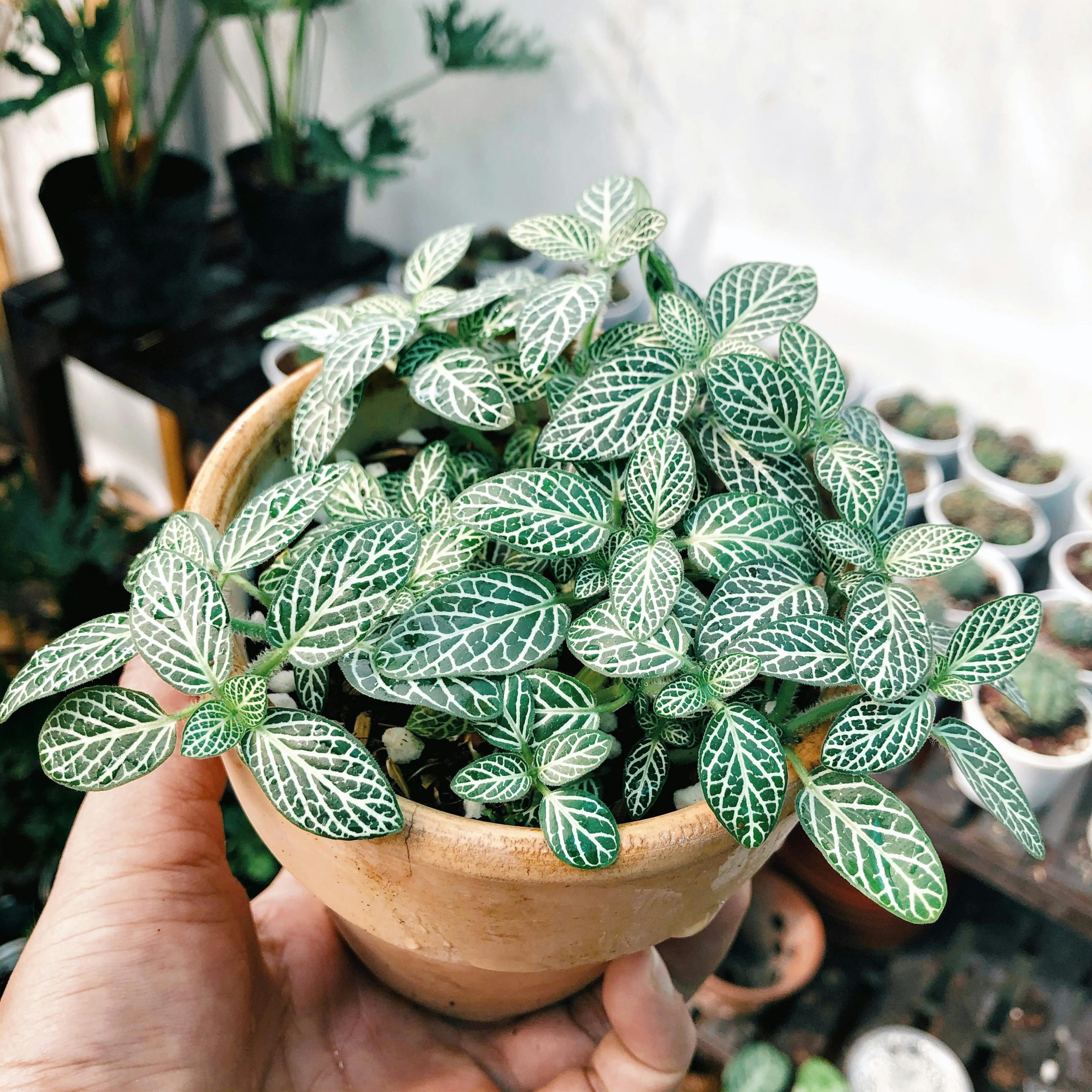
Fittonia’s intricate leaf patterning — a dense network of white, pink, or red veins against deep green — looks more like something painted than grown. It is a plant that rewards close inspection, which is why it is such a popular choice for terrariums, bottle gardens, and desk plants where it can be seen at short range. The challenge is that it is native to humid Amazonian forest floors and needs moisture and warmth to match. In a UK home without supplemental humidity, it wilts dramatically and frequently — a behaviour it has earned the nickname ‘drama plant’ for. The wilting is reversible, but the need for humidity is real.
Light Requirements
Fittonia needs medium indirect light. It grows on forest floors in the wild under dense canopy, so it is adapted to filtered, low-intensity light rather than bright conditions. Direct sun burns the delicate leaves instantly. A position a metre or two back from a window, or on a desk or shelf with reasonable ambient light, suits it well.
Too little light causes the leaf patterning to fade and growth to become sparse and leggy. The right balance is consistent medium indirect light — more than a cast iron plant needs, less than a rubber plant. An east-facing room or a position several feet from a south-facing window are both appropriate.
Soil & Growing Medium
Use a rich, moisture-retentive potting mix that still drains freely. A standard houseplant compost with a small amount of added perlite (10-15%) and some coir to retain moisture works well. Unlike succulents and cacti, fittonia prefers a medium that stays consistently slightly moist — it should never completely dry out.
Adding a small amount of horticultural charcoal to the mix is beneficial, particularly for terrarium growing, as it prevents the accumulation of stale water and bacteria in the enclosed environment.
Watering
Keep the soil consistently lightly moist. Water when the surface of the compost just begins to feel dry — do not wait for the top few centimetres to dry out as you would for a monstera. Fittonia cannot tolerate drought: it wilts dramatically (the dramatic, collapsed-looking wilt that gives it the ‘drama plant’ nickname) within hours of the soil drying out.
The good news is that the wilt is usually recoverable. Water thoroughly and the plant typically recovers its posture within an hour or two. Repeated wilting and recovery, however, stresses the plant and reduces its long-term health. Consistent moisture is better than relying on the wilt signal.
Temperature & Humidity
Fittonia prefers 18-26°C. It is cold-sensitive and will show damage below 15°C. Keep away from cold draughts and unheated rooms in winter.
High humidity is the most important requirement for fittonia. It needs 60-80% humidity — significantly above what most UK homes provide, particularly in winter with central heating running. A terrarium or closed glass container is the most effective solution, creating a self-regulating humid microclimate that suits the plant perfectly. Open containers require a humidifier nearby or very frequent misting (twice daily) to maintain adequate humidity. This is the plant that most benefits from terrarium growing.
Fertilising
Feed monthly from March to September with a balanced liquid fertiliser at quarter strength. Fittonia is a small, light-feeding plant and does not require or benefit from heavy fertilisation. Over-fertilising causes burnt leaf edges and root damage. Stop feeding in winter.
Grow Light Compatibility
Fittonia adapts well to grow lights at low to medium intensity, making it a practical choice for enclosed terrariums with built-in LED lighting. It does not need high light intensity — a modest strip light above a terrarium maintains healthy growth and vivid patterning. Run for 10-12 hours per day.
Toxicity
Fittonia is non-toxic to cats, dogs, and humans — one of the better attributes for a plant often kept in accessible positions like desks and terrariums. The plant presents no toxicity risk if touched or if small amounts are ingested. It is a safe choice for households with curious pets or children.
Pruning
Pinch back the growing tips regularly to keep the plant bushy and compact. Without regular pinching, fittonia becomes leggy — the stems extend and the foliage becomes sparse at the base. Pinching takes seconds and keeps the plant looking its best. Remove any flower spikes that appear — the small, insignificant flowers divert energy from the foliage and are not the reason to grow this plant.
Propagating
Stem tip cuttings root readily. Take a cutting of 5-7cm with two or three leaf pairs and a node. Place in moist compost or water and keep in high humidity — enclosing in a clear plastic bag or a propagator maintains the moisture needed for rooting. Roots appear within two to three weeks.
Fittonia in a terrarium self-propagates readily — the creeping stems root wherever they contact the growing medium, and the plant spreads naturally to fill the available space.
Indoor Setup Notes
Terrariums and enclosed glass containers are the ideal home for fittonia in a UK context. A 20-litre fish tank with a loose glass lid, a large glass jar, or a purpose-built planted terrarium gives the plant the humidity it needs without daily intervention. Mixed with mosses, selaginella, and other humidity-loving small plants, fittonia creates a striking low-maintenance display.
As a standalone pot plant, it works best in bathrooms with good natural light or in rooms where a humidifier is running. A desk plant in a dry, centrally heated office is one of the harder environments for this species.
Potting & Repotting
Repot every one to two years or when the plant has outgrown its container. Go up by one pot size. Use fresh, rich, slightly moisture-retentive compost. Fittonia in terrariums rarely needs repotting — the enclosed environment maintains consistent conditions and the plant grows at a manageable pace.
Common Pests & Problems
- Wilting: Almost always underwatering or very low humidity. Water immediately and raise humidity. The plant recovers quickly if caught early.
- Brown, crispy leaf edges: Low humidity. Improve the growing environment — consider moving to a terrarium.
- Faded leaf patterning: Insufficient light or over-exposure to direct sun. Adjust the light position.
- Leggy, sparse growth: Not enough pinching, or insufficient light. Pinch tips regularly and improve light.
- Fungus gnats: Consistently moist soil attracts them. Allow the surface to dry very slightly between waterings; treat with a neem drench.
- Root rot: Less common than in succulents but possible if the soil stays saturated. Improve drainage and reduce watering.
FAQ
Why does my fittonia keep wilting?
Either the soil is drying out too quickly (water more frequently or improve humidity to reduce transpiration) or the ambient humidity is too low (the plant is losing water through its leaves faster than the roots can replace it). Both issues need addressing — consistent moisture and higher humidity together.
Is fittonia a good terrarium plant?
Yes — it is one of the best. The enclosed humidity of a terrarium replicates its native rainforest floor conditions better than any open container can in a UK home. It grows well, propagates readily, and looks striking alongside mosses and other humidity-loving small plants.
How often should I mist fittonia?
If kept as a standalone pot plant, twice daily is the minimum to maintain adequate humidity in a dry room. This is why terrariums are the more practical long-term solution — the plant creates its own humidity in an enclosed environment with no daily intervention.
Is nerve plant safe for cats?
Yes. Fittonia is non-toxic to cats, dogs, and humans — a practical advantage for a plant often kept at desk or floor level.