| At a Glance | |
| Common Name | Rubber Plant, Rubber Fig, Rubber Tree |
| Plant Type | Tropical tree |
| Light Required | Bright indirect light; some direct morning light tolerated |
| Soil / Medium | Well-draining houseplant potting mix |
| Difficulty | Easy to Intermediate |
| Mature Size | 1-3m indoors; can be kept smaller with pruning |
| Toxicity | Toxic to cats, dogs, and humans; sap is a skin irritant |
| Native Habitat | South and Southeast Asia (India, Nepal, Bhutan) |
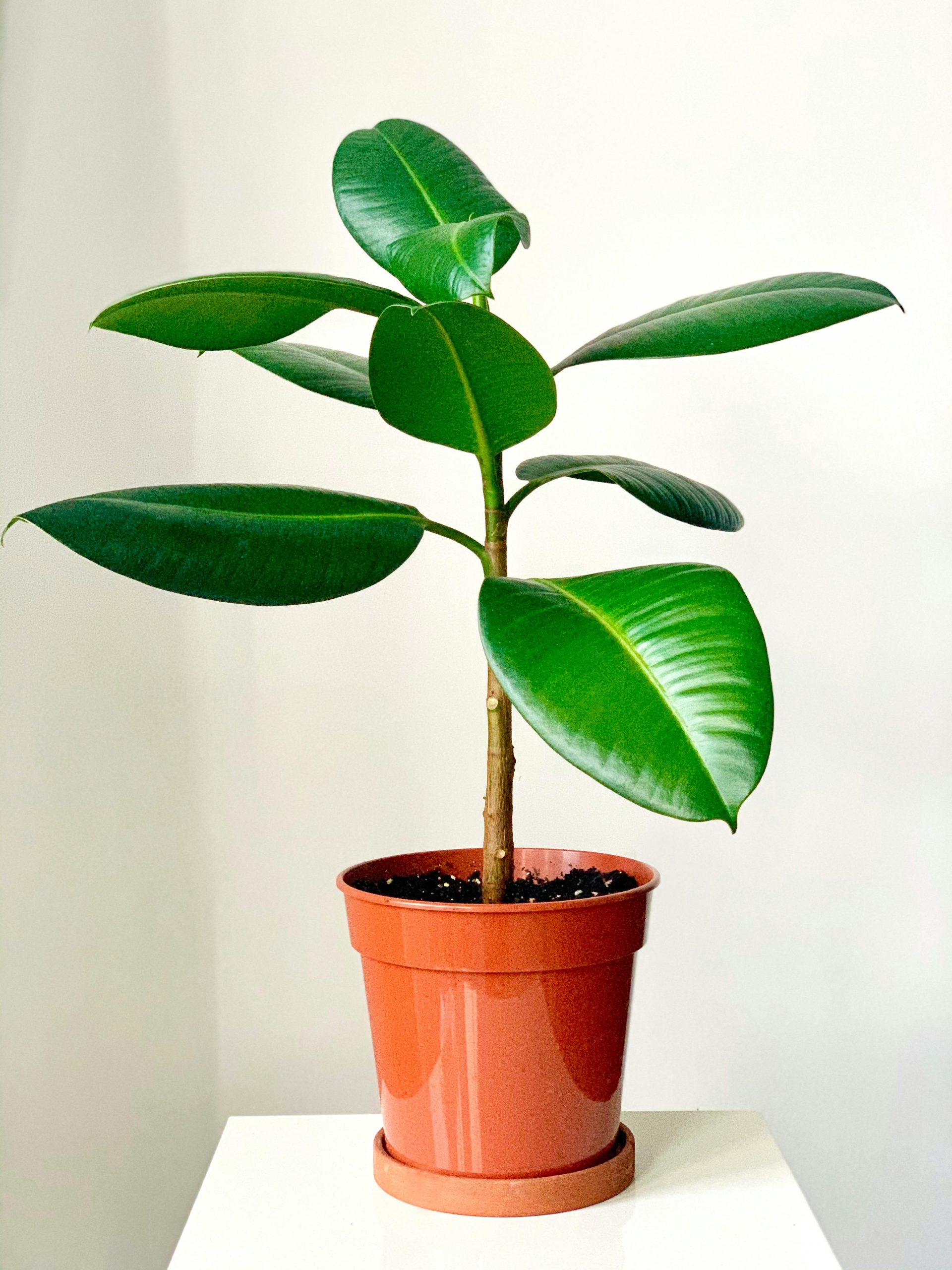
The rubber plant has been a fixture of British homes since Victorians first imported them from India, and it holds up as well now as it did then. The large, glossy leaves — deep green in the standard form, burgundy or variegated in others — have a weight and presence that smaller-leafed plants cannot match. Grown correctly, it becomes a genuine statement plant. The trade-off is that it is less forgiving than a ZZ or pothos: it drops leaves in protest at cold draughts, inconsistent watering, and sudden changes in position, so it rewards some attention to placement.
Light Requirements
Rubber plants need bright indirect light to grow well and maintain their rich leaf colouring. Near an east-facing window — morning sun, afternoon shade — is often the sweet spot. A south-facing window with a sheer curtain to filter the strongest midday light works well. West-facing positions are also good.
Insufficient light causes the plant to stretch toward the window, produces pale leaves, and reduces the rich pigmentation that makes the burgundy varieties (Ficus elastica ‘Burgundy’, ‘Abidjan’) so striking. If growth is becoming leggy or leaf colour is fading, move the plant closer to the light source.
Soil & Growing Medium
A standard well-draining houseplant potting mix with 20-30% added perlite works well. Rubber plants need good drainage — standing water around the roots is the primary cause of root rot and subsequent leaf drop. Avoid dense, heavy composts.
For larger specimens in heavy terracotta pots, mixing in a little bark chip helps aeration and reduces the risk of compaction over time.
Watering
Water when the top 3-5cm of compost are dry — roughly every one to two weeks in summer, every two to three weeks in winter. Rubber plants are more tolerant of underwatering than overwatering. Inconsistent watering, particularly wide swings from very dry to very wet, causes leaf drop and is one of the more common complaints from new rubber plant owners.
Pour water evenly over the soil surface and let it drain fully. In winter, reduce watering significantly — the plant’s growth slows and it needs much less moisture.
Temperature & Humidity
Rubber plants prefer 16-27°C. The critical thing to avoid is cold draughts — even a brief exposure to cold air from an open door or window can trigger significant leaf drop. Keep the plant well away from exterior doors, draughty windows, and sources of cold air.
Humidity above 40% helps prevent brown leaf edges. Wipe the leaves with a damp cloth every month or so — this cleans the large leaf surface and allows better light absorption. The leaves do accumulate dust, and dusty leaves are less efficient at photosynthesis.
Fertilising
Feed monthly from March to September with a balanced liquid fertiliser at half strength. A fertiliser higher in nitrogen supports the large leaf production rubber plants are known for. Do not feed in winter. Reduce feeding if brown leaf tips or edges are developing — these can indicate excess fertiliser salts.
Grow Light Compatibility
Rubber plants benefit significantly from grow lights in darker rooms. The variegated and burgundy varieties in particular require bright light to maintain their colouring — in low light they revert toward a plain, duller green. A high-output full-spectrum LED positioned 30-45cm above the canopy and run for 10-12 hours produces results comparable to a good window position.
Toxicity
Rubber plant sap contains latex, which is toxic if ingested by cats, dogs, and humans. It also causes skin and eye irritation on contact — wear gloves when pruning, as the white sap bleeds freely from cut stems. Symptoms of ingestion in pets include vomiting, diarrhoea, and skin redness. Keep out of reach of pets and children.
Pruning
Pruning controls height and encourages branching. Cut back a stem just above a node or leaf — new growth emerges just below the cut, and the plant becomes bushier rather than a single tall trunk. The cut will bleed white sap; wipe it with a damp cloth to stop the flow. Spring is the best time to prune.
If your rubber plant has become very tall and bare at the base (a common problem in older specimens), air layering is an option for creating a new, shorter plant from the existing growth.
Propagating
Stem cuttings are the standard propagation method. Take a cutting of 10-15cm with two or three leaves and at least one node. Allow the sap at the cut end to dry for 30 minutes, then dip in rooting hormone and place in moist compost or sphagnum moss. Keep warm (above 20°C) and humid — a plastic bag over the cutting maintains humidity. Roots typically develop within four to eight weeks.
Air layering works well for large specimens where a stem cutting would mean removing a significant portion of the plant. Wound the stem, pack with damp sphagnum moss, wrap in cling film, and wait for roots to fill the moss ball before cutting the stem below.
Indoor Setup Notes
Given a bright spot and the space to grow, a rubber plant becomes one of the most impactful foliage plants available for UK homes. It suits living rooms and hallways with good indirect light, and works particularly well in rooms with high ceilings where its vertical growth can be appreciated.
One practical note: pick the position carefully before buying, because moving it causes leaf drop. Assess the light levels at different times of day before settling on a spot.
Potting & Repotting
Repot every one to two years in spring, or when roots emerge from drainage holes. Go up by one pot size. Large rubber plants can be top-dressed — replacing the top few centimetres of compost with fresh mix — rather than fully repotted, which reduces disturbance.
Repotting can trigger some leaf drop as the plant adjusts. Keep the environment stable (no draughts, consistent temperature) and water conservatively for a few weeks after repotting.
Common Pests & Problems
- Leaf drop: Most commonly caused by cold draughts, being moved, or inconsistent watering. Stabilise the environment and give the plant four to six weeks to adjust.
- Brown or yellow leaves: Overwatering (yellowing, mushy stems) or cold damage (brown, dry). Diagnose by checking root condition and temperature history.
- Pale leaf colour: Insufficient light. Move to a brighter position or add a grow light.
- Scale insects: Sticky residue on leaves and brown bumps on stems. Treat with isopropyl alcohol and neem oil.
- Mealybugs: White cottony clusters in leaf joints. Treat the same way as scale.
- Root rot: Caused by overwatering or poor drainage. Remove affected roots and repot in fresh, drier mix.
FAQ
Why is my rubber plant dropping leaves?
Almost always one of three causes: cold draught, being moved to a new position, or overwatering. Identify which applies and stabilise conditions. Some leaf drop after a move is unavoidable; it stops once the plant adjusts.
How do I make my rubber plant branch?
Prune the main stem above a node. The plant will produce new growth below the cut, typically two to three branches. Without pruning, rubber plants grow as a single trunk.
Can I keep a rubber plant in a dark room?
It will survive in lower light but will not thrive — growth slows, leaf colour fades, and the burgundy varieties lose their pigment. A grow light resolves this effectively.
How tall will a rubber plant get indoors?
Given space and good light, 2-3m over several years. Regular pruning keeps it at whatever height you want. Most UK homes work well with a specimen kept at 1-1.5m through annual pruning.