| At a Glance | |
| Common Name | Aloe Vera, True Aloe, Barbados Aloe |
| Plant Type | Succulent perennial |
| Light Required | Bright direct or bright indirect; 6+ hours per day |
| Soil / Medium | Sandy, fast-draining cactus and succulent compost |
| Difficulty | Easy |
| Mature Size | 30-60cm tall and wide indoors |
| Toxicity | Toxic to cats and dogs; gel safe for human topical use |
| Native Habitat | Arabian Peninsula; naturalised across tropics and subtropics |
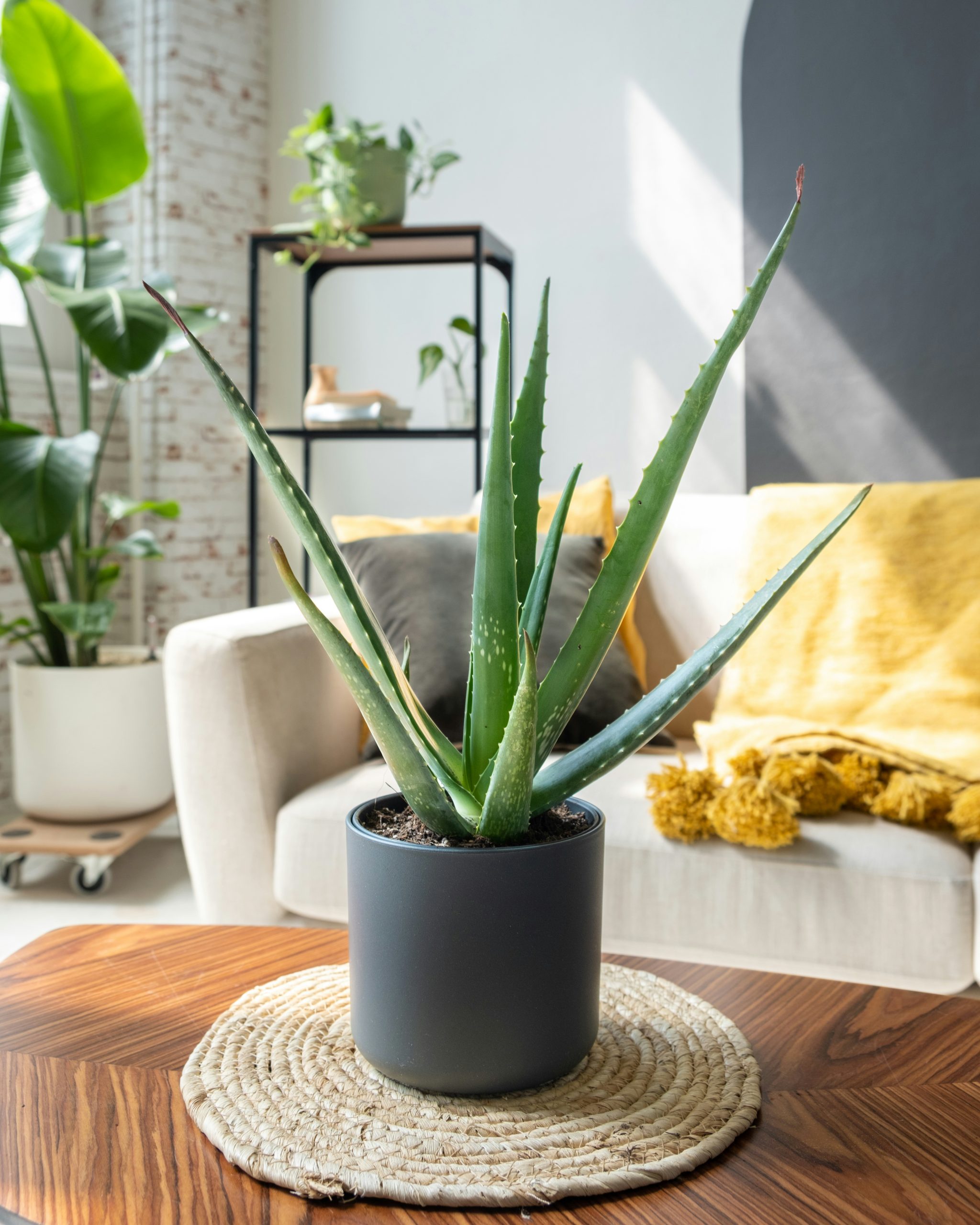
Aloe vera occupies a unique position in the houseplant world: it is both an attractive succulent and a genuinely useful plant. The gel inside the leaves is well-documented for its soothing effect on minor burns and skin irritation, which gives it a functional appeal that most houseplants lack. From a care perspective, it is forgiving, drought-tolerant, and long-lived — a well-maintained aloe can grow for decades. The main way people go wrong is treating it like a moisture-loving tropical when it is, at heart, a desert plant.
Light Requirements
Aloe vera needs bright light — more than almost any other commonly kept houseplant. Ideally, place it in a south-facing window where it receives direct sunlight for several hours per day. An east- or west-facing window with at least six hours of bright indirect light can work, but growth will be slower.
In a UK home in winter, when daylight hours are short and light quality is low, aloes often slow down or stop growing entirely. This is normal. If the plant starts to look pale, elongated, or ‘leggy’, it is telling you it wants more light.
Soil & Growing Medium
This is one area where you cannot compromise. Aloe vera must be in fast-draining, sandy compost. A specialist cactus and succulent mix is the easiest option; alternatively, mix standard potting compost 50/50 with coarse horticultural grit or perlite. The goal is a medium that dries out within two to three days of watering in normal room conditions.
Standard houseplant compost holds too much moisture for aloe and will cause root rot within weeks. This is the single most common cause of aloe deaths in UK homes.
Watering
Water thoroughly, then wait until the soil is completely dry before watering again — typically every two to three weeks in summer, and once a month or less in winter. Push your finger all the way to the bottom of the pot; if there is any moisture, wait longer.
Aloe vera is a succulent and stores water in its leaves. The leaves feel firm when well-hydrated and become slightly soft and thin when the plant is genuinely thirsty. A slightly thirsty aloe is fine; a soggy one is at serious risk. Always err on the side of too dry.
Temperature & Humidity
Aloe vera prefers 13-27°C. It tolerates the dry warmth of a south-facing UK windowsill in summer and the cooler temperatures of an unheated room in winter, but it is not frost-hardy. Keep it above 5°C at all times.
Low humidity suits aloe vera perfectly. It originates in arid conditions and is actively harmed by the high humidity environments that peace lilies and monsteras prefer. Do not mist it, and avoid positioning it in a consistently humid bathroom.
Fertilising
Feed once or twice during the growing season (May and July) with a cactus and succulent fertiliser or a balanced liquid fertiliser diluted to half strength. Aloe vera is a light feeder and over-fertilising causes weak, soft growth and increases susceptibility to root problems. Do not feed in autumn or winter.
Grow Light Compatibility
Aloe vera is one of the more demanding plants for grow lights because it genuinely needs bright, high-intensity light. A modest grow light will not provide enough intensity for a thriving specimen. If using a grow light, choose a high-output full-spectrum LED and position it 20-30cm above the plant for 12-14 hours per day.
For UK homes without a south-facing window, a good grow light is a practical solution — but invest in a capable unit. Aloe under insufficient light becomes pale and leggy faster than most succulents.
Toxicity
Aloe vera gel — the clear substance inside the leaves — is safe for human topical use and widely used for minor burns, sunburn, and skin irritation. However, the latex layer just beneath the leaf skin (the yellow, bitter substance) contains compounds that cause digestive irritation if consumed. The whole plant is toxic to cats and dogs, causing vomiting, diarrhoea, and lethargy. Keep aloe out of reach of pets.
Pruning
Aloe vera does not require conventional pruning. Remove outer leaves at the base if they are dead, damaged, or if you want to harvest the gel. Cut the leaf as close to the base as possible with a clean sharp knife. To use the gel, slice the leaf open lengthways and scoop out the clear gel with a spoon. It keeps in the refrigerator for a few days.
Avoid removing more than two to three leaves at a time. Each leaf takes a long time to replace.
Propagating
Aloe vera propagates readily from offsets, called pups. These small plants appear around the base of the mother plant and can be separated once they are 8-10cm tall and have developed their own root system. Use a clean sharp knife, ensure each pup has roots attached, and pot into cactus compost.
Allow the cut surfaces to dry and callous for 24 hours before potting. Water sparingly for the first two weeks while roots establish. Do not overwater a freshly separated pup — this is the point of highest vulnerability.
Indoor Setup Notes
A south-facing kitchen windowsill is the classic aloe position in a UK home, and for good reason — the combination of direct light, warmth, and practical access to the gel is hard to beat. It suits terracotta pots, which dry out faster than ceramic or plastic and suit the plant’s drainage needs.
Aloe vera also works on a sunny conservatory shelf or in a greenhouse for summer growing. In the UK, it is not reliably hardy outdoors but can spend summer outside in a sheltered, sunny spot before being brought in before the first frost.
Potting & Repotting
Repot every two to three years, or when the plant is clearly root-bound or the pups are overcrowding the pot. Use a terracotta pot with a drainage hole — the porous nature of terracotta helps moisture escape and reduces overwatering risk.
Go up by one pot size only. Very large pots hold too much moisture around the roots for too long. After repotting, wait a week before watering to allow any root damage to heal.
Common Pests & Problems
- Brown, mushy leaves at the base: Root rot from overwatering. This is the most common aloe problem. Remove from the pot, cut away all damaged roots, allow to dry for 48 hours, and repot into fresh dry cactus compost. Do not water for a week.
- Pale, elongated leaves: Insufficient light. Move to a south-facing window or add a high-output grow light.
- Brown, dry leaf tips: Natural ageing of outer leaves, or very low humidity with dry heat. Minor and normal.
- Soft, floppy leaves: Overwatering or extreme underwatering. Check the roots to diagnose which.
- Mealybugs: White cottony deposits, especially where leaves meet the stem. Treat with isopropyl alcohol and neem oil.
- Scale: Brown bumps on stems. Treat with isopropyl alcohol; follow with neem oil.
FAQ
How do I harvest aloe vera gel at home?
Select a mature outer leaf, cut it at the base, stand it upright for a few minutes to let the yellow latex drain out, then slice it open lengthways and scoop out the clear gel. Use immediately or store in the refrigerator for up to a week.
Can I keep aloe vera in the kitchen?
Yes, and it is an ideal spot if the kitchen has a south-facing window. The practical access to the gel for minor burns and cooking accidents is a genuine bonus, and the conditions — warmth and light — tend to suit the plant well.
Why are my aloe vera leaves going brown?
Brown and mushy at the base: root rot from overwatering. Brown and dry at the tips: normal ageing or very dry heat. Brown overall and floppy: almost always too much water, rarely too little.
Is aloe vera easy to grow in the UK?
Yes, provided it has enough light. The main challenge in the UK is finding a position with sufficient direct sunlight — a south-facing windowsill is often essential. The drought tolerance and low feeding requirements make everything else straightforward.
Can I put aloe vera outside in summer?
Yes — a sheltered, sunny spot outside from June to September works well and the extra direct light will encourage growth. Bring it back inside before temperatures drop below 10°C and well before any frost risk.