| At a Glance | |
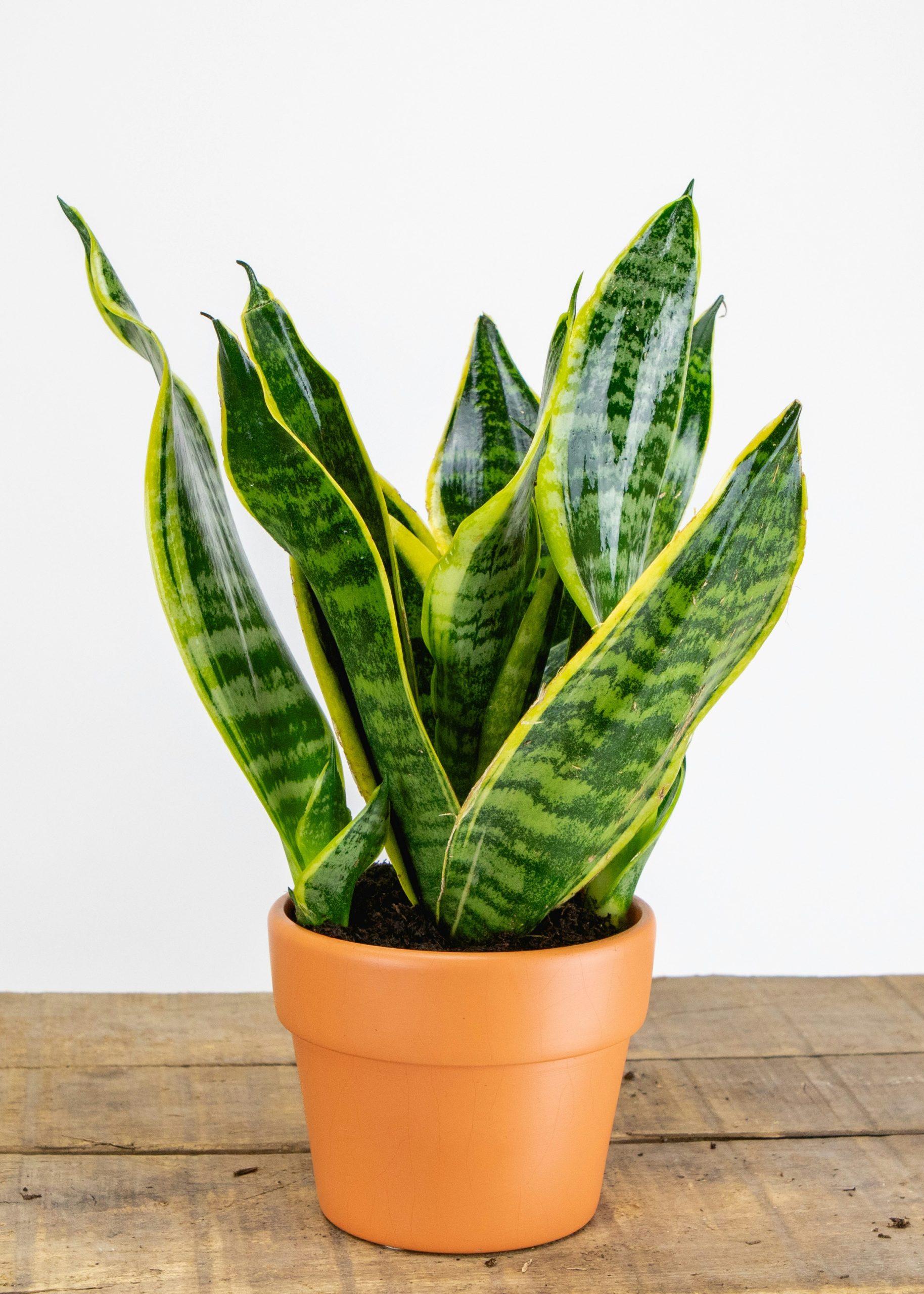
| Common Name | Snake Plant, Mother-in-Law’s Tongue, Saint George’s Sword |
| Plant Type | Succulent-like tropical perennial |
| Light Required | Low to bright indirect light; very adaptable |
| Soil / Medium | Fast-draining cactus or succulent mix |
| Difficulty | Very Easy — one of the most forgiving houseplants |
| Mature Size | 30cm to 1.2m depending on variety |
| Toxicity | Toxic to cats and dogs; mildly toxic to humans |
| Native Habitat | West Africa (Nigeria to Congo) |
Snake plants are the honest workhorse of the houseplant world. They are not the most dramatic plant on the shelf, but they are relentlessly unfussy, they tolerate conditions that would finish off most other plants, and they have a clean, architectural quality that holds its own in any room. If you keep killing plants, start here.
Light Requirements
Snake plants adapt to an unusually wide range of light conditions — from low-light corners well away from windows through to bright indirect light near south-facing glass. Growth is fastest in brighter conditions, but the plant survives and maintains its form in surprisingly dim spots.
Direct midday sun can scorch the leaf margins in summer, so keep it slightly back from a south-facing window if leaves are starting to develop pale, papery patches. A north-facing room is one of the few situations where a snake plant actually makes practical sense without supplemental light.
Soil & Growing Medium
Use a fast-draining cactus or succulent mix, or cut standard houseplant compost 50/50 with perlite or coarse sand. The single most important thing about snake plant soil is that it drains fast and dries out reasonably quickly. Heavy, moisture-retentive compost is a reliable path to root rot in this plant.
If you are using a decorative pot without drainage, treat it as a cache pot with a plastic liner, and be conservative with watering. Snake plants in pots without drainage holes are a common cause of slow decline that is mistaken for slow growth.
Watering
Water thoroughly, then let the soil dry out completely before watering again. In summer, this typically means every two to three weeks. In winter, once a month or even less is enough — the plant enters a rest period and uses very little water. It is one of the few houseplants where erring on the side of too dry is consistently better than erring on the side of too wet.
The most reliable watering test: push your finger all the way to the bottom of the pot. Water only when it feels completely dry. If there is any doubt, wait another week.
Temperature & Humidity
Snake plants prefer 16-27°C but tolerate a wider range than most tropicals. They will manage in temperatures as low as 10°C, though growth stops. The one hard limit is cold and wet simultaneously — a cold, damp environment will rot the roots faster than either condition alone.
Humidity is not a concern. Snake plants are native to dry conditions and cope well with the low humidity of centrally heated UK homes in winter. No misting, no pebble trays required.
Fertilising
Snake plants are light feeders. Feed two or three times during the growing season (April to September) with a balanced liquid fertiliser at half strength. More than this produces lush but structurally weaker leaves. In winter, do not feed at all.
Grow Light Compatibility
Snake plants function well under grow lights for spaces without natural light. They do not require high light intensity and will do fine under a modest full-spectrum LED on a 10-12 hour cycle. Growth under good light is noticeably faster and the leaf colours remain more vivid than in low-light conditions.
This makes snake plants a practical choice for windowless office spaces or interior rooms where a grow light is the only source of illumination.
Toxicity
Snake plants contain saponins and are moderately toxic to cats and dogs. Ingestion typically causes nausea, vomiting, and diarrhoea rather than serious harm, but veterinary advice is worth seeking if a pet eats a significant amount. The plant is mildly toxic to humans but would need to be eaten in quantity to cause symptoms.
Pruning
Pruning needs are minimal. Remove individual leaves at the base with a clean sharp knife if they become damaged, yellowed, or if they have developed brown tips that detract from the plant’s appearance. Cutting the tip off a leaf stops that leaf’s growth but does not harm the plant overall.
If the plant has outgrown its space, you can remove outer leaves entirely at the base. New growth emerges from the centre of the rosette.
Propagating
Snake plants can be propagated by division or by leaf cuttings. Division is the most reliable method: at repotting time, separate the rhizomes into sections, each with at least one shoot, and pot up individually. New plants are identical to the parent.
Leaf cuttings also work — cut a leaf into 5-7cm sections and push them into moist cactus compost or water, maintaining the same orientation as on the plant (roots will not form if the cutting is upside down). Note that leaf cuttings from variegated varieties will often produce plain green plants; division is the only reliable way to propagate variegated types true to form.
Indoor Setup Notes
Snake plants work in almost any indoor position, which is part of their appeal. They are particularly useful in low-light corners, hallways, and north-facing rooms where other plants struggle. Their upright, architectural form suits modern interiors and they hold their shape without staking or training.
In a UK context, they are a sensible choice for offices with fluorescent lighting and homes where natural light is limited by neighbouring buildings or mature trees. They will not put on dramatic growth in these conditions, but they will survive and remain presentable.
Potting & Repotting
Snake plants prefer to be slightly root-bound and rarely need repotting more than every two to three years. The plant will push up from the pot and crack lightweight plastic pots when genuinely root-bound — this is the clearest signal to repot. Go up by one pot size only.
Heavy pots — terracotta, ceramic — are practical choices since snake plants can become top-heavy as they grow. Spring is the best time to repot, though the plant tolerates it year-round.
Common Pests & Problems
- Mushy, yellow base: Root rot from overwatering. Remove affected roots, dust with cinnamon or fungicide, repot into dry, fast-draining mix. Reduce watering significantly.
- Brown leaf tips: Low humidity, fluoride in tap water, or physical damage. Use filtered water if tips recur repeatedly. Minor brown tips on an otherwise healthy plant can simply be trimmed.
- Pale, washed-out leaves: Too much direct sun. Move away from the window or filter the light.
- Slow or no growth: Normal in winter. In summer, check light levels and consider whether the plant is root-bound.
- Mealybugs or spider mites: Uncommon on snake plants but possible in dry conditions. Treat with neem oil or insecticidal soap.
FAQ
Do snake plants actually purify the air?
The NASA Clean Air Study found snake plants remove certain toxins from the air, but the practical effect in a real home with normal air exchange is minimal. It is a useful plant, but buying it primarily for air purification overstates the benefit.
Why are my snake plant leaves falling over?
Leaves flop outward when the plant is overwatered (soggy roots cannot support the leaves properly) or when light is very low and the leaves are growing long and soft. Check the roots and improve the light.
Can I keep a snake plant in the bedroom?
Yes. Unlike most plants that release CO2 at night, snake plants use Crassulacean Acid Metabolism (CAM) and release a small amount of oxygen overnight. The practical difference is negligible, but they are a perfectly fine bedroom plant.
Why is my snake plant not growing?
In winter, zero growth is normal. In the growing season, check that you are not underfeeding, that the pot is not severely root-bound, and that the plant has at least some indirect light.