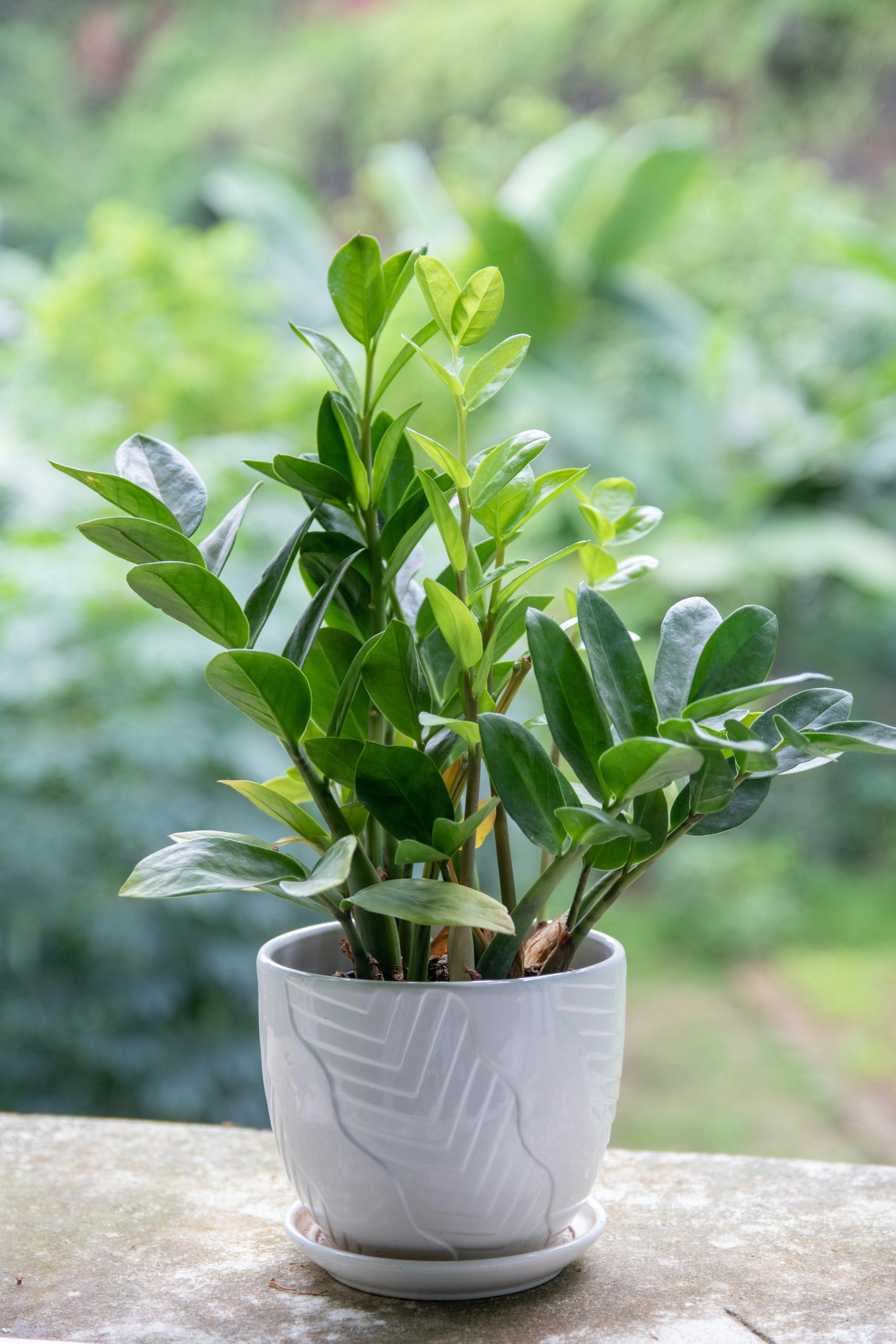
| At a Glance | |
| Common Name | ZZ Plant, Zanzibar Gem, Eternity Plant |
| Plant Type | Tropical rhizomatous perennial |
| Light Required | Low to bright indirect light; very tolerant |
| Soil / Medium | Well-draining houseplant compost with added perlite |
| Difficulty | Very Easy |
| Mature Size | 60cm to 1m tall indoors |
| Toxicity | Toxic to cats, dogs, and humans if ingested |
| Native Habitat | Eastern Africa, from Kenya to South Africa |
The ZZ plant earns its reputation as one of the most unkillable houseplants in cultivation. It stores water in large underground rhizomes, which means it shrugs off weeks of missed watering with the kind of equanimity most plants reserve for ideal conditions. The glossy, dark green leaves look expensive in a way that belies how little effort the plant asks for.
Light Requirements
ZZ plants adapt to a wide range of light levels, from low-light corners to bright indirect light. Like snake plants, they tolerate dim conditions that most houseplants would find challenging. Growth is faster in brighter light, but the plant’s structural form holds up even in lower light.
Avoid prolonged direct sun, which causes pale, scorched patches on the leaves. The ideal position in a UK home is somewhere with consistent indirect light — an east-facing windowsill or a spot a metre back from a south-facing window.
Soil & Growing Medium
A standard well-draining houseplant compost with 20-30% added perlite is ideal. The ZZ’s rhizomes store water effectively, so the soil does not need to retain moisture. In fact, a heavy, moisture-retentive compost is one of the few reliable ways to harm this plant.
Avoid buying or mixing a soil that stays wet for long periods. If you pot up into a new mix and notice it takes weeks to dry out after watering, amend it with more perlite or switch to a cactus/succulent blend.
Watering
Water every two to three weeks in summer, less in winter — once a month or when the top half of the compost is completely dry. The rhizomes act as a water reservoir, which means the plant forgives missed waterings with unusual grace. Overwatering, however, is genuinely damaging: the rhizomes rot before any surface symptom appears.
If you are unsure, wait. The ZZ is one of the very few plants where the advice ‘when in doubt, don’t water’ is categorically correct.
Temperature & Humidity
ZZ plants prefer 18-26°C but tolerate down to around 8°C without damage. They do not like cold draughts or prolonged exposure near single-glazed windows in a UK winter. Most centrally heated homes stay well within the comfortable range year-round.
Humidity is not a significant concern. The ZZ is native to seasonally dry regions and copes well with the low humidity of UK homes in winter without any supplemental moisture.
Fertilising
Feed once a month from March to September with a balanced liquid fertiliser at half strength. The ZZ is not a heavy feeder and excess fertiliser causes salt build-up that damages the root system more than it helps growth. Skip feeding entirely from October through February.
Grow Light Compatibility
ZZ plants work well under grow lights for interior spaces with no natural light. They do not require high light intensity — a modest full-spectrum LED at 10-12 hours per day is sufficient. The dark, glossy leaves tend to look particularly good in low-wattage grow light conditions that might leave other plants struggling.
Toxicity
ZZ plants contain calcium oxalate crystals throughout their tissue and are toxic to cats, dogs, and humans if ingested. Symptoms include oral irritation, swelling, nausea, and vomiting. Despite the occasional myth that ZZ plants cause cancer, there is no credible evidence for this — the calcium oxalate toxicity is the relevant concern. Keep out of reach of pets and children.
Pruning
ZZ plants need very little pruning. Remove individual leaves or entire stems at the base if they yellow or become damaged. The plant grows in upright stems from the rhizome; you can remove any stem entirely at the base without harming the plant, and new stems will emerge in spring.
Propagating
The most reliable propagation method is division: at repotting time, separate the rhizomes with a clean sharp knife, ensuring each section has at least one stem. Pot each section up individually in fresh compost and water sparingly until new growth begins.
Leaf cuttings also work, though they are slow. A single leaflet can produce a new rhizome and plant over several months. Remove a healthy leaf, let the cut end callous for a day, then push it into moist, well-draining compost. Patience is required — ZZ leaf cuttings can take three to six months to develop a visible rhizome.
Indoor Setup Notes
ZZ plants suit the same low-light, lower-maintenance indoor positions as snake plants. They are a practical choice for offices, dark hallways, and any room where consistent care is not guaranteed. The upright, symmetrical form looks good in both modern and traditional interiors.
One practical note for UK homes: ZZ plants grow slowly, which means they are often the right choice for spaces where you want a plant but do not want to repot every year or manage rapid growth.
Potting & Repotting
ZZ plants are slow growers and rarely need repotting more than every two to three years. The rhizomes will eventually push up out of the pot when the plant is ready — this is the clearest signal. Repot in spring, going up by one pot size only. Use a well-draining mix and do not water for a week after repotting to let any damaged roots recover.
Common Pests & Problems
- Yellow leaves: Most commonly overwatering. Also possible: too much direct sun, or normal ageing of lower leaves.
- Drooping or mushy stems: Root or rhizome rot from overwatering. Remove damaged sections and repot in dry compost.
- Brown leaf tips: Low humidity or fluoride in tap water. Minor and cosmetic; trim if needed.
- No new growth: Normal in winter. In the growing season, check light levels and whether the plant is root-bound.
- Mealybugs: Treat with isopropyl alcohol on a cotton swab, followed by neem oil application.
FAQ
Is ZZ plant good for beginners?
Yes — it is one of the best. It tolerates infrequent watering, low light, and low humidity better than almost any other commonly available houseplant.
Does ZZ plant clean the air?
Like most houseplants, it removes some airborne toxins, but the practical effect in a real home is small. The plant’s real selling point is resilience, not air purification.
Why is my ZZ plant turning yellow?
In almost all cases, overwatering. Let the soil dry out completely before watering again. If yellowing is widespread and the stems are soft, check the rhizomes for rot.
How long can a ZZ plant survive without water?
Several weeks to a couple of months in cooler conditions, thanks to its water-storing rhizomes. This makes it one of the best options for people who travel frequently.