| At a Glance | |
| Common Name | African Violet, Usambara Violet |
| Plant Type | Tropical flowering perennial |
| Light Required | Bright indirect light; no direct sun |
| Soil / Medium | Light, well-draining African violet or peat-free mix |
| Difficulty | Easy once watering technique is understood |
| Mature Size | 10-30cm spread depending on variety |
| Toxicity | Non-toxic to cats, dogs, and humans |
| Native Habitat | Tanzania and Kenya (Usambara Mountains) |
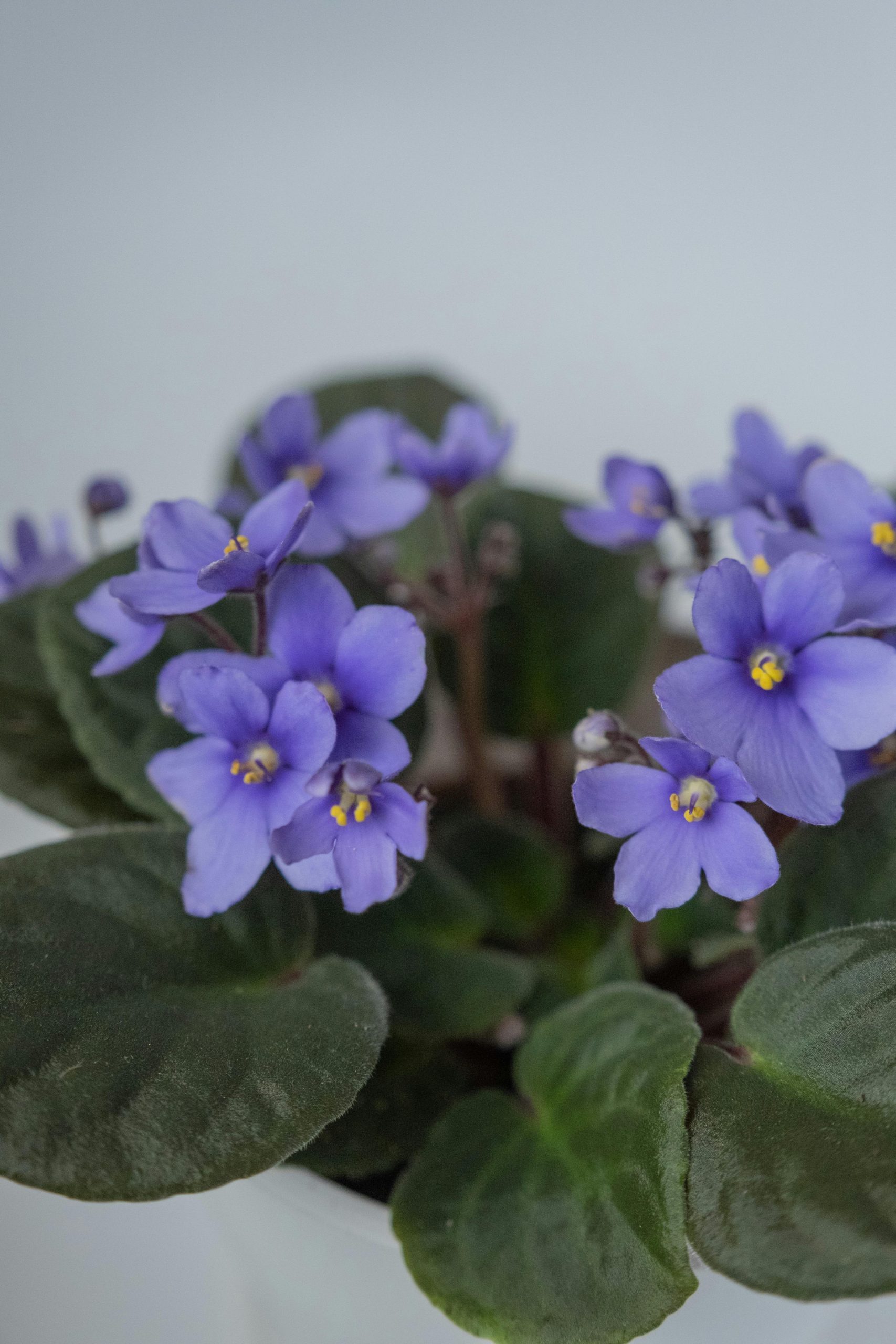
African violets have been a staple of British windowsills since the mid-20th century, and they remain one of the best flowering plants for indoor conditions in the UK. A healthy specimen in the right position will flower almost continuously throughout the year — the clusters of purple, pink, white, or bicolour flowers appearing in reliable succession with minimal intervention. They are compact, they do not need repotting often, and they are genuinely beautiful. The one care point that confuses most people is watering — specifically, keeping water off the leaves — but once that habit is established, African violets are among the most rewarding and trouble-free flowering plants available.
Light Requirements
African violets need bright indirect light to flower reliably. An east-facing windowsill is the classic UK position, providing gentle morning light without the harsh afternoon sun that bleaches and scorches the velvety leaves. North-facing windowsills in summer can work for foliage but rarely provide enough light for consistent flowering.
Artificial light suits African violets exceptionally well — they are among the most commonly grown plants under fluorescent and LED lighting among specialist growers. Under a full-spectrum LED at 10-14 hours per day, they flower with remarkable consistency, which is why African violet collections in dedicated grow rooms are common among enthusiasts.
Soil & Growing Medium
Use a specialist African violet compost or a light, peat-free mix with added perlite. The mix needs to be light and well-draining — African violet roots are fine and delicate and cannot cope with dense, compacted compost. Avoid heavy potting mixes formulated for outdoor use.
Some growers add a small amount of horticultural grit or extra perlite to standard houseplant compost to create an appropriate texture. The goal is a mix that drains freely but retains just enough moisture to stay consistently lightly damp.
Watering
The golden rule: keep water off the leaves. Water droplets on African violet leaves in direct or bright light cause permanent white or brown spots that do not fade. Always water from below (setting the pot in a saucer of water for 20-30 minutes until the surface feels moist, then emptying the saucer) or water carefully at the soil surface, avoiding the leaves and crown entirely.
Water when the top centimetre of compost begins to dry out. Keep the soil consistently lightly moist — African violets do not tolerate prolonged drought the way succulents do. Use room-temperature water; cold water causes the same spotting as water droplets in light. In hard-water areas, rainwater or filtered water prevents mineral deposits on the leaves.
Temperature & Humidity
African violets prefer 18-24°C. They are sensitive to cold and will show wilting and flower drop below 15°C. Keep away from cold windowsills in winter — the glass can be several degrees colder than the room air, which the plant feels even if the room is warm. A small piece of card or foam between the pot and the windowsill helps in winter.
Moderate humidity (40-60%) suits them well. They do not need the high humidity that calatheas or orchids prefer, but they dislike very dry air. Position away from radiators and use a pebble tray if the room is particularly dry.
Fertilising
Feed every two weeks during the growing season with a specialist African violet fertiliser (high phosphorus to support flowering) at the recommended rate. A phosphorus-rich bloom feed keeps the flowers coming. In winter, reduce to monthly feeding. Unlike many houseplants, African violets benefit from consistent regular feeding rather than infrequent doses, as their compact size means they exhaust the nutrients in a small pot quickly.
Grow Light Compatibility
African violets are one of the best plants for growing under artificial light. Specialist growers routinely produce show-quality plants entirely under fluorescent tubes or LED strips, with no natural light at all. A full-spectrum LED at 10-14 hours per day produces continuous, reliable flowering. This makes African violets an excellent choice for rooms without bright natural light, provided the grow light conditions are met consistently.
Toxicity
African violets are non-toxic to cats, dogs, and humans — one of the better attributes of a plant that sits at windowsill height where pets often investigate. The velvety leaves are occasionally chewed by cats, but the plant presents no toxicity risk.
Pruning
Remove spent flowers and their stems at the base once they fade. Remove yellowed or damaged leaves by gently twisting them downward until they detach — pulling cleanly rather than cutting reduces the risk of leaving a stub that can rot. Keep the rosette symmetrical by removing leaves evenly from around the base.
African violets sometimes produce suckers — small offset plants that grow alongside the main rosette. Remove these promptly; if left to grow, they compete with the main plant and reduce flowering.
Propagating
Leaf cuttings are the standard propagation method. Select a healthy, mid-aged leaf (not the very newest or the oldest), cut the petiole (stem) to about 3-4cm, and insert it into moist African violet compost or a peat-perlite mix. Keep in a warm, humid environment — a clear plastic bag over the pot maintains humidity. New plantlets appear at the base of the petiole within four to eight weeks.
Once the plantlets have developed two to three leaves of their own, they can be carefully separated and potted individually. A single leaf cutting can produce multiple plantlets.
Indoor Setup Notes
An east-facing windowsill is the classic position for African violets in UK homes and it remains the right answer. Compact enough for a windowsill, bathroom shelf, or desk, they suit any well-lit indoor space. Avoid south-facing windows in summer without filtering — the direct sun burns the leaves.
African violets also suit the grow light setup common in indoor gardening — a dedicated shelf with an LED strip overhead allows a collection of plants to flower reliably regardless of the available natural light. For growers who find the windowsill positioning challenging, this is the practical solution.
Potting & Repotting
African violets prefer to be slightly root-bound and flower more reliably in snug pots. Use small pots — a pot that is roughly one-third the diameter of the leaf spread is the general guideline. Standard 8-10cm pots suit most varieties.
Repot every one to two years in spring, or when the plant has outgrown its pot. Remove any dead roots and the bottom inch of old compost. Fresh compost at repotting supports continued flowering.
Common Pests & Problems
- White or brown leaf spots: Cold water or direct sun. Use room-temperature water and avoid wet leaves in bright light.
- No flowers: Insufficient light or wrong fertiliser. Move to a brighter spot and switch to a phosphorus-rich bloom feed.
- Pale, bleached leaves: Too much direct sun. Move back from the window or filter the light.
- Powdery mildew: White powdery coating on leaves. Improve airflow, reduce humidity slightly, and treat with a dilute neem oil spray.
- Crown rot: Caused by water sitting in the crown of the plant. Always water from below or carefully at the soil edge. Remove rotted tissue and repot in fresh compost.
- Mealybugs: White cottony deposits in the centre of the rosette. Treat carefully with isopropyl alcohol on a cotton swab.
FAQ
Why won’t my African violet flower?
Insufficient light is the most common cause. Move to a brighter east-facing windowsill or add a grow light. Also check the fertiliser — a phosphorus-rich feed makes a significant difference to flowering frequency.
Can I water African violets from the top?
Yes, but carefully — water at the soil surface only, avoiding the leaves and crown entirely. Bottom watering (setting the pot in water for 20-30 minutes) is simpler and eliminates the risk of leaf spotting.
Why does my African violet have spots on its leaves?
Almost certainly cold water or water droplets in bright light. Both cause permanent white or brownish spots. Use room-temperature water and keep leaves dry.
How often do African violets bloom?
In good conditions — bright indirect light, regular phosphorus-rich feeding, comfortable temperature — they flower almost continuously with short gaps between flushes. Some varieties are more floriferous than others.
Do African violets need special compost?
A specialist African violet mix is ideal, but a light, peat-free houseplant compost with extra perlite added works well. The key is a light, well-draining mix — avoid dense outdoor or all-purpose composts.