| At a Glance | |
| Common Name | Dieffenbachia, Dumb Cane, Leopard Lily |
| Plant Type | Tropical perennial |
| Light Required | Medium to bright indirect light |
| Soil / Medium | Well-draining houseplant potting mix with perlite |
| Difficulty | Easy |
| Mature Size | 1-1.5m tall indoors; some varieties taller |
| Toxicity | Highly toxic to cats, dogs, and humans — handle with care |
| Native Habitat | Tropical Americas |
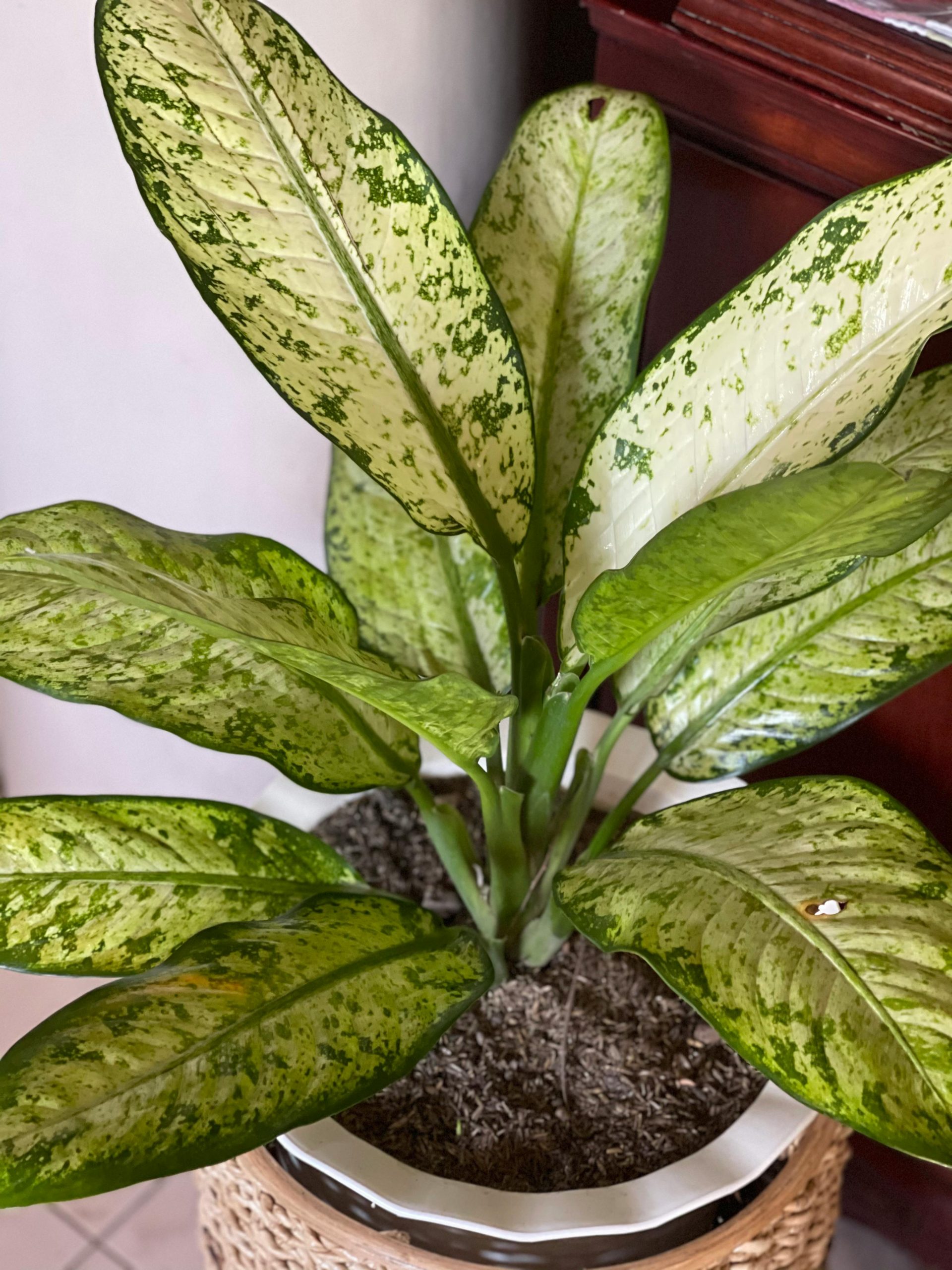
Dieffenbachia is one of the most striking large-leafed tropical plants you can grow indoors, and one of the most widely sold in the UK. The broad, patterned leaves — typically a mix of cream, pale green, and dark green in patterns that vary significantly between varieties — have a bold, architectural quality that makes smaller-leafed plants look understated by comparison. Care is straightforward and the plant grows quickly in good conditions. The one critical point that every dieffenbachia owner needs to know upfront: the sap is highly toxic and causes severe mouth and throat swelling if ingested. The common name ‘dumb cane’ refers to this effect. Handle with gloves, keep away from children and pets, and the plant is otherwise a trouble-free and rewarding choice.
Light Requirements
Dieffenbachia adapts to a wide range of light conditions, from medium indirect light through to bright indirect. The variegated varieties — those with cream or pale patterning — hold their colouring best in brighter light. In lower light, the pale areas reduce and the leaves trend toward a more uniform green.
Direct intense sunlight scorches and bleaches the large leaves, so keep away from unfiltered south-facing glass in summer. An east-facing window or a position a metre back from a south-facing window suits most varieties well. North-facing rooms are workable but growth slows and leaf patterning diminishes.
Soil & Growing Medium
Use a standard well-draining houseplant potting mix with 20-30% perlite added. The mix needs to drain freely and not stay wet for extended periods — dieffenbachia roots are susceptible to rot in waterlogged conditions, which is the most common cause of decline.
A slightly richer mix suits dieffenbachia better than the lean, sandy mixes used for succulents. The plant is a vigorous grower in good conditions and benefits from some nutrient content in the compost.
Watering
Water when the top 3-5cm of compost are dry — roughly every one to two weeks in summer, every two to three weeks in winter. Dieffenbachia is moderately drought-tolerant and will show slightly drooping, limp leaves when genuinely thirsty, giving you a clear signal before any permanent damage occurs.
Overwatering is the more common problem. Yellow lower leaves combined with consistently soggy compost are the early signs. Check the root condition if in doubt — healthy roots are firm and white; rotted roots are brown, mushy, and often foul-smelling. Always wear gloves when handling the roots.
Temperature & Humidity
Dieffenbachia prefers 18-30°C. It is sensitive to cold and will show leaf damage below 15°C. Keep away from cold draughts, unheated rooms in winter, and single-glazed windows in the coldest months. Most centrally heated UK homes stay comfortably within range.
Humidity above 50% produces larger, more vigorous leaves. The plant manages in the ambient humidity of a UK living room without significant browning, but a humidifier nearby or a bathroom position with good light produces noticeably better growth.
Fertilising
Feed monthly from March to September with a balanced liquid fertiliser at half strength. Dieffenbachia is a vigorous grower in the growing season and responds well to regular feeding. A nitrogen-rich formulation supports the large leaf production the plant is known for. Stop feeding entirely in winter. Over-fertilising causes brown leaf edges — if this occurs, flush the soil with plain water and reduce feeding frequency.
Grow Light Compatibility
Dieffenbachia adapts well to grow lights and is a practical choice for offices and rooms with limited natural light. It does not require high intensity — a modest full-spectrum LED at 10-12 hours per day maintains good growth. The variegated leaf patterning holds better under adequate artificial light than it does in genuinely low natural light conditions.
Toxicity
Dieffenbachia is highly toxic and requires serious caution in homes with children or pets. Ingestion causes immediate and severe oral burning, swelling of the mouth, tongue, and throat, excessive drooling, and difficulty swallowing or speaking. In severe cases, throat swelling can obstruct breathing. Contact with the sap causes skin and eye irritation.
This is not a plant to keep in a home with toddlers or pets that chew on plants. In a household of adults with careful handling habits, it is manageable. Always wear gloves when working with it and wash hands afterwards. Seek medical attention immediately if any part of the plant is ingested.
Pruning
Remove lower leaves as they naturally yellow and age, cutting the petiole close to the main stem with clean, gloved hands. If the plant becomes top-heavy or bare at the base — common as the lower leaves age and fall away — the top can be cut and rooted as a new plant, and the remaining cane will produce new growth from below the cut.
Always wear gloves. The sap from cut stems is more concentrated than from intact leaves and is the main exposure risk during routine care.
Propagating
Stem cuttings are the standard propagation method. Take a cutting of 10-15cm from the growing tip, or cut the main cane into sections of 5-8cm each with a node. Allow cut surfaces to dry and the sap to stop running, then place in water or moist compost. Wear gloves throughout. Roots develop within three to five weeks.
Cane sections can be laid horizontally in moist compost with the node facing upward — new shoots emerge from the node within four to eight weeks. This is useful for rejuvenating an overgrown plant while producing several new specimens from the cuttings.
Indoor Setup Notes
Dieffenbachia suits large living rooms, home offices, and any bright indoor space where its scale can be appreciated. The broad, patterned leaves create a strong visual focal point and the plant grows tall enough to work as a room divider or corner specimen.
The toxicity constraint is the main positioning consideration. Keep it well away from floor level in homes with toddlers or plant-chewing pets. A high shelf or an elevated position in a room that children and pets do not access unsupervised is the practical solution.
Potting & Repotting
Repot every one to two years in spring, or when roots are emerging from drainage holes. Go up by one pot size. Use gloves throughout — the roots and soil will contain traces of sap. Fresh, well-draining compost at each repotting maintains the fertility that supports the plant’s vigorous growth.
After repotting, water sparingly for two weeks and hold off fertilising for four to six weeks while the plant re-establishes.
Common Pests & Problems
- Yellow lower leaves: Natural ageing or overwatering. Normal for the lowest, oldest leaves; concerning if widespread with soggy soil.
- Brown leaf edges: Over-fertilising, low humidity, or fluoride in tap water. Flush soil and switch to rainwater if browning persists.
- Drooping, limp leaves: Underwatering or, less commonly, overwatering with root rot. Check soil moisture to diagnose.
- Pale, washed-out leaf patterning: Insufficient light. Move to a brighter position.
- Root rot: Caused by overwatering. Wear gloves when inspecting roots. Remove affected roots, repot in dry compost, and reduce watering.
- Spider mites and mealybugs: Treat with neem oil. Always wear gloves when applying treatments to dieffenbachia.
FAQ
Is dieffenbachia safe for homes with children?
Not for homes with toddlers or young children who put things in their mouths. The sap causes severe oral burning and swelling. In households with older children who understand not to touch plants, it can be kept safely in a position that is not accessible.
Why is dieffenbachia called dumb cane?
The sap contains compounds that cause severe swelling of the mouth and throat, temporarily impairing speech. Historically, this effect was used as a punishment — a deeply unpleasant chapter in the plant’s history that is now part of the explanation for the common name.
Can I grow dieffenbachia in a north-facing room?
It will survive but the leaf patterning fades and growth slows considerably. A grow light is the practical solution for darker rooms if you want to maintain the plant’s full visual impact.
Why are my dieffenbachia leaves drooping?
Drooping most often means underwatering. Water thoroughly and the leaves typically recover within a few hours. Persistent drooping despite moist soil suggests root rot — check the root condition wearing gloves.
How do I handle dieffenbachia safely?
Always wear disposable gloves when pruning, repotting, or handling cut stems. Avoid touching your face during work. Wash hands thoroughly after any contact with the plant. Keep the plant out of reach of children and pets.