| At a Glance | |
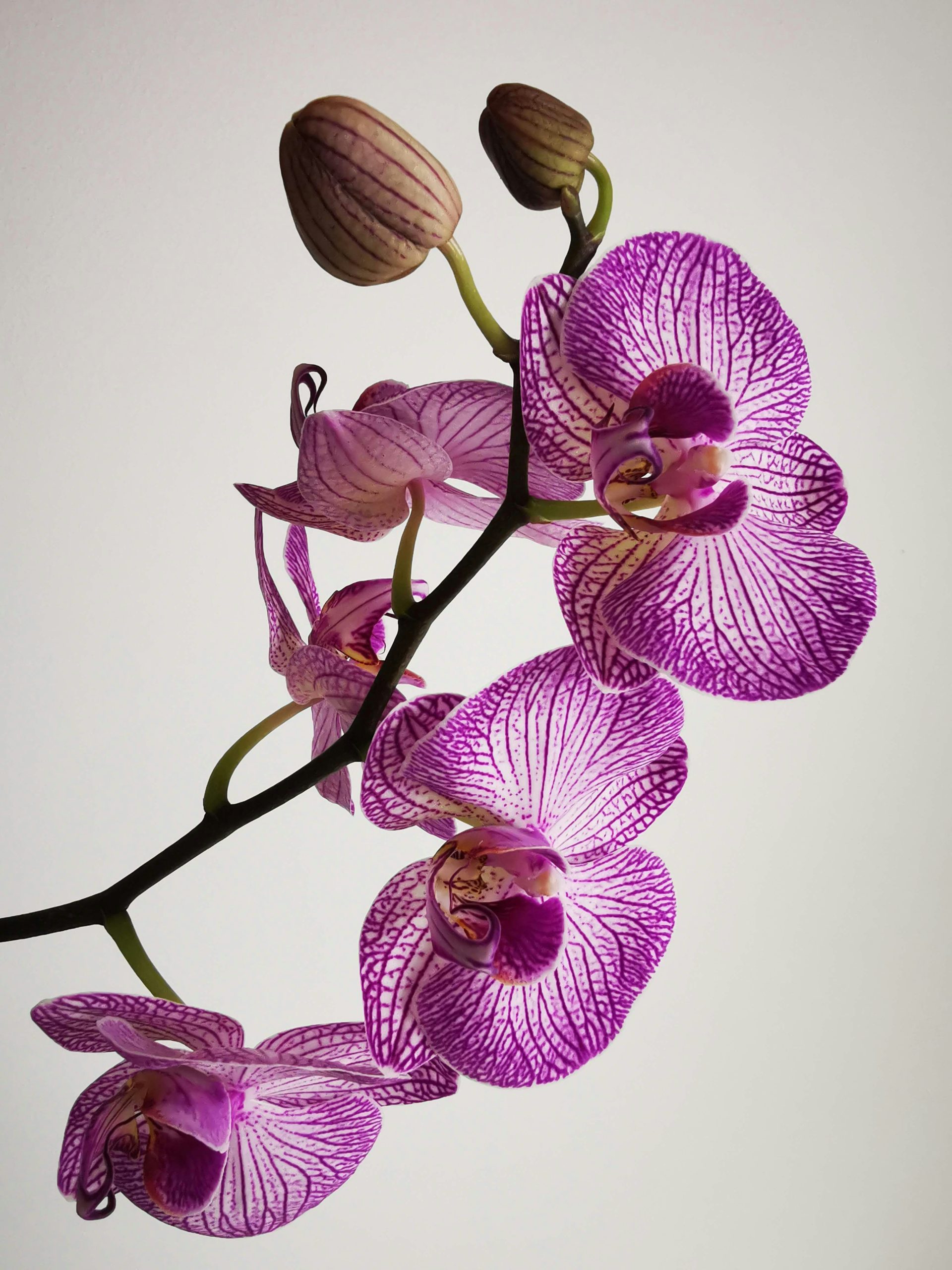
| Common Name | Moth Orchid, Phalaenopsis Orchid |
| Plant Type | Epiphytic tropical flowering plant |
| Light Required | Bright indirect light; no direct sun |
| Soil / Medium | Bark-based orchid compost; never standard potting mix |
| Difficulty | Easy once you understand the basics |
| Mature Size | 30–60cm tall in bloom |
| Toxicity | Non-toxic to cats, dogs, and humans |
| Native Habitat | Southeast Asia, Northern Australia |
Phalaenopsis orchids are the most widely sold houseplant in the UK by volume, and they are also one of the most frequently killed — not because they are inherently difficult, but because the care they need is different from almost every other houseplant most people own. The main mistakes are watering too frequently, using the wrong growing medium, and throwing the plant away after the first flowering ends. Get those three things right and you have a plant that will rebloom reliably for years.
Light Requirements
Phalaenopsis orchids need bright, indirect light. An east-facing windowsill is widely considered the ideal position — the gentle morning light suits them well, and the absence of harsh afternoon sun prevents the leaf scorch that south-facing glass can cause. A west-facing window also works. South-facing positions are workable if the light is filtered through a sheer curtain.
One useful diagnostic: healthy orchid leaves are mid-green. Leaves that are dark, deep green indicate the plant is not getting enough light and is compensating by producing more chlorophyll. Leaves that are yellowing or have reddish tinges are getting too much direct sun. Aim for the mid-green.
Soil & Growing Medium
Standard potting compost will kill a phalaenopsis orchid. These are epiphytic plants — in the wild, their roots cling to tree bark and are exposed to air. They need an open, bark-based orchid compost that provides airflow around the roots and drains almost instantly after watering.
Specialist orchid bark mixes are available in most UK garden centres and online. Some growers use pure bark chips or a mixture of bark, perlite, and sphagnum moss. The principle in every case is the same: the medium must dry out quickly and allow air to reach the roots.
Watering
Water approximately once a week in summer, every ten to fourteen days in winter. The most reliable method: take the pot to the sink, run tepid water through the bark for 30 seconds, allow it to drain completely, then return the plant to its position. Never let the pot sit in water — orchid roots sitting in standing water rot within days.
The roots themselves are a useful indicator. Healthy, hydrated roots are silvery-green. Dry roots appear white or silvery-grey and slightly shrivelled. If the roots look white and the bark is completely dry, it is time to water. If the bark still feels damp or the roots look silvery-green, wait.
Temperature & Humidity
Phalaenopsis orchids prefer 18-28°C during the day, and actually benefit from a temperature drop of 5-8°C at night — this temperature differential is one of the triggers for reflowering. A windowsill where night temperatures drop naturally (but not below 15°C) replicates this well.
Humidity of 50-70% suits them well. Avoid misting the flowers directly, as this causes spotting. A pebble tray with water beneath the pot (not touching the roots) provides ambient humidity without wetting the plant.
Fertilising
Feed every two to three weeks during the growing season with a specialist orchid fertiliser, diluted to half strength. The mantra widely used among orchid growers is ‘weakly, weekly’ — regular dilute feeding is far better than infrequent concentrated doses. Flush the bark with plain water every month to prevent fertiliser salt build-up. Do not feed when the plant is in bloom; save feeding for the active growing phase.
Grow Light Compatibility
Phalaenopsis orchids adapt well to grow lights, which makes them a practical choice for darker rooms or windowless spaces. They need moderate light intensity — less than fruiting crops but more than deep-shade plants. A full-spectrum LED at medium output, run for 10-12 hours per day, reliably sustains healthy growth and promotes reblooming.
One benefit of grow lights for orchids: the consistent, controllable light level removes the guesswork about whether a window position is providing enough light, especially through the dim UK winter months.
Toxicity
Phalaenopsis orchids are non-toxic to cats, dogs, and humans — one of the few commonly kept flowering houseplants that can be placed freely in homes with pets and children. The fertilisers and pesticides used on them are another matter, but the plant itself presents no toxicity risk.
Pruning
After flowering ends, cut the flower spike back to just above the second or third node — this encourages a new side spike. If the spike turns brown and dry, cut it back to the base entirely. Remove dead or yellowed leaves at the base by pulling gently downward — they usually detach cleanly. Do not cut healthy green leaves.
Propagating
Phalaenopsis orchids occasionally produce keikis — small plantlets that develop on the flower spike, complete with their own leaves and roots. Once a keiki has roots of at least 3-5cm, it can be carefully removed from the spike and potted into bark compost. This is the most reliable propagation method for home growers.
Division at repotting is possible for orchids with multiple growth points, though phalaenopsis orchids are typically single-crown plants and do not divide as readily as sympodial orchids. Tissue culture is used commercially but not practical at home.
Indoor Setup Notes
East-facing windowsills and bathroom shelves with good natural light are classic positions. Bathrooms suit orchids well because the ambient humidity from showers reduces the need for supplemental moisture. Keep orchids away from fruit bowls — ripening fruit produces ethylene gas that causes premature flower drop.
The clear plastic pots that orchids are typically sold in are functional, not just cheap — they allow you to check root health and moisture levels at a glance. If you repot into a decorative ceramic pot, use a slightly smaller clear liner so you retain visibility of the roots.
Potting & Repotting
Repot every one to two years, or when the bark has broken down into fine, soil-like particles that no longer drain freely. Spring, after flowering, is the best time. Remove all old bark from the roots, trim any dead or rotted roots back to healthy tissue (healthy roots are firm and greenish-white), and repot into fresh bark compost in a pot just large enough to contain the roots comfortably.
Orchid roots often cling to the pot — this is normal. Soak the pot in tepid water for a few minutes to loosen the grip before attempting to remove the plant.
Common Pests & Problems
- Root rot: The most common problem. Caused by overwatering or bark that has broken down. Trim affected roots, repot in fresh bark, and reduce watering frequency.
- Yellow leaves: Natural ageing of lower leaves is normal. Widespread yellowing suggests overwatering, too much direct sun, or root problems.
- Bud blast (buds dropping before opening): Caused by cold draughts, ethylene from fruit, or sudden changes in temperature. Move away from draughts and fruit.
- No reblooming: Usually insufficient light or no night-time temperature drop. Move to a brighter spot near a window where night temperatures fall by 5°C or more.
- Mealybugs: White cottony clusters in leaf joints. Treat with isopropyl alcohol swabs; follow with neem oil.
- Scale: Brown bumps on leaves and stems. Treat with isopropyl alcohol and neem oil.
FAQ
Why won’t my orchid rebloom?
The two most common causes: insufficient light and no night-time temperature drop. Move the plant to a brighter spot and ensure it experiences a 5-8°C temperature fall at night — a windowsill is ideal for this in a UK home. Consistent warmth without this variation suppresses flowering.
How do I know when to water my orchid?
Check the roots through the clear pot. White or light grey roots that look slightly shrivelled mean it is time to water. Silvery-green roots mean the bark still has moisture. Lift the pot — a very light pot is another reliable signal.
Can I use tap water on my orchid?
Yes, though hard water in the UK can cause mineral build-up on the bark and roots over time. Flush the bark with plain water monthly and, if possible, use collected rainwater or filtered water in hard-water areas.
How long do orchid flowers last?
Phalaenopsis flowers typically last eight to twelve weeks. With good care — consistent temperature, moderate humidity, no draughts — a full spike can last up to four months.
Should I cut the spike after flowering?
Cut back to just above the second or third node from the base to encourage a side spike and potential second bloom. If the spike turns yellow or brown, cut to the base entirely and wait for the plant to grow a new spike from the base in the following growing season.