| At a Glance | |
| Common Name | Spider Plant, Ribbon Plant, Airplane Plant |
| Plant Type | Tropical perennial |
| Light Required | Bright to medium indirect light |
| Soil / Medium | Well-draining houseplant potting mix |
| Difficulty | Very Easy |
| Mature Size | 30-60cm spread; spiderettes trail to 60cm+ |
| Toxicity | Non-toxic to humans; mildly hallucinogenic to cats (safe but inadvisable) |
| Native Habitat | Southern Africa |
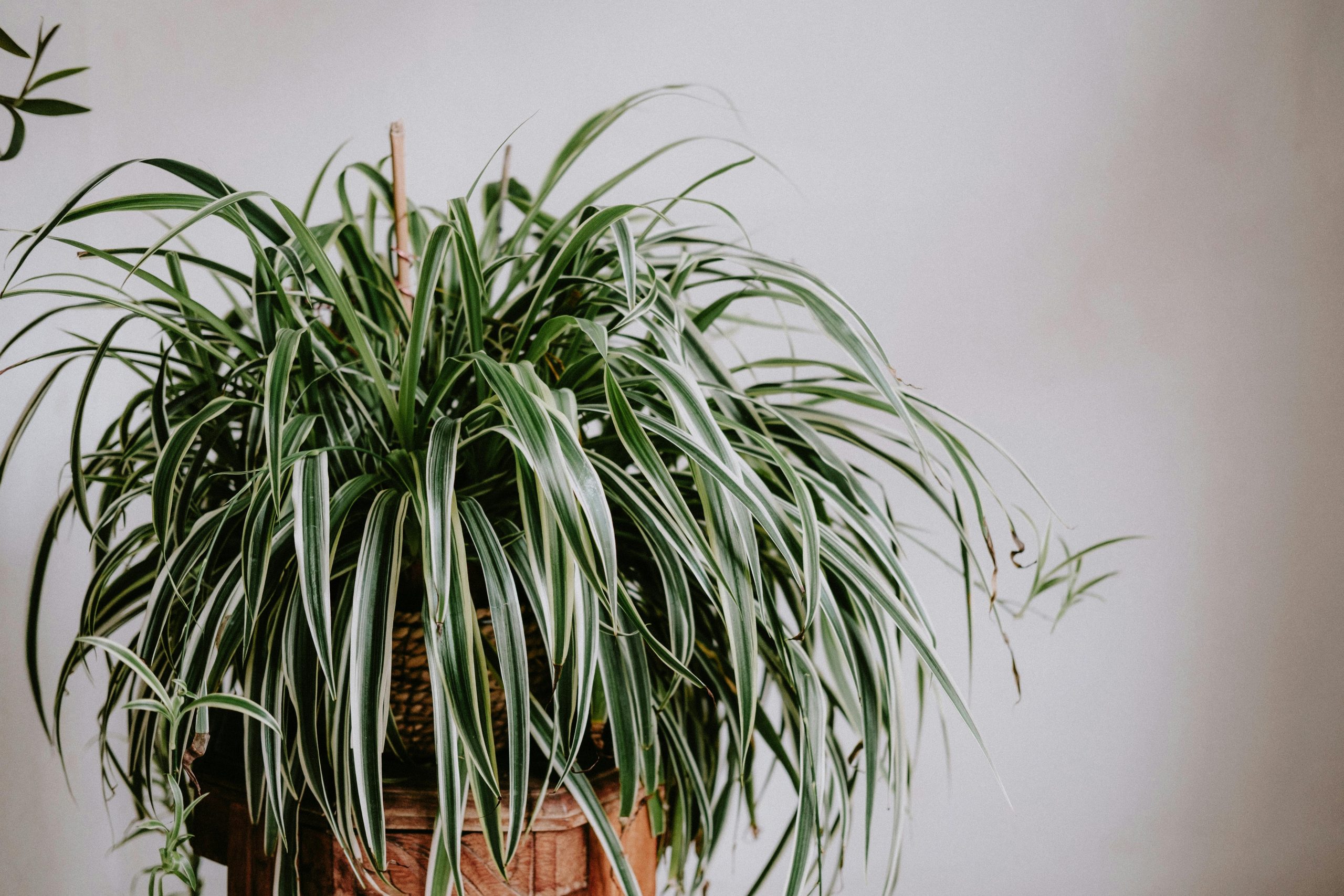
Spider plants have been a staple of British homes since the Victorian era, and they have retained their popularity for good reason. They are fast-growing, forgiving, and one of the most willing propagators in the houseplant world — a single mature plant will produce dozens of offsets, called spiderettes, that root readily and make excellent gifts. The variegated forms, with their cream and green striped leaves, look particularly good in hanging planters.
Light Requirements
Spider plants prefer bright to medium indirect light and will reward a good position with faster growth and more vibrant leaf striping. They tolerate lower light than, say, a rubber plant, but they are not as dim-tolerant as pothos or ZZ plants — in genuinely dark rooms, growth slows significantly and the foliage loses its crispness.
Avoid direct midday sun, which bleaches the leaf edges. An east-facing windowsill or a position a metre back from a south-facing window is ideal. They also do well in well-lit bathrooms and kitchens.
Soil & Growing Medium
Any standard, well-draining houseplant compost works well. Unlike succulents or ZZ plants, spider plants tolerate a slightly moisture-retentive mix, but good drainage is still important for long-term health. Adding 15-20% perlite reduces the risk of root rot in less well-ventilated spots.
Spider plants are one of the few houseplants that will show clear distress if over-fertilised, so use a lean mix without added slow-release fertiliser when repotting.
Watering
Water when the top 3-4cm of compost are dry — roughly every one to two weeks in summer. In winter, reduce to every two to three weeks. Spider plants are moderately drought-tolerant but perform better with consistent moisture during the growing season than with irregular extremes of wet and dry.
One notable quirk: spider plants are sensitive to fluoride and other minerals in tap water, which causes brown leaf tips over time. In hard-water areas of the UK, using collected rainwater or filtered water makes a visible difference. If brown tips are a persistent issue despite correct watering, the water quality is the likely cause.
Temperature & Humidity
Spider plants prefer 13-27°C. They tolerate cooler temperatures than most tropical plants and can handle a cool hallway or conservatory that drops to around 7°C briefly in winter, though growth will stop. They are not frost hardy.
Humidity is flexible — they manage in the dry air of centrally heated homes without the leaf curl or brown edges that more sensitive tropicals develop. A bit of humidity helps, but it is not a significant concern.
Fertilising
Feed monthly during the growing season (March to September) with a balanced liquid fertiliser at half to quarter strength. Spider plants are particularly sensitive to over-fertilising — excess nitrogen causes brown leaf tips and can damage the root tips. Less is more here. Stop feeding entirely in winter.
Grow Light Compatibility
Spider plants adapt well to grow lights and are a practical choice for darker rooms. They do not require high light intensity; a modest full-spectrum LED at 10-12 hours per day produces good growth and maintains leaf variegation. The striped variegated forms are more visually rewarding under adequate light.
Toxicity
Spider plants are non-toxic to humans. They contain compounds similar in structure to opium alkaloids, which appear to have a mild euphoric effect on cats — similar to catnip. This is not dangerous in small quantities but can lead to cats chewing the leaves repeatedly, which harms the plant. If you have cats that show interest in the spider plant, hanging it out of reach is sensible.
Pruning
Remove brown-tipped leaves or cut back individual leaves to the base if they are fully damaged. The plant can also be tidied by removing the long runners (stolons) that carry the spiderettes, if you do not want the plant to trail. Removing runners also directs energy back to the main rosette and encourages denser foliage.
Propagating
Spider plant propagation is one of the most straightforward in the houseplant world. The plant produces long arching stolons with small plantlets (spiderettes) at the ends. Once a spiderette has developed small root nubs, it can be detached and placed directly into moist compost or in a glass of water until roots develop to 2-3cm.
You can also propagate while the spiderette is still attached to the mother plant, by placing it in a small pot of compost alongside the main plant and pinning the runner in place. Once established, sever the runner. This tends to produce the healthiest young plants.
Indoor Setup Notes
Hanging planters are the natural home for spider plants — the trailing stolons and spiderettes create a cascading effect that looks best when the plant is elevated. They also work well on high shelves or mounted in macrame hangers.
In a UK home, a bright kitchen or bathroom with east or west light is an excellent position. Spider plants tolerate the humidity fluctuations of a bathroom well, and the cooking and shower humidity helps counteract the drying effect of central heating.
Potting & Repotting
Spider plants grow quickly and may need repotting every one to two years. Root-bound plants often push up out of their pots or begin to dry out very quickly after watering. Fleshy, tuberous roots store water and can physically crack lightweight pots when overcrowded.
Repot in spring into a pot one size up. Use a fresh, lean potting mix without added slow-release fertiliser. After repotting, the plant typically produces a flush of new growth within a few weeks.
Common Pests & Problems
- Brown leaf tips: Fluoride in tap water (most common), over-fertilising, or very low humidity. Switch to rainwater first.
- Yellow leaves: Overwatering or root crowding. Check drainage and repot if root-bound.
- Pale, washed-out leaves: Too much direct light or too little light. Assess the position.
- No spiderettes: Insufficient light or the plant is not yet mature. Spider plants typically begin producing runners after two to three growing seasons.
- Spider mites: Dry conditions encourage these. Treat with insecticidal soap; improve humidity.
- Root rot: Uncommon in well-draining conditions but possible if left in standing water. Remove affected roots and repot.
FAQ
Why does my spider plant have brown tips?
In most UK homes, fluoride and chlorine in tap water is the cause. Switch to collected rainwater or filtered water for a few weeks and the problem usually resolves. Over-fertilising and very dry air are the other common causes.
When will my spider plant produce babies?
Typically once the plant is two to three years old and has adequate light. Root-bound plants often produce more runners than those in large pots. The flowering stems that produce spiderettes are triggered by good light and slight root restriction.
Can I cut off the runners?
Yes, without harming the main plant. Removing runners redirects energy to the foliage and keeps the plant compact. Propagate from them or simply compost them.
Is spider plant safe for a home with cats?
It is non-toxic, but cats are sometimes attracted to the plant and will chew on it. This is more problematic for the plant than the cat, but if the attraction is strong, hanging the plant out of reach is the practical solution.