| At a Glance | |
| Common Name | Tradescantia, Spiderwort, Inch Plant, Wandering Dude |
| Plant Type | Tropical trailing perennial |
| Light Required | Bright indirect light; some direct sun tolerated |
| Soil / Medium | Well-draining standard houseplant potting mix |
| Difficulty | Very Easy — one of the fastest-growing houseplants |
| Mature Size | Trails to 60-90cm; spreads readily |
| Toxicity | Mildly toxic to cats and dogs; can cause skin irritation in humans |
| Native Habitat | Mexico and Central America |
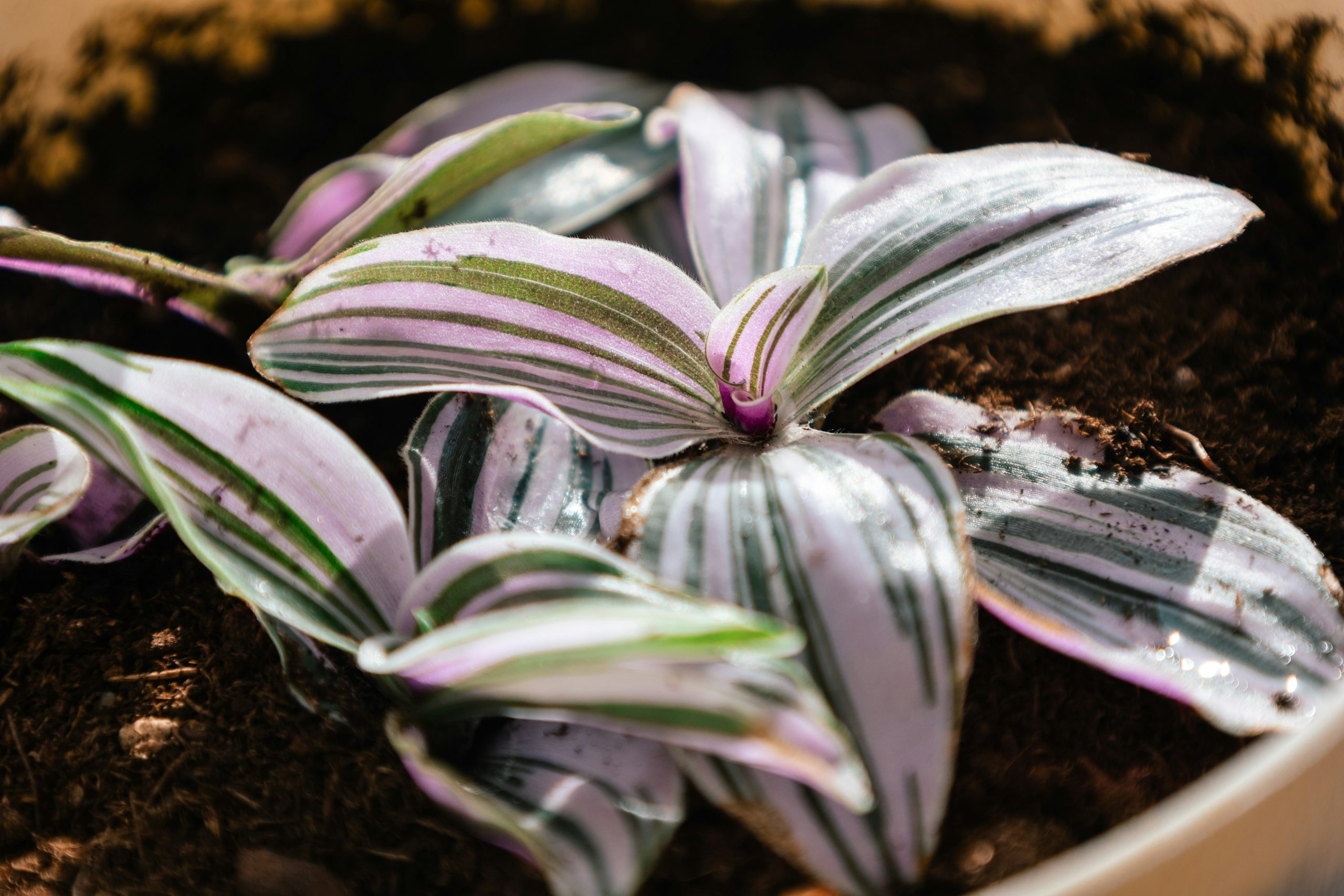
Tradescantias are the plant equivalent of a good supporting actor — they rarely get the headline billing that monstera or fiddle leaf figs command, but in the right position they are genuinely striking. The range of varieties covers purple, green, cream, and striped in combinations that photograph well and look distinctive on a shelf or in a hanging basket. They are also among the fastest-growing houseplants available, which makes them rewarding to watch and easy to propagate. The trade-off is that they can become leggy quickly without regular pruning and bright enough light to keep them compact.
Light Requirements
Tradescantias need bright indirect light to maintain their colour and compact growth. The purple-leaved varieties — Tradescantia zebrina, Tradescantia pallida — in particular require good light to hold their vivid colouring; in low light they revert toward a duller, greener tone and the distinctive stripes or purple pigmentation fades noticeably.
They tolerate some direct morning sun without leaf scorch, which makes an east-facing windowsill an excellent position. South-facing positions work well with a sheer curtain to filter the most intense afternoon light in summer. North-facing rooms are not adequate without a grow light.
Soil & Growing Medium
Standard well-draining houseplant potting mix works well. Adding 15-20% perlite improves drainage and reduces root rot risk. Tradescantias are not fussy about soil composition provided drainage is adequate — they are adaptable plants that tolerate a range of conditions that would stress more demanding species.
Avoid rich, moisture-retentive composts that stay wet for extended periods. Tradescantias grow fast and use water reasonably quickly, but the soil should still cycle through wet and dry rather than staying consistently damp.
Watering
Water when the top 3-4cm of compost are dry — roughly every one to two weeks in summer, less frequently in winter. Tradescantias are moderately drought-tolerant and will show slightly limp stems when genuinely thirsty, well before any lasting damage occurs. Overwatering causes root rot and stem die-back at the base, which is more difficult to recover from than brief underwatering.
UK tap water is generally fine. In hard-water areas, occasional flushing of the soil with rainwater helps prevent mineral build-up, but it is not essential the way it is for calatheas.
Temperature & Humidity
Tradescantias prefer 15-25°C and are among the more cold-tolerant of the tropical houseplants commonly sold in the UK. They manage down to around 7°C without damage, though growth stops. Avoid frost — they are not hardy outdoors in most of the UK year-round.
Humidity is flexible. They tolerate the dry air of centrally heated UK homes without the leaf curl or browning that more humidity-demanding plants develop. A slightly more humid environment produces fuller growth, but it is not a significant concern.
Fertilising
Feed every two to four weeks during the growing season (March to September) with a balanced liquid fertiliser at half strength. Tradescantias grow quickly and benefit from more frequent feeding than slower-growing plants. In winter, stop feeding entirely. Consistent feeding during the growing season is one of the best ways to maintain vivid leaf colour in the more ornamental varieties.
Grow Light Compatibility
Tradescantias adapt readily to grow lights and are a good choice for darker rooms. The purple and striped varieties need adequate light to maintain their colour — this is one area where a grow light genuinely earns its place. A full-spectrum LED at 10-12 hours per day maintains colour intensity and compact growth in rooms where natural light is insufficient.
Toxicity
Tradescantias are mildly toxic to cats and dogs — ingestion causes mild vomiting and diarrhoea. The sap can cause contact dermatitis in humans with sensitive skin; wear gloves when handling or pruning if you have a tendency toward skin reactions. The toxicity level is moderate rather than severe, but keep away from persistent plant-chewing pets.
Pruning
Prune regularly and without hesitation. Cut back stems to just above a node throughout the growing season. The plant branches freely from below the cut point and becomes bushier with each trim. A tradescantia that is never pruned becomes a long, sparse tangle within one growing season; one that is trimmed monthly stays dense and attractive.
If the plant has become very leggy, cut it back hard to within a few centimetres of the soil. New growth will emerge from the base within two to three weeks in good light.
Propagating
Tradescantia is one of the easiest houseplants to propagate — a reputation it has held since cuttings were passed between households long before it became commercially widespread. Take stem cuttings of 8-10cm, remove the lower leaves, and place in water or moist compost. Roots appear in water within one week. The cuttings are so reliable that pushing several directly into a pot of compost, without water propagation first, is a common and successful approach.
A pot of tradescantia can be refreshed entirely by cutting the whole plant back and re-rooting the best cuttings into the same pot with fresh compost. This takes about three weeks and produces a plant that looks as good as new.
Indoor Setup Notes
Hanging baskets and high shelves suit tradescantias well, allowing the trailing stems to cascade freely. They also work in standard pots where the stems spill over the sides. The purple-leaved varieties (T. zebrina, T. pallida) look particularly good against a light-coloured wall or shelf.
In a UK home, a bright windowsill — east or south-facing — is the best position. Avoid north-facing rooms without supplemental light, as the colour fades and growth becomes sparse. Tradescantias respond to improved light faster than almost any other houseplant — within two weeks of moving to a brighter position, the change in growth and colour is visible.
Potting & Repotting
Tradescantias grow quickly and may need repotting every year in spring. Roots emerging from drainage holes or a plant that dries out very quickly after watering are the signals. Go up by one pot size. Because these plants grow so fast, the most common reason to repot is not root-binding but the desire to refresh the compost and give the plant more room to spread.
Many growers find it easier to take cuttings and start a fresh plant in new compost every two years rather than repotting — the result is a younger, more vigorous plant with the same visual appeal.
Common Pests & Problems
- Faded leaf colour: Insufficient light. The purple and striped varieties need bright indirect light to hold their pigmentation. Move to a brighter position.
- Leggy, sparse growth: Not enough light or not pruned frequently enough. Both issues compound each other — improve light first, then prune.
- Root rot: Caused by overwatering or heavy, slow-draining soil. Remove affected roots and repot in lighter, better-draining compost.
- Skin irritation after handling: Normal sap reaction in sensitive individuals. Wash hands after contact and wear gloves when pruning.
- Spider mites: Common in dry conditions. Treat with insecticidal soap; improve humidity and airflow.
- Aphids: Occasional on soft new growth. Treat with insecticidal soap or a dilute neem oil spray.
FAQ
Why is my tradescantia losing its purple colour?
Insufficient light is almost always the cause. Purple pigmentation in T. zebrina and T. pallida requires good indirect light — or some direct sun — to develop and hold. Move to a brighter position and the colour returns within a few weeks.
How do I keep tradescantia bushy?
Pinch or cut back the growing tips regularly throughout the growing season. Do not wait until the plant is leggy to prune — trim little and often. Monthly pruning in the growing season keeps the plant compact and dense.
Is tradescantia the same as wandering jew?
Yes — wandering Dude, spiderwort, and inch plant are all common names used for plants in the Tradescantia genus. The term ‘wandering Dude’ is the current preferred common name for Tradescantia zebrina.
Can I grow tradescantia in water?
Yes. Cuttings root readily in water and can be kept there indefinitely. Growth is slower than in compost, but a jar of tradescantia cuttings on a bright windowsill is a low-maintenance and attractive display.
How often should I propagate tradescantia?
Whenever you prune, propagate. The cuttings are so reliable that there is no reason not to. Replace old, woody plants with rooted cuttings every two to three years for the freshest-looking results.