| At a Glance | |
| Common Name | Heartleaf Philodendron, Velvet Leaf Philodendron |
| Plant Type | Tropical trailing or climbing vine |
| Light Required | Medium to bright indirect light |
| Soil / Medium | Well-draining houseplant potting mix with perlite |
| Difficulty | Very Easy |
| Mature Size | Trails or climbs to 1.5m+ indoors |
| Toxicity | Toxic to cats, dogs, and humans if ingested |
| Native Habitat | Central America and the Caribbean |
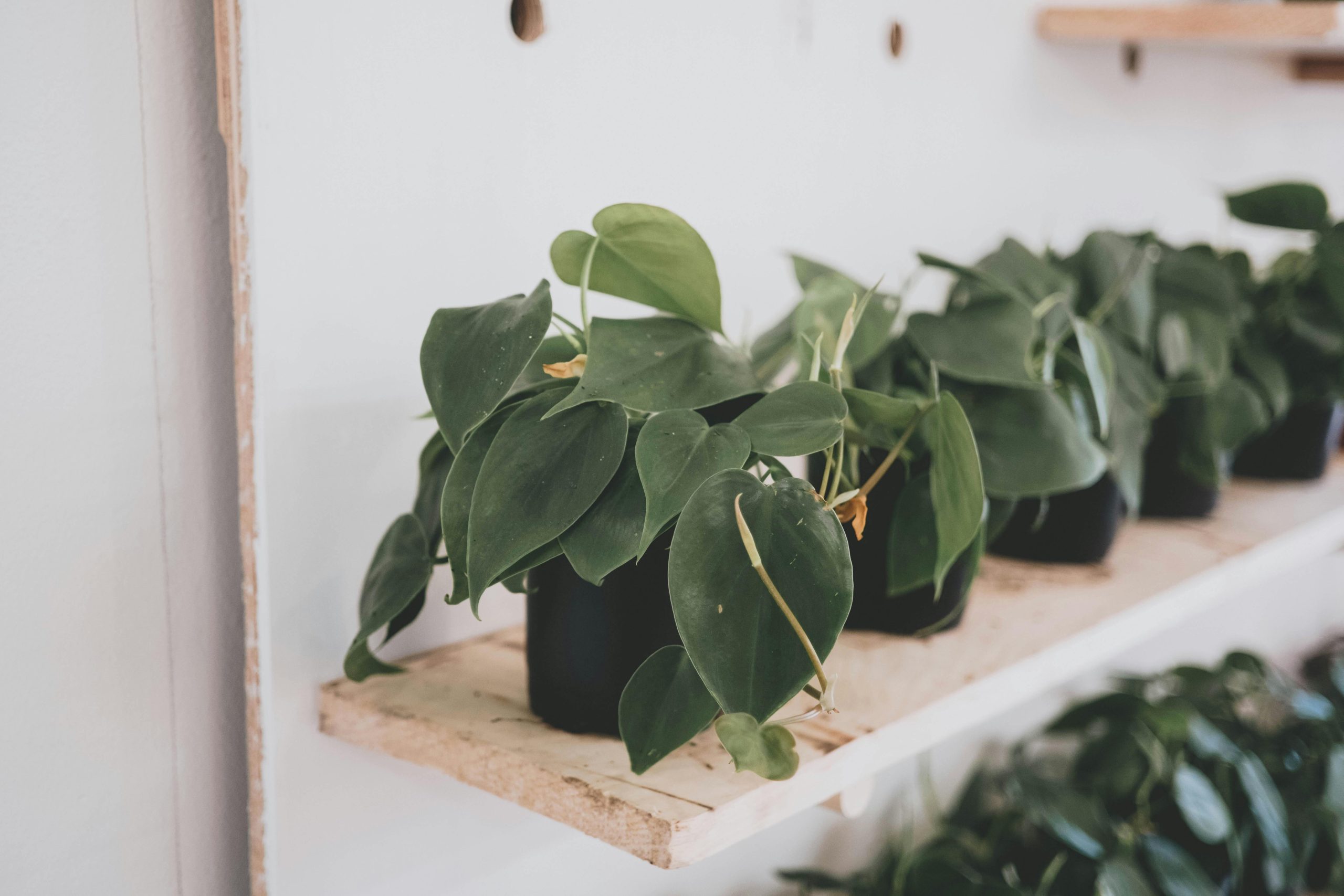
Heartleaf philodendrons are the plant that plant shops reach for when they want something that looks good, sells reliably, and does not come back to haunt customers with care problems. The glossy, heart-shaped leaves and easy-going nature make it one of the most dependable foliage plants for UK homes. It is often confused with pothos — both trail, both have heart-shaped leaves, both tolerate low light — but the philodendron has a softer, more velvety leaf texture and tends to grow faster in good conditions. If you can keep a pothos, you can keep a heartleaf philodendron.
Light Requirements
Heartleaf philodendrons thrive in medium to bright indirect light and tolerate lower light conditions better than most trailing plants. In low light, growth slows and the internodes — the gaps between leaves on the stem — lengthen as the plant reaches toward the light source. In bright indirect light, the plant produces leaves more frequently and at closer intervals.
Avoid prolonged direct sunlight, which scorches the soft leaves. An east-facing window or a position a metre back from a south-facing window are both well-suited. North-facing rooms are workable with a modest grow light.
Soil & Growing Medium
Use a standard well-draining houseplant potting mix with 20-30% perlite added. The mix should drain freely and not stay wet for extended periods. Heartleaf philodendrons are not as drought-tolerant as succulents but are more forgiving of brief dryness than, say, calatheas or peace lilies.
The plant also grows readily in water — cuttings root easily in a glass on the windowsill and can be kept in water indefinitely for a minimalist display, though growth is slower than in compost.
Watering
Water when the top 3-4cm of compost are dry — roughly every one to two weeks in summer, every two to three weeks in winter. The leaves will droop slightly when the plant is thirsty, giving a clear signal before any damage occurs. Overwatering causes yellowing of lower leaves and, in persistent cases, root rot.
Like pothos, heartleaf philodendrons are more tolerant of underwatering than overwatering. When in doubt, wait another few days before reaching for the watering can.
Temperature & Humidity
Comfortable between 16-29°C. Heartleaf philodendrons dislike cold draughts and temperatures below 12°C. In a typical UK centrally heated home, they sit comfortably within range year-round.
They appreciate humidity above 50% and respond with faster growth and larger leaves in more humid conditions, but they tolerate the dry air of UK homes in winter without the leaf curl and browning that calatheas and ferns suffer. A modest amount of additional humidity helps without being critical.
Fertilising
Feed monthly from March to September with a balanced liquid fertiliser at half strength. A nitrogen-rich formulation encourages the vigorous leaf growth the plant is capable of. Stop feeding in winter. Heartleaf philodendrons are fast growers in good conditions and benefit from regular feeding during the growing season more than many other houseplants.
Grow Light Compatibility
Heartleaf philodendrons adapt well to grow lights and make a practical choice for offices and rooms without adequate natural light. A modest full-spectrum LED at 10-12 hours per day produces good growth. The plant responds to improved light quickly — new leaves emerge faster and internodes shorten noticeably within a few weeks of moving to a better light position.
Toxicity
Heartleaf philodendrons contain calcium oxalate crystals and are toxic to cats, dogs, and humans if ingested. Symptoms include oral irritation, drooling, swelling, and vomiting. This is the same toxicity mechanism as monstera and pothos. Keep out of reach of pets and children, particularly if the plant is trailing at floor level.
Pruning
Prune regularly to keep the plant bushy and full. Cut stems just above a node — new growth emerges from below the cut and the plant branches outward. Without regular pruning, heartleaf philodendrons become leggy, with long stems and leaves spaced far apart. A good cut-back in early spring sets the plant up for a dense growing season.
Pruned stems are excellent propagation material — nothing from this plant goes to waste.
Propagating
Stem cuttings root readily in water or moist compost. Take a cutting of 10-15cm with at least one node and one or two leaves. Remove the lowest leaf to expose the node, place in water or moist compost, and keep in bright indirect light. Roots appear in water within one to three weeks. Pot up once they reach 2-3cm.
Multiple cuttings in one pot from the start produce a fuller plant than a single cutting. This is a good use of trimmings from a pruning session.
Indoor Setup Notes
Heartleaf philodendrons work beautifully trained up a moss pole — where the leaves grow larger, similar to monstera — or left to trail from a shelf or hanging basket. They are versatile in a way that few plants match. They also perform well in terrariums and bottle gardens where the enclosed humidity suits them.
In a UK home, they suit virtually any room with indirect light. A bookshelf in a bright living room, a bathroom windowsill, or a desk near an east-facing window all work. The main constraint is temperature — keep above 12°C in winter.
Potting & Repotting
Repot every one to two years in spring, or when roots are emerging from drainage holes or circling the surface. Go up by one pot size. Heartleaf philodendrons in slightly snug pots tend to grow more vigorously than those in oversized containers that hold excess moisture.
After repotting, hold off fertilising for four to six weeks and keep watering moderate while roots establish in the new compost.
Common Pests & Problems
- Yellow leaves: Usually overwatering or natural ageing of lower leaves. Check soil moisture before adjusting care.
- Brown leaf tips: Low humidity or inconsistent watering. Raise humidity and review watering frequency.
- Leggy growth with long gaps between leaves: Insufficient light. Move to a brighter position or add a grow light.
- Root rot: Caused by overwatering. Remove affected roots and repot in fresh, drier mix.
- Mealybugs: White cottony deposits in leaf joints. Treat with isopropyl alcohol and neem oil.
- Spider mites: Fine webbing in dry conditions. Treat with insecticidal soap; improve humidity to prevent recurrence.
FAQ
What is the difference between philodendron and pothos?
Philodendron leaves are thinner, softer, and slightly velvety; new leaves emerge bronzed from a cataphyll sheath. Pothos leaves are thicker and waxy with no cataphyll. Care requirements are similar, but they are distinct plants.
Can heartleaf philodendron climb?
Yes — given a moss pole or trellis, it will climb and produce larger leaves. It also trails happily without support. The climbing habit produces more impressive growth over time.
Why are the leaves on my philodendron turning yellow?
Lower leaf yellowing is normal ageing. Widespread yellowing usually indicates overwatering. Check the soil before increasing or decreasing water.
How fast does heartleaf philodendron grow?
In good light with regular feeding, it is one of the faster-growing houseplants — producing several new leaves per month in summer. Growth slows significantly in winter, which is normal.
Is heartleaf philodendron the same as a split-leaf philodendron?
No. Split-leaf philodendron is a common name sometimes used for monstera deliciosa, which is a different genus. Heartleaf philodendron is Philodendron hederaceum, a distinct and considerably smaller plant.