| At a Glance | |
| Common Name | Swiss Cheese Plant, Split-Leaf Philodendron |
| Plant Type | Tropical climbing vine |
| Light Required | Bright to medium indirect light |
| Soil / Medium | Well-draining, peat-based or coco coir mix |
| Difficulty | Easy to Intermediate |
| Mature Size | Up to 3m indoors given support |
| Toxicity | Toxic to cats, dogs, and humans if ingested |
| Native Habitat | Central American tropical forest floors |
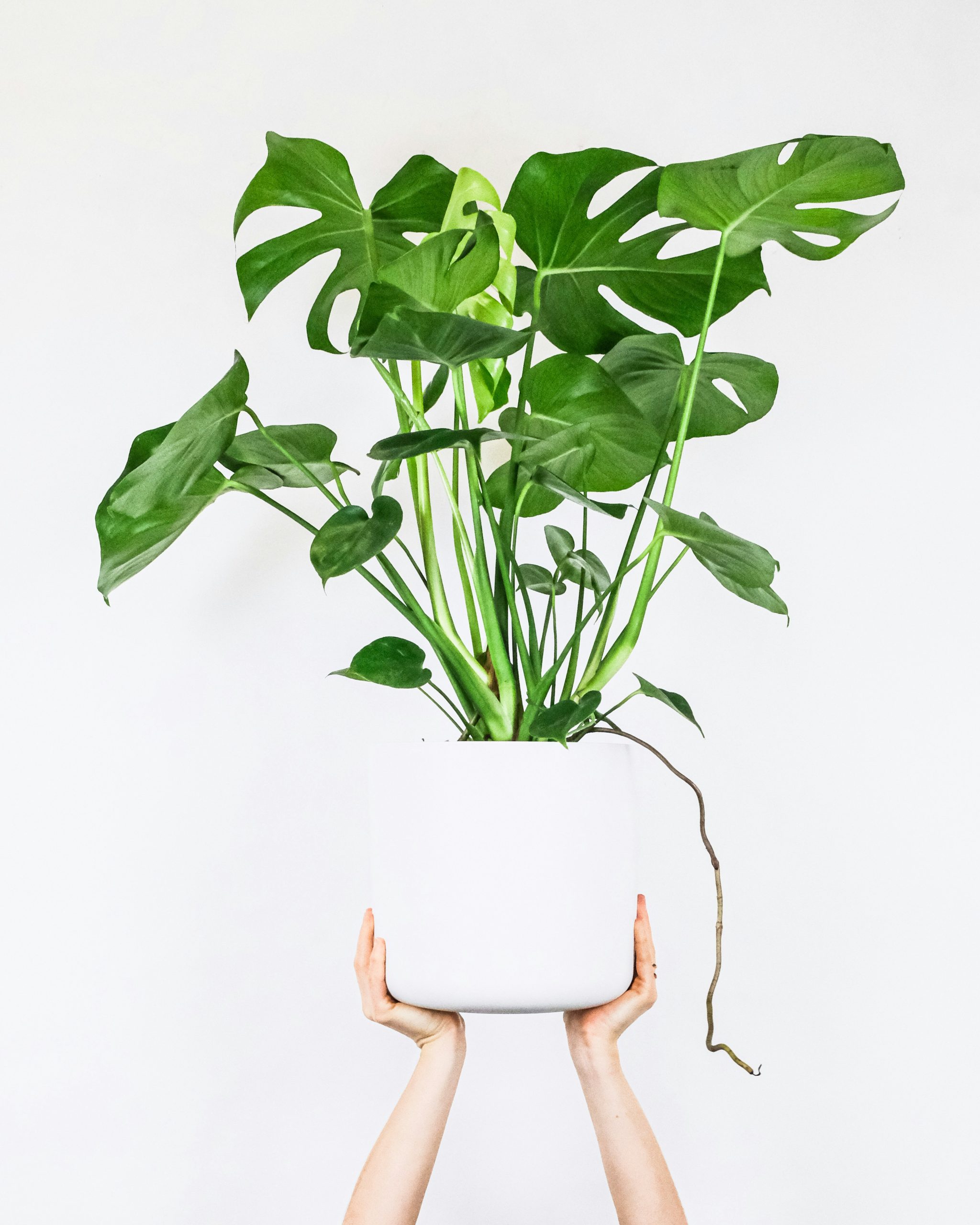
Monstera deliciosa is one of the most recognisable plants on the internet, and for good reason — it grows fast, tolerates a range of conditions, and produces those dramatic split leaves that look like they belong in a greenhouse. Grown indoors in the UK, it tends to be a bit more modest than its jungle relatives, but with the right setup it will still put out a new leaf every few weeks during the growing season.
Light Requirements
Monstera does best in bright, indirect light — the kind you get sitting a few feet back from a south- or east-facing window. Direct afternoon sun will scorch the leaves; too little light and the plant stops fenestrating (producing those characteristic holes and splits) and becomes leggy as it reaches for the window.
A north-facing windowsill in a UK home is rarely enough. If that is all you have, a grow light will make a meaningful difference. Aim for at least four to six hours of good light per day, whether from the sun or a full-spectrum LED.
Soil & Growing Medium
Use a chunky, well-draining mix. A standard houseplant compost cut with 20-30% perlite works well. Some growers add a handful of orchid bark for extra aeration — monsteras are semi-epiphytic in the wild and their roots benefit from airflow around them.
Avoid heavy, peat-dense composts that retain too much moisture. Soggy roots are the single most common cause of a struggling monstera. If your shop-bought mix feels dense and slow-draining, add perlite before potting.
Watering
Water when the top 4-5cm of compost are dry — roughly every one to two weeks in summer, every two to three weeks in winter. Stick your finger in rather than watering on a fixed schedule; the plant will tell you more than a calendar will.
When you water, water thoroughly until it drains from the bottom of the pot, then let it drain fully before replacing on its saucer. Monsteras sitting in standing water will develop root rot quickly. UK tap water is fine — monsteras are not especially fussy about fluoride.
Temperature & Humidity
Monsteras prefer 18-29°C and will slow noticeably below 15°C. Keep them away from cold draughts, radiators, and single-glazed windows in winter. Most UK living rooms fall comfortably within range during the growing season.
Humidity above 50% produces lusher growth and fewer brown leaf edges. A pebble tray, nearby humidifier, or grouping plants together all help. Regular misting provides a short-term surface boost but does not meaningfully raise ambient humidity.
Fertilising
Feed monthly during the growing season (March through October) with a balanced liquid fertiliser diluted to half strength. A feed higher in nitrogen will support the large leaf growth monsteras are known for. Do not feed in winter when growth slows; unused nutrients sit in the soil and cause salt build-up that damages roots.
Grow Light Compatibility
Monsteras respond very well to full-spectrum LED grow lights, making them a solid choice for rooms without adequate natural light. Position the light 30-60cm above the canopy and run it for 10-12 hours per day on a timer. At this level, many growers report faster fenestration compared to low-light window positions.
One caveat: monsteras grow fast under adequate light, so expect to repot and adjust supports more frequently. That is a good problem to have, but worth planning for.
Toxicity
Monstera deliciosa contains calcium oxalate crystals, which cause irritation to the mouth and digestive tract if eaten. This applies to cats, dogs, and humans. The sap can also irritate skin in sensitive individuals. Keep out of reach of pets and small children, and wear gloves when pruning or repotting if you have sensitive skin.
Pruning
Monsteras need only light pruning. Remove yellowed or damaged leaves at the stem with clean scissors or a sharp knife. If the plant is getting too large, cut back individual stems to a leaf node — new growth will emerge from just below the cut. Avoid removing more than a quarter of the plant at once.
Propagating
The easiest propagation method is stem cuttings. Take a cutting that includes at least one node (the bump or aerial root on the stem) and one leaf. Place it in water or moist sphagnum moss and keep it warm above 20°C. Roots appear within two to four weeks in water; pot up once they reach 2-3cm.
Cuttings without a node will not root. This is the most common propagation mistake. Each cutting needs at least one node to produce a new plant.
Indoor Setup Notes
Monsteras are climbers by nature. Give yours a moss pole, coco coir pole, or trellis and it will produce larger, more fenestrated leaves than a plant left to trail. The aerial roots that emerge from the stem are not a sign of distress — encourage them to attach to the support.
In a UK home, a bright living room near a south- or east-facing window is the ideal spot. A corner position a metre or two from the window balances good light with protection from direct afternoon sun.
Potting & Repotting
Repot in spring every one to two years, or when roots emerge from drainage holes or circle the surface of the compost. Go up one pot size only — too large a pot holds excess moisture. Terracotta pots dry out faster than plastic and are a sensible choice if you tend to overwater.
After repotting, the plant may sulk for a week or two while it adjusts. Hold off fertilising for four to six weeks and keep watering conservative until you see new growth.
Common Pests & Problems
- Yellow leaves: Usually overwatering or poor drainage. Check the roots; if brown and mushy, trim and repot into fresh, drier mix.
- Brown leaf tips: Low humidity or inconsistent watering. Raise humidity and review your watering routine.
- No fenestration: Insufficient light. Move closer to a window or add a grow light.
- Leggy, sparse growth: Also insufficient light. New leaves will be smaller and further apart on the stem.
- Spider mites: Fine webbing and stippled leaves. Treat with neem oil or insecticidal soap; improve airflow and humidity to prevent re-infestation.
- Scale: Brown or tan bumps along stems. Wipe off with isopropyl alcohol on a cotton swab, then treat with neem.
FAQ
Why does my monstera have yellow leaves?
Yellow leaves are most often caused by overwatering. Check the soil before adding more water and ensure the pot drains freely. Occasional lower leaf yellowing as older leaves age is normal.
Why are the leaves not splitting?
Fenestration only develops once the plant matures and has sufficient light. Young plants produce solid leaves. If yours is mature but producing uncut leaves, increase the light.
Can I grow monstera in a north-facing room?
It will survive but will not thrive. Growth slows, leaves stay smaller, and fenestration reduces or stops. A full-spectrum grow light is the practical solution here.
How fast does monstera grow?
In good conditions, one to two new leaves per month during the growing season. In winter, growth slows or stops entirely. Do not increase watering or fertilising to compensate.
Does monstera need a moss pole?
Not strictly, but it benefits significantly from one. A supported monstera produces larger, more fenestrated leaves than a trailing plant. A moss pole is one of the better investments for this plant.