| At a Glance | |
| Common Name | Syngonium, Arrowhead Plant, Arrowhead Vine |
| Plant Type | Tropical climbing or trailing vine |
| Light Required | Medium to bright indirect light |
| Soil / Medium | Well-draining houseplant potting mix with perlite |
| Difficulty | Very Easy |
| Mature Size | Trails or climbs to 1.5m+; compact when young |
| Toxicity | Toxic to cats, dogs, and humans if ingested |
| Native Habitat | Tropical Americas (Mexico to Bolivia) |
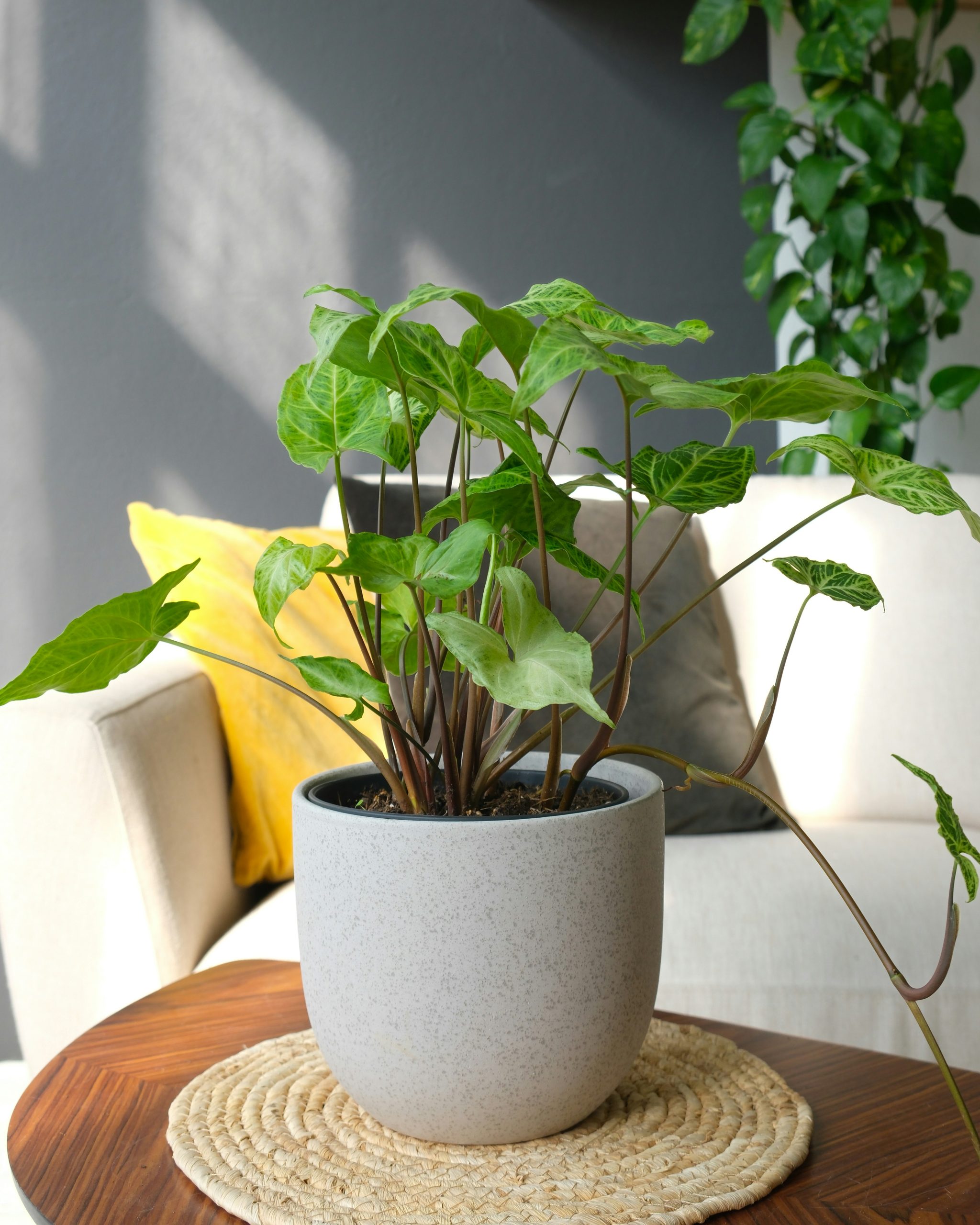
Syngoniums are one of the most versatile and adaptable houseplants available. Young plants form a neat, compact rosette of arrowhead-shaped leaves; as they mature they develop trailing or climbing stems and the leaf shape transforms into a multi-lobed form that looks entirely different from the juvenile foliage. The range of varieties is extensive — from plain green through pink, cream, and variegated forms that have made the genus extremely popular on social media. Care is straightforward, tolerant of occasional neglect, and well-suited to UK homes.
Light Requirements
Syngoniums adapt to a wide range of light conditions. They grow well in medium indirect light and tolerate lower light better than many popular houseplants. In brighter conditions, growth is faster and the colouring of variegated or pink varieties is more vivid. In low light, plain green varieties manage better than variegated ones, which tend to revert toward green without adequate light.
Avoid direct sun, which bleaches and scorches the leaves. An east-facing window or a position a metre back from a south-facing window suits them well. North-facing rooms are workable for the plain green varieties with a modest grow light added.
Soil & Growing Medium
A standard well-draining houseplant potting mix with 20-30% perlite works well. Syngoniums are not particularly demanding about soil composition, provided drainage is adequate. They tolerate a slightly richer mix than succulents and benefit from the nutrients in good-quality houseplant compost.
The plant also grows readily in water — cuttings root easily and can be kept in a vase indefinitely, making it a popular choice for hydroponic or semi-hydroponic setups.
Watering
Water when the top 3-4cm of compost are dry — roughly every one to two weeks in summer, less frequently in winter. Syngoniums are moderately drought-tolerant but perform best with consistent moisture during the growing season. Overwatering causes yellowing leaves and root rot; underwatering causes limp, slightly curled leaves that recover quickly once watered.
They are not sensitive to tap water quality and manage well with standard UK tap water in most areas.
Temperature & Humidity
Syngoniums prefer 16-27°C. They dislike cold draughts and temperatures below 12°C. In a centrally heated UK home, they stay comfortably within range throughout the year.
Higher humidity — above 50% — produces larger, more vigorous leaves and reduces browning at the leaf tips. They manage in the lower humidity of a typical UK living room without severe distress, but a pebble tray or humidifier nearby improves growth noticeably.
Fertilising
Feed monthly from March to September with a balanced liquid fertiliser at half strength. Syngoniums are moderate feeders that respond well to regular feeding during the growing season. Stop feeding in winter. The pink and variegated varieties in particular benefit from consistent feeding to maintain their colour intensity.
Grow Light Compatibility
Syngoniums adapt readily to grow lights and are a practical choice for rooms without adequate natural light. A modest full-spectrum LED at 10-12 hours per day maintains good growth. The pink and variegated varieties need more light to hold their colouring — these benefit from a slightly higher-output grow light than the plain green forms.
Toxicity
Syngoniums contain calcium oxalate crystals and are toxic to cats, dogs, and humans if ingested. Symptoms include oral irritation, drooling, swelling, and vomiting. The sap can also cause skin irritation in sensitive individuals. Keep out of reach of pets and children — the trailing habit of mature plants means the vines can become accessible at floor level.
Pruning
Prune regularly to keep the plant compact and bushy. Cut stems just above a node — new growth emerges below the cut and the plant branches outward. Without pruning, syngoniums become leggy as the vining stems extend. A trim in early spring and again in midsummer keeps the plant dense and attractive.
Pruned cuttings root readily and make excellent propagation material or gifts.
Propagating
Stem cuttings are the standard propagation method. Take a cutting of 10-15cm with at least one node and one or two leaves. Place in water or moist compost — roots develop in water within one to two weeks. Pot up once roots reach 2-3cm.
Syngoniums are among the easiest houseplants to propagate. Multiple cuttings placed into one pot from the start produce a fuller plant than a single cutting growing on alone.
Indoor Setup Notes
Young, compact syngoniums suit desks, shelves, and windowsills. As they mature and begin to vine, they work well trained up a small moss pole or left to trail from a hanging basket. They are versatile enough to suit most indoor spaces with reasonable light.
In a UK home, an east-facing room or a position away from direct south-facing afternoon sun are both well-suited. Bathrooms with good indirect light work particularly well — the humidity benefits the plant and the compact young form fits the space.
Potting & Repotting
Repot every one to two years in spring, or when roots emerge from drainage holes. Go up by one pot size. Syngoniums in slightly snug pots tend to stay more compact than those in oversized containers. Use fresh, well-draining compost at each repotting.
Common Pests & Problems
- Yellow leaves: Overwatering or natural ageing of lower leaves. Check soil moisture before adjusting care.
- Brown leaf tips: Low humidity or inconsistent watering. Improve humidity and review watering frequency.
- Faded variegation or pink colouring: Insufficient light. Move to a brighter position or upgrade the grow light.
- Leggy growth: Insufficient light or not pruned regularly enough. Both issues need addressing together.
- Spider mites: Dry conditions. Treat with insecticidal soap; improve humidity.
- Mealybugs: White cottony deposits in leaf joints. Treat with isopropyl alcohol and neem oil.
FAQ
Why is my syngonium losing its pink colour?
Insufficient light. Pink and variegated syngonium varieties need bright indirect light to maintain their colouring. Move to a brighter position — the colour returns in new growth within a few weeks.
Can syngonium grow in water?
Yes. Cuttings root readily in water and can be kept there indefinitely. Growth is slower than in compost but the plant remains healthy. Change the water weekly to prevent stagnation.
Why are my syngonium leaves changing shape?
This is normal maturation. Young plants have simple arrowhead leaves; older plants produce multi-lobed leaves as part of their natural growth cycle. Both forms are healthy.
How do I keep syngonium bushy?
Prune the growing tips regularly throughout the growing season. Each cut point produces new branches — regular trimming keeps the plant dense rather than trailing and sparse.