| At a Glance | |
| Common Name | English Ivy, Common Ivy |
| Plant Type | Evergreen climbing and trailing vine |
| Light Required | Medium to bright indirect light; tolerates lower light |
| Soil / Medium | Well-draining houseplant potting mix |
| Difficulty | Easy — prefers cool conditions often found in UK homes |
| Mature Size | Trails or climbs to 2m+ indoors |
| Toxicity | Toxic to cats, dogs, and humans if ingested; sap causes skin irritation |
| Native Habitat | Europe and Western Asia — naturalised across the British Isles |
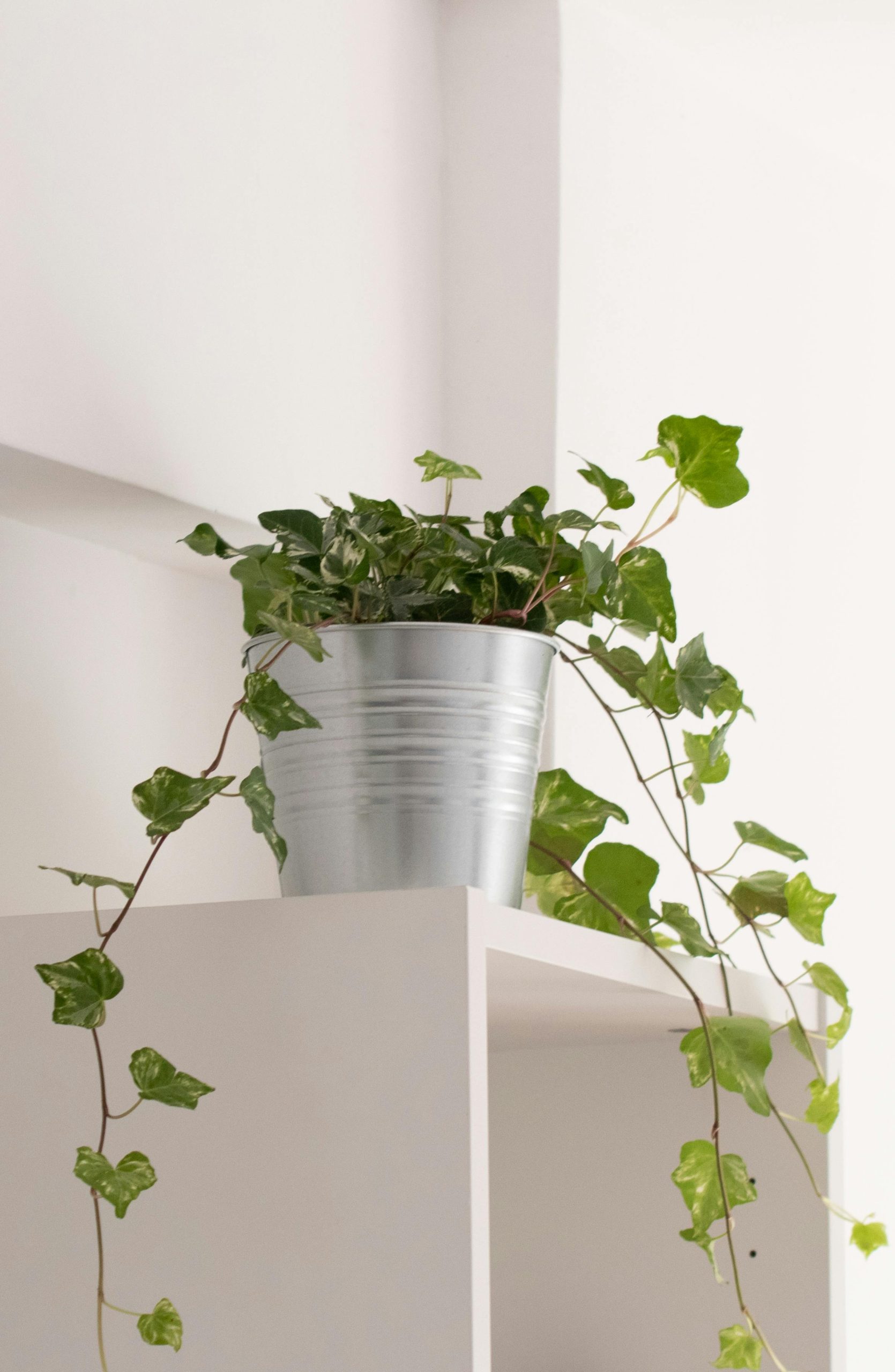
English ivy has the unusual distinction of being a plant entirely native to the UK that also makes an excellent houseplant. It is hardy, adaptable, and — crucially for many UK homes — one of the few trailing plants that actually prefers the cooler temperatures common in British houses, particularly in winter. The classic lobed leaves trail elegantly from hanging baskets or shelves, climb readily up a trellis or moss pole, and come in a range of variegated forms with cream, gold, or silver markings. The main challenge indoors is spider mites, which thrive in the warm, dry conditions of centrally heated rooms.
Light Requirements
English ivy tolerates a wide range of light conditions, from medium indirect light through to bright indirect. Variegated varieties — those with cream or gold markings — need brighter conditions to maintain their colouring; in low light they revert toward plain green. The plain green forms are among the most shade-tolerant trailing plants available and manage in genuinely dim rooms where most other plants would struggle.
Avoid prolonged direct sun, which bleaches and scorches the leaves. Ivy does not need intense light and performs well in the kind of indirect light common in UK rooms away from the windows.
Soil & Growing Medium
A standard well-draining houseplant potting mix works well. Adding 15-20% perlite improves drainage. Ivy is not demanding about soil composition and grows in a wide range of conditions — outdoors in the UK it colonises everything from deep shade to rocky walls, and indoors it is similarly adaptable.
Watering
Water when the top 3-4cm of compost are dry. English ivy prefers consistently slightly moist soil and dislikes both drought and waterlogging. In a cool room in winter, watering once every two to three weeks is usually adequate. In a warm room or under a grow light, check more frequently.
Ivy is more tolerant of occasional underwatering than overwatering. Consistently soggy roots cause root rot and yellowing leaves. In cool rooms — which is where ivy thrives — the soil dries slowly, so check before watering rather than following a fixed schedule.
Temperature & Humidity
This is where English ivy stands apart from most houseplants: it prefers cool conditions. The ideal range is 10-18°C, which means a cool hallway, an unheated spare room, or a position away from radiators suits it better than a warm living room. It tolerates warmth but grows more slowly in heated rooms and becomes more susceptible to spider mites.
Moderate humidity helps, particularly in warm rooms. A pebble tray or occasional misting reduces spider mite pressure in centrally heated environments. Cool rooms are naturally better at retaining humidity than warm ones, so a cooler position addresses both temperature and humidity at once.
Fertilising
Feed monthly from March to September with a balanced liquid fertiliser at half strength. Ivy is not a heavy feeder — in its natural outdoor habitat it grows in nutrient-poor soils and does not need rich feeding to perform well. Stop feeding in winter. Over-fertilising produces soft, sappy growth that is more susceptible to pests.
Grow Light Compatibility
English ivy adapts to grow lights and is a practical choice for darker rooms. The variegated varieties in particular need adequate light to maintain their colouring — a full-spectrum LED at 10-12 hours per day sustains good growth. The plant does not require high intensity and will manage under modest grow light conditions that other plants find insufficient.
Toxicity
English ivy is toxic to cats, dogs, and humans. Ingestion causes drooling, vomiting, diarrhoea, and in larger quantities more severe symptoms. The sap and leaves also cause contact dermatitis in sensitive individuals — wear gloves when handling or pruning. Despite being so common in UK gardens, it is worth treating with the same caution as other toxic houseplants.
Pruning
Prune regularly to keep the plant bushy and prevent it from becoming a single long trailing strand. Cut stems back to just above a node — new growth emerges below the cut and the plant fills out. A good trim in spring sets the plant up for a dense growing season. Remove any all-green stems on variegated varieties promptly, as they grow more vigorously than the variegated stems and will eventually dominate if left unchecked.
Propagating
English ivy is one of the easiest plants to propagate. Take stem cuttings of 10-15cm with two or three leaves and at least one node. Place in water or moist compost — roots develop within one to two weeks in water. The plant’s natural willingness to root is why it naturalises so readily outdoors.
Multiple cuttings in one pot from the start produce a dense, full plant far more quickly than a single cutting. This is also the best way to refresh an old, leggy plant.
Indoor Setup Notes
Cool hallways, stairwells, and north-facing rooms suit English ivy better than most houseplants. It is one of the few plants that actually improves in the cooler, dimmer conditions common in UK period homes. Hanging baskets and high shelves work well for trailing; a trellis or frame allows it to climb.
Variegated varieties in bright indirect light are a strong choice for mantlepieces and shelves where their patterned foliage can be appreciated. The classic plain green form in a cool hallway is a reliably easy long-term plant that asks very little.
Potting & Repotting
Repot every one to two years in spring, or when root-bound. Go up by one pot size. Ivy in slightly snug pots grows more densely than in oversized containers. Use fresh, well-draining compost at each repotting.
Common Pests & Problems
- Spider mites: The most common problem, especially in warm dry rooms. Treat with insecticidal soap; improve humidity and reduce temperature. Regular misting of foliage is the best preventive measure.
- Yellow leaves: Overwatering or natural ageing of lower leaves. Check soil moisture.
- Leggy growth: Insufficient light or not pruned frequently enough. Both issues need addressing.
- All-green growth on variegated varieties: Normal reversion — remove promptly before it dominates the plant.
- Root rot: Caused by overwatering. Remove affected roots, repot in fresh compost, reduce watering.
- Scale insects: Brown bumps on stems. Treat with isopropyl alcohol and neem oil.
FAQ
Why does my indoor ivy keep getting spider mites?
Because the room is too warm and dry. Spider mites thrive in exactly the conditions of a centrally heated UK home. Move the plant to a cooler position, increase humidity, and mist the foliage regularly. Consistent misting is the most effective preventive measure.
Can English ivy grow in a north-facing room?
Yes — better than most houseplants. Plain green varieties are among the most shade-tolerant trailing plants available and manage well in north-facing rooms. Variegated varieties need slightly more light to hold their colouring.
Is it true ivy cleans the air?
Studies suggest ivy removes some airborne toxins, but the practical effect in a home with normal air exchange is minimal. It is a useful plant, but air purification alone is not a strong enough reason to choose it over other considerations.
Can I bring outdoor ivy inside?
Yes, though outdoor ivy brought indoors will need a period of adjustment and is often carrying pests from the garden. Inspect carefully for spider mites, scale, and vine weevil before bringing inside. Pot into fresh compost rather than using garden soil.