| At a Glance | |
| Common Name | Bird of Paradise, Crane Flower |
| Plant Type | Tropical perennial |
| Light Required | Bright direct or bright indirect light; maximum light indoors |
| Soil / Medium | Rich, well-draining potting mix |
| Difficulty | Easy in terms of survival; challenging to flower indoors |
| Mature Size | 1–2m tall indoors |
| Toxicity | Mildly toxic to cats and dogs; mildly toxic to humans if ingested in quantity |
| Native Habitat | South Africa |
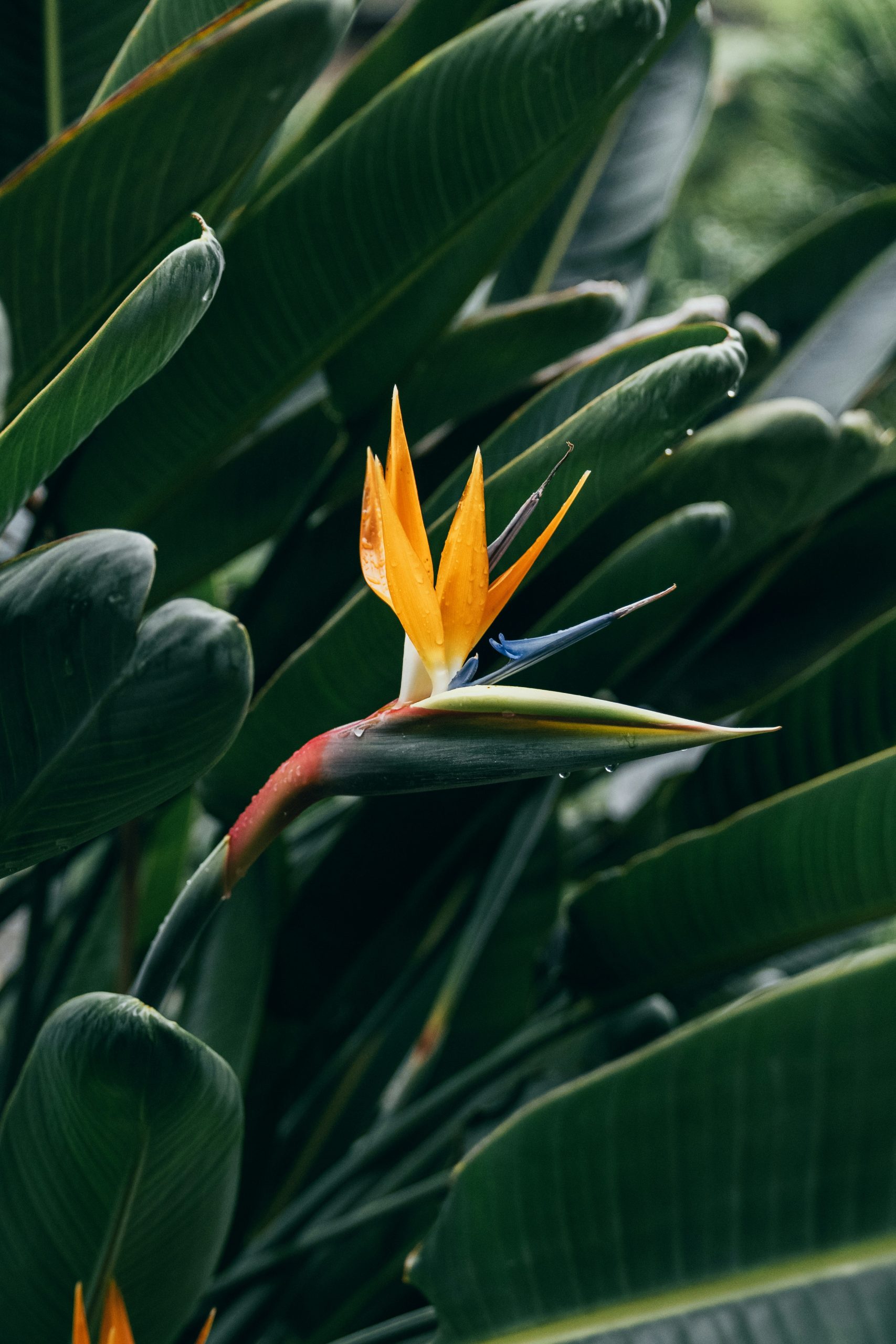
The bird of paradise is one of the most sought-after statement plants for UK interiors, and the appeal is obvious: the large, paddle-shaped leaves on long arching stems have a bold, tropical quality that creates a genuine sense of scale in a room. The honest caveat is that flowering indoors in the UK is rare without near-ideal conditions — most people grow it as a foliage plant and appreciate it for that. For the leaves alone, it delivers. For anyone expecting the iconic orange and blue flowers, the expectations need calibrating.
Light Requirements
Bird of paradise is one of the most light-hungry houseplants commonly sold in the UK. It needs as much light as you can give it indoors — ideally, several hours of direct sun per day combined with bright indirect light for the rest. A south-facing window is the best position in most UK homes. East- or west-facing windows work but produce slower growth.
Insufficient light is the most common reason bird of paradise fails to thrive indoors. In a dim room, the leaves become pale, growth slows to almost nothing, and the plant gradually declines. If your best window is still not bright enough, a high-output grow light is the practical solution.
Soil & Growing Medium
Use a rich, well-draining potting mix. A standard houseplant compost with 20-30% perlite works well. Bird of paradise has thick, fleshy roots that need good drainage but also benefit from a nutrient-rich medium — unlike succulents, it appreciates a fertile mix.
Avoid composts that compact over time and reduce drainage. Replenish with fresh compost at each repotting to maintain fertility.
Watering
Water thoroughly when the top 4-5cm of compost are dry — roughly every one to two weeks in summer, every two to three weeks in winter. Bird of paradise tolerates brief periods of drought better than prolonged overwatering; the thick roots store some moisture, but they rot in consistently soggy conditions.
In summer, particularly in a sunny south-facing position, the plant may need more frequent watering than other tropicals in the same room. Monitor the soil and adjust to the conditions rather than following a fixed schedule.
Temperature & Humidity
Strelitzia prefers 18-30°C and tolerates a wide range. It can handle temperatures down to around 5°C without frost damage, making it one of the more cold-tolerant tropicals commonly kept indoors. In mild UK regions, it can even spend summer outdoors in a sheltered, sunny position.
Humidity is not a major concern. Bird of paradise is from South Africa rather than humid tropical forest and manages well in the ambient conditions of a UK home. Wipe the large leaves occasionally to remove dust and help photosynthesis.
Fertilising
Feed monthly from March to September with a balanced liquid fertiliser at full strength. Bird of paradise is a vigorous grower when conditions are right and benefits from regular feeding during the growing season. A feed higher in potassium supports root development and, where conditions allow, flowering. Reduce to every six to eight weeks in autumn and stop altogether in winter.
Grow Light Compatibility
Bird of paradise is a strong candidate for high-output grow light use in rooms without a south-facing window. Because it needs high light intensity, a capable LED is required — not a modest unit. Position the light 20-30cm above the canopy and run for 12-14 hours per day. Under a good grow light, growth rate improves noticeably compared to a low-light position.
Toxicity
Bird of paradise is mildly toxic to cats and dogs — ingestion can cause nausea, drowsiness, and vomiting. The seeds and flowers are more toxic than the leaves, though indoor plants rarely flower. Mild toxicity to humans if eaten in significant quantity. Keep away from persistent nibblers, but the risk is not at the level of peace lily or pothos.
Pruning
Remove individual leaves at the base when they yellow, brown, or become damaged. Bird of paradise leaves split naturally along the veins over time — this is a normal adaptive trait (the splits allow wind to pass through rather than damaging the whole leaf) and is not a sign of disease or damage. Do not remove leaves solely because they have developed splits.
Propagating
Bird of paradise is propagated by division at repotting time. Use a sharp knife to separate the root clump into sections, each with at least two to three stems and a healthy root system. Pot each section individually, water sparingly for the first two weeks, and keep in bright light.
Division is best done in spring. Plants divided in autumn or winter take much longer to re-establish and are more susceptible to decline. Each divided section will take one to two years to recover its full vigour.
Indoor Setup Notes
Bird of paradise suits large, bright rooms — open-plan living areas, conservatories, and rooms with full-height windows are ideal. The scale of the plant works best where there is ceiling height to accommodate it and space to appreciate its spread.
A south-facing conservatory or a sunroom is genuinely the best indoor position in the UK. Standard living rooms with a south-facing window are the next best option. The plant is often sold at a size that looks manageable, but it grows. Plan for a specimen that will eventually reach 1.5-2m and require a substantial pot.
Potting & Repotting
Bird of paradise prefers to be slightly root-bound — plants in snug pots are more likely to flower than those in oversized containers. Repot every two to three years or when roots are clearly pushing out of the drainage holes. Go up by one pot size only.
Use a heavy pot — terracotta or ceramic — to counterbalance the top-heavy growth. Plastic pots tip over as the plant grows. After repotting, hold off fertilising for six weeks while the plant re-establishes.
Common Pests & Problems
- Split leaves: Normal and adaptive. Not a sign of disease or poor care.
- Yellow leaves: Overwatering, root rot, or natural ageing of older leaves. Check soil and root condition.
- Brown leaf edges: Low humidity (less common in this species), underwatering, or cold damage. Check conditions.
- No growth: Insufficient light is the primary cause in UK homes. Move to a brighter position or add a high-output grow light.
- Scale insects: Brown bumps on stems and leaf undersides. Treat with isopropyl alcohol and neem oil.
- Spider mites: Dry conditions in winter. Improve humidity and treat with insecticidal soap.
FAQ
Will my bird of paradise flower indoors in the UK?
Rarely. Flowering requires a mature plant, maximum direct sunlight, and a cool winter rest — conditions most UK homes cannot consistently provide. Treat it as a foliage plant and any flowers that appear are a welcome surprise.
Why are my bird of paradise leaves splitting?
Splitting along the veins is completely normal. The leaf is designed to split in the wind to reduce damage. It is not a sign of disease, low humidity, or any deficiency.
How fast does bird of paradise grow?
In bright light and with regular feeding, it produces two to three new leaves per growing season. In lower light, growth is slower. It is not a fast grower by tropical houseplant standards.
Can bird of paradise go outside in summer?
Yes — in a sheltered, sunny position outdoors from June to September it will grow more vigorously than indoors. Bring it back inside before temperatures drop below 10°C in autumn.