| At a Glance | |
| Common Name | Geranium (Pelargonium) |
| Plant Type | Tender perennial |
| Light Required | Bright to direct light |
| Soil / Medium | Well-draining houseplant compost |
| Difficulty | Easy |
| Mature Size | 30–60cm |
| Toxicity | Mildly toxic to cats and dogs |
| Native Habitat | South Africa |
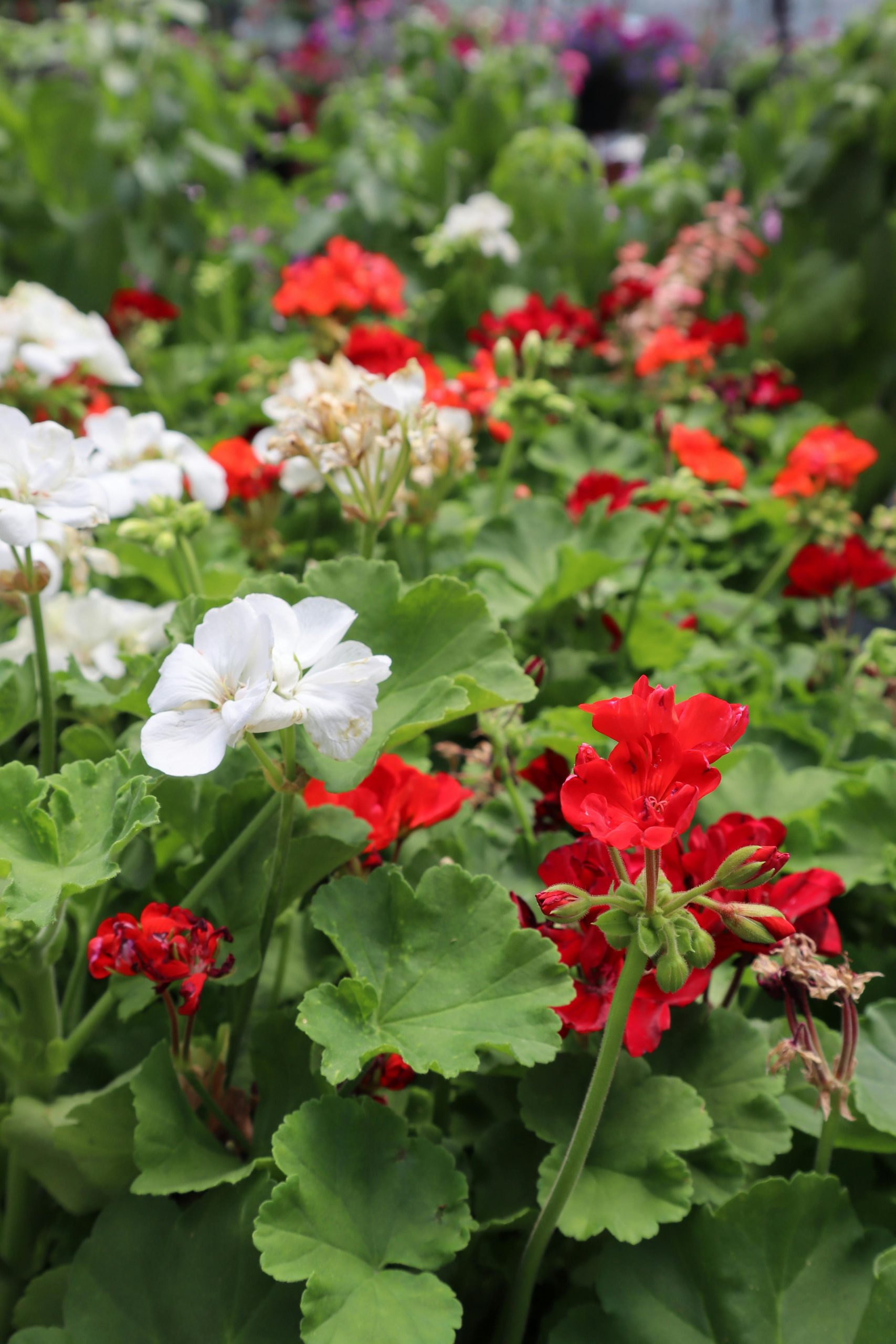
The plants sold as geraniums in UK garden centres are almost always pelargoniums — true geraniums are a different plant. Pelargoniums are South African in origin and are among the most reliably flowering houseplants available. They produce long seasons of colour, are easy to propagate, and tolerate some neglect, though they do best with plenty of light and controlled watering.
Light Requirements
Pelargoniums need as much light as possible — a south-facing windowsill is ideal. In lower light they become leggy and flower poorly. They are one of the few houseplants that genuinely benefit from some direct sun, and a bright east or west-facing window is the minimum for consistent flowering.
In summer they perform very well outside on a patio or balcony.
Soil & Growing Medium
Well-draining houseplant compost or a mix of standard compost with added perlite or grit. Pelargoniums are sensitive to overwatering and need good drainage. They also tolerate slightly poorer, lower-fertility soil better than many houseplants.
Watering
Allow the soil to dry out between waterings — more than you might expect. Pelargoniums are native to dry conditions and tolerate drought far better than waterlogged soil. In summer, water when the top third of the soil is dry. In winter, cut back to watering every two to three weeks.
Avoid wetting the leaves and flowers when watering — this encourages botrytis (grey mould).
Temperature & Humidity
Pelargoniums prefer 10-21°C. They tolerate cooler temperatures in winter when kept drier, down to around 5°C, which makes them practical for cool windowsills and conservatories. They are not frost-hardy.
Low humidity is fine — they handle dry air well and do not need misting.
Fertilising
Feed every two weeks during the growing season with a high-potash liquid fertiliser (tomato feed works well). High-potash encourages flowering over leafy growth. Reduce feeding in autumn and stop in winter.
Grow Light Compatibility
Pelargoniums benefit from grow lights during the short UK winter days to maintain flowering. A bright full-spectrum LED on a 14-hour cycle can keep them flowering year-round.
Toxicity
Pelargoniums are mildly toxic to cats and dogs. Ingestion causes mild gastrointestinal upset and, in cats, mild lethargy. Keep out of reach.
Pruning
Pinch back growing tips regularly to encourage bushy, compact growth. Cut back by one third to half in autumn when bringing inside, and remove dead and damaged growth. Plants pruned hard in autumn come back more vigorously in spring.
Propagating
Pelargoniums are among the easiest plants to propagate from stem cuttings. Take 10cm cuttings in late summer, allow the cut end to callous for a few hours, and insert into free-draining compost. Roots develop in two to three weeks at room temperature, without the need for a propagator.
Indoor Setup Notes
Pelargoniums are at their best on bright sunny windowsills from spring to autumn. The scented varieties (with fragrant leaves) are worth seeking out for indoor use — they release fragrance when brushed and some smell of rose, citrus, or peppermint. The classic zonal pelargoniums are the most commonly available.
Potting & Repotting
Repot in spring when the plant has outgrown its pot. Pelargoniums do not need large pots — slightly snug conditions encourage more flowering. Use well-draining compost.
Common Pests & Problems
- Botrytis (grey mould): Fuzzy grey growth on leaves and stems, usually in cool, damp conditions with poor air circulation. Remove affected growth and improve ventilation.
- Leggy growth: Insufficient light. Move to a brighter spot and pinch back tips.
- Whitefly: Common. Treat with yellow sticky traps and insecticidal soap.
- Vine weevil: Notched leaf margins and sudden wilting. Check roots for white grubs.
FAQ
Are pelargoniums and geraniums the same thing?
Botanically, no. True geraniums are hardy perennials. Pelargoniums are the tender South African plants sold as geraniums in the UK. Commercially the name geranium has stuck, but the plants are different genera.
How do I overwinter my geraniums?
Bring inside before the first frost. Cut back by one third, reduce watering to once every two to three weeks, and keep in a cool bright spot at around 7-10°C. Resume normal care in March.
Why are my geranium leaves going yellow?
Overwatering is the most common cause. Allow the soil to dry out more between waterings. Nutrient deficiency or very low light are other possibilities.
How do I get more flowers?
Maximum light, high-potash feed, and regular deadheading. Remove spent flower heads completely to prevent the plant putting energy into seed production.