| At a Glance | |
| Common Name | Echeveria |
| Plant Type | Succulent rosette |
| Light Required | Bright to direct light |
| Soil / Medium | Cactus and succulent mix with perlite |
| Difficulty | Easy |
| Mature Size | 5–30cm depending on variety |
| Toxicity | Non-toxic to cats, dogs, and humans |
| Native Habitat | Mexico and Central America |
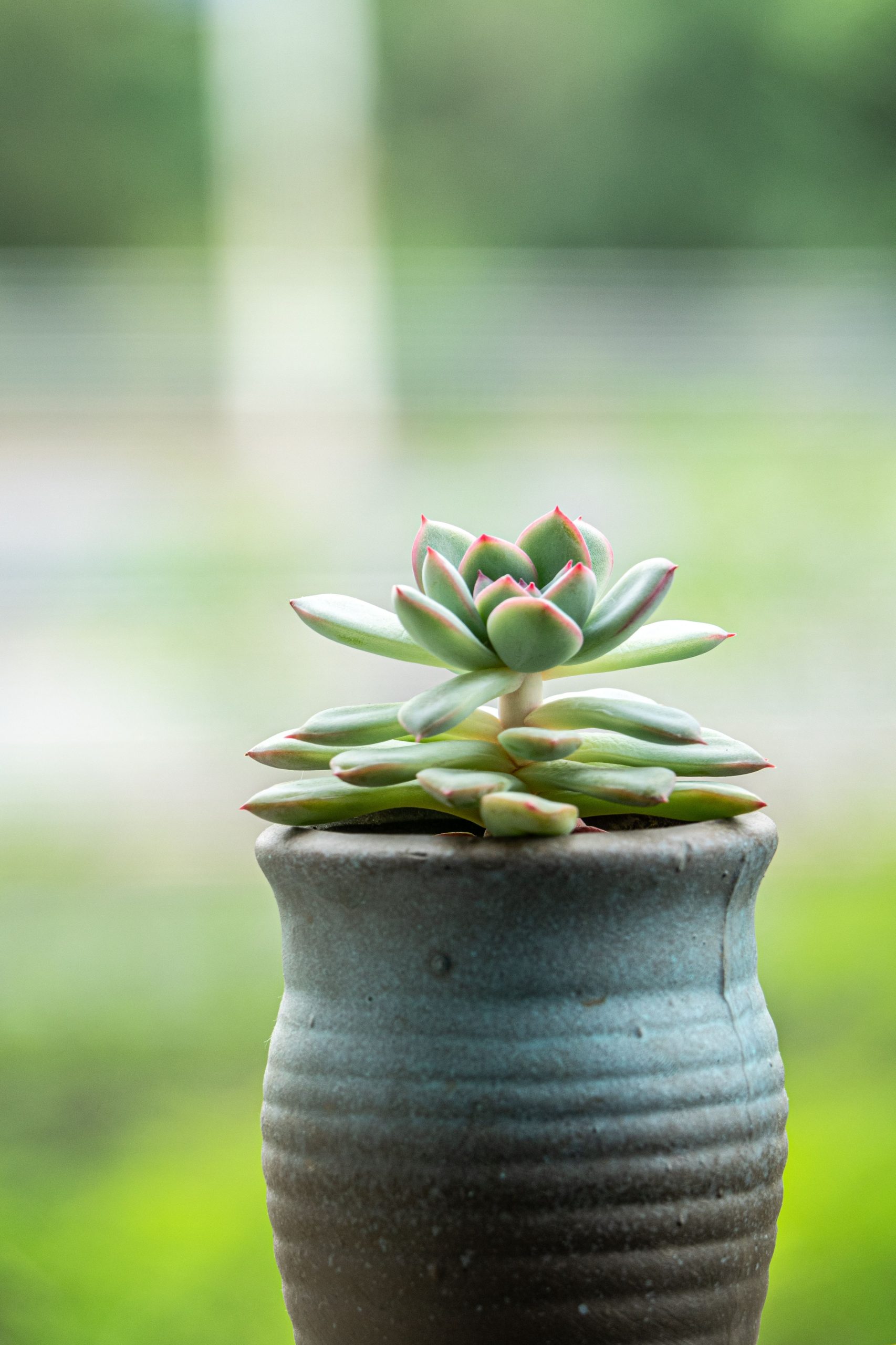
Echeveria is a large genus of rosette-forming succulents from Mexico and Central America, and probably the most recognisable group of succulents in the UK houseplant market. They are genuinely easy to keep alive — the main thing that kills them is overwatering — but getting them to look their best requires more light than most indoor spaces provide.
Light Requirements
Echeverias need bright light to maintain their tight rosette form and vivid colouring. A south or east-facing windowsill is ideal. In lower light they etiolate rapidly — the rosette stretches upward and outward, becoming loose and pale. In a UK winter with limited daylight, a grow light is often necessary to keep echeverias looking presentable.
Soil & Growing Medium
Fast-draining cactus and succulent mix is essential. Add 30-50% perlite or coarse grit for extra drainage. Echeverias will rot quickly in dense, moisture-retentive compost. Terracotta pots are preferable — they wick away excess moisture from the soil.
Watering
Water thoroughly, then let the soil dry out completely before watering again. In summer every ten to fourteen days. In winter, once a month or even less. Avoid getting water into the rosette itself — trapped moisture in the centre leads to rot.
Temperature & Humidity
Echeverias prefer 18-26°C but tolerate down to around 5°C if kept dry. The combination of cold and wet is what kills them. Humidity is not a concern — echeverias handle the low humidity of heated homes without any issues.
Fertilising
Feed once or twice during the growing season with a diluted cactus fertiliser or a low-nitrogen fertiliser. Too much nitrogen produces soft, weak growth that loses the compact rosette form.
Grow Light Compatibility
Grow lights are strongly recommended for winter in the UK. Echeverias need high light intensity — full-spectrum LEDs run on a 12-14 hour cycle placed 15-30cm above the plant. This is one of the plants that genuinely repays the investment in supplemental lighting.
Toxicity
Echeverias are non-toxic to cats, dogs, and humans.
Pruning
Remove dead or dried lower leaves as they appear — pull them downward cleanly rather than cutting.
Propagating
Echeverias propagate readily from leaf cuttings and offsets. For leaf cuttings, remove a healthy leaf cleanly, lay it on the surface of dry cactus mix, and leave in bright indirect light. A tiny rosette develops over four to eight weeks. Do not water until the rosette is established. Offsets can be separated and potted once they are roughly a third of the parent plant’s size.
Indoor Setup Notes
Echeverias are best placed on the sunniest windowsill available. In bright conditions they stay compact and often develop colour stress — a reddish tinge at the leaf tips — which is a sign of healthy light exposure, not distress.
Potting & Repotting
Repot every one to two years in spring. A snug pot in fast-draining mix is better than a large pot that stays damp. Terracotta is preferable to plastic.
Common Pests & Problems
- Etiolation (stretching): The most common issue — insufficient light. Stretched growth cannot be reversed.
- Root rot: Overwatering or poor drainage. Remove affected roots, dry out for a few days, repot in dry cactus mix.
- Mealybugs: White cottony deposits in leaf axils. Treat with 70% isopropyl alcohol on a cotton bud.
FAQ
Why is my echeveria stretching and going leggy?
Not enough light. Echeverias will etiolate quickly indoors. Move to a brighter spot or add a grow light.
Can I propagate from a single leaf?
Yes, and it works well. Remove a leaf cleanly from the stem, lay it on dry cactus mix, and wait. A tiny rosette will grow from the base over several weeks.
Why did my echeveria go red or purple?
Stress colouration from high light or temperature fluctuations. It is not harmful — many growers deliberately stress their echeverias to enhance the colours.
How often should I water in winter?
Once a month at most. In winter the plant is dormant and barely uses water. Overwatering in winter is the most common cause of death.