| At a Glance | |
| Common Name | Norfolk Island Pine |
| Plant Type | Tropical conifer |
| Light Required | Bright indirect light |
| Soil / Medium | Well-draining, slightly acidic compost |
| Difficulty | Intermediate |
| Mature Size | 1–2m indoors |
| Toxicity | Mildly toxic to cats and dogs |
| Native Habitat | Norfolk Island, South Pacific |
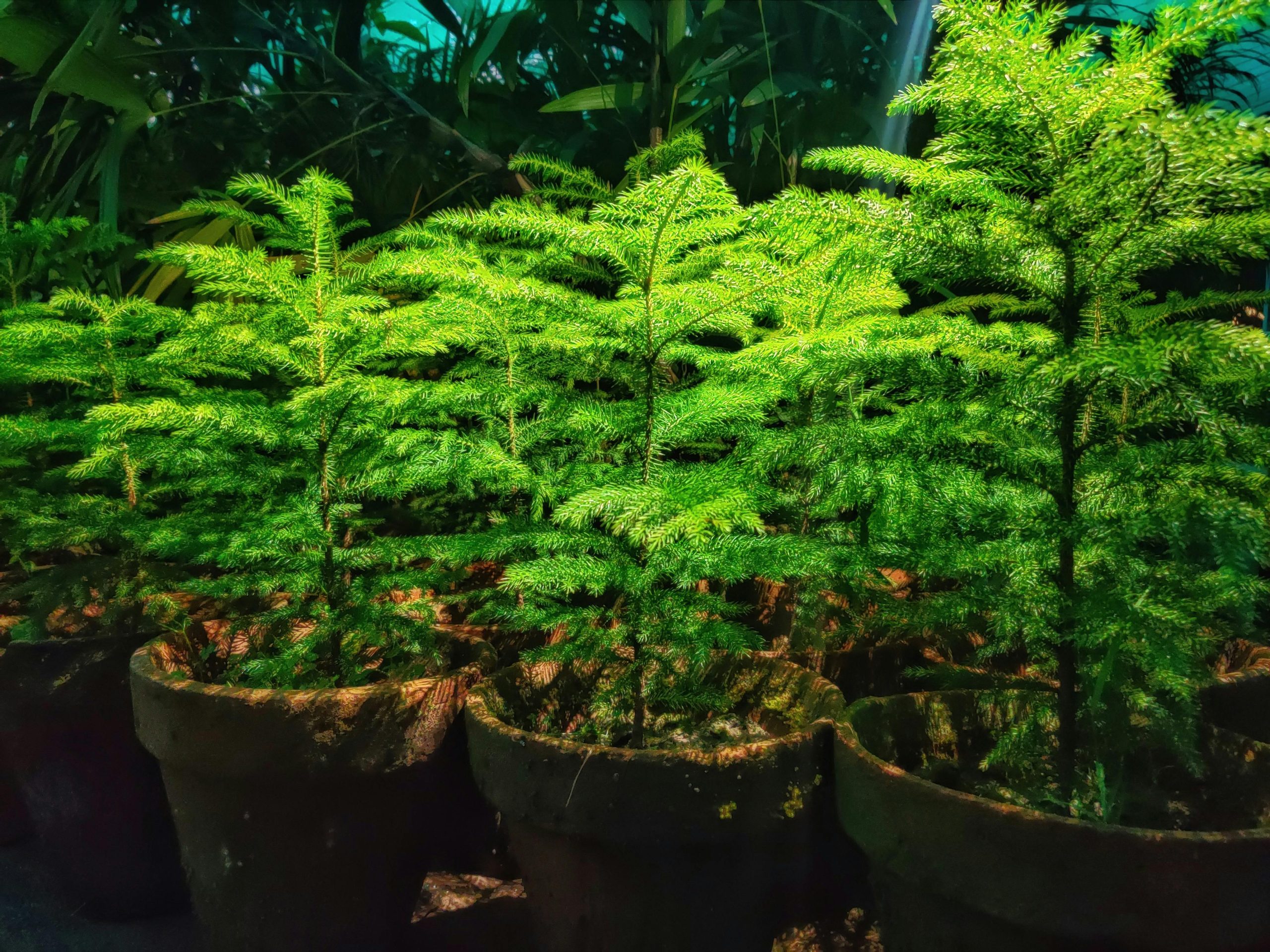
Norfolk Island pine is not a true pine — it is a prehistoric conifer from a small island in the South Pacific, more closely related to monkey puzzle trees than to the pines in British gardens. Indoors it grows as a symmetrical, tiered tree with soft needles, making it a popular choice as a living Christmas tree and an interesting year-round houseplant. It is more demanding than it looks, particularly regarding humidity and light.
Light Requirements
Norfolk Island pine needs bright indirect light to maintain its symmetrical, well-spaced growth. In lower light, the tiers become irregular, the needles thin out, and lower branches drop. A spot near a bright window, with regular rotation to ensure even growth, is ideal.
Avoid direct midday sun in summer, which can scorch the needles, but some direct morning sun is beneficial.
Soil & Growing Medium
Well-draining, slightly acidic compost. A mix of standard houseplant compost with added perlite works well. Avoid very alkaline soils, which cause yellowing. Good drainage is important — the plant dislikes waterlogged roots.
Watering
Keep the soil consistently moist during the growing season but not waterlogged. Allow the top 2-3cm to dry out before watering again. In winter, reduce watering — the plant uses less water but should not dry out completely.
Use room-temperature, preferably soft water. Fluoride in tap water can cause brown needle tips.
Temperature & Humidity
Norfolk Island pine prefers cool to moderate temperatures: 16-24°C ideally, but it tolerates down to about 7°C. It does not like high heat (above 24°C) combined with dry air — this is the most common cause of branch drop in heated UK homes.
Humidity is the most important environmental factor. It prefers 50%+ humidity and struggles in the dry air of centrally heated rooms. Misting, a pebble tray, or a humidifier nearby all help. This is not a plant that thrives near a radiator.
Fertilising
Feed once a month during the growing season with a balanced liquid fertiliser at half strength. Do not feed in winter. Overfeeding causes uneven growth.
Grow Light Compatibility
Norfolk Island pine responds to supplemental lighting in winter. A full-spectrum LED on a 12-hour cycle helps maintain the compact, even growth habit. Rotate the plant regularly, even under grow lights, to ensure even development.
Toxicity
Norfolk Island pine is mildly toxic to cats and dogs. Ingestion causes vomiting and lethargy. Keep out of reach.
Pruning
Do not prune the main leader (central growing tip) — this will permanently alter the tree’s shape. Dead lower branches can be removed cleanly. The plant cannot regenerate branches from bare stems, so any removed branches are gone permanently.
Propagating
Propagation at home is difficult. Norfolk Island pines are typically grown from seed or stem tip cuttings taken from the main leader, but these are challenging and slow. Most gardeners buy new plants rather than propagate.
Indoor Setup Notes
Norfolk Island pine suits large, bright rooms and makes an attractive statement plant. Rotate it a quarter turn every two to four weeks to prevent it leaning toward the light source, which creates uneven growth. It is genuinely useful as a living Christmas tree — it tolerates the low humidity of heated homes better than most real conifers, though still not well.
Potting & Repotting
Repot every two to three years in spring, going up one pot size. The plant grows slowly and does not need frequent repotting.
Common Pests & Problems
- Branch drop: The most dramatic problem — entire lower branches turn brown and fall. Usually caused by very dry air combined with heat, or overwatering. Increase humidity and check watering.
- Brown needle tips: Low humidity, fluoride in tap water, or physical damage. Switch to rainwater.
- Mealybugs: Treat with neem oil or isopropyl alcohol.
- Scale insects: Brown bumps on stems and branches. Scrape off and treat with neem oil.
FAQ
Why is my Norfolk Island pine dropping branches?
The most common cause is very dry air from central heating combined with warm temperatures. Increase humidity around the plant, move it away from radiators, and check watering — both over and underwatering can trigger branch drop.
Can I use Norfolk Island pine as a Christmas tree?
Yes, and it is a popular choice. Decorate lightly — heavy ornaments damage the soft branches. Return it to a bright spot after the festive period and increase humidity to help it recover from the dry conditions.
How tall will it grow indoors?
Slowly — typically 15-30cm per year. Most indoor specimens reach 1-2 metres over many years.
Why are the needles going brown?
Usually dry air and/or fluoride in tap water. Switch to rainwater and increase humidity. Some browning of very old lower needles is normal.