| At a Glance | |
| Common Name | Kentia Palm, Thatch Palm |
| Plant Type | Tropical palm |
| Light Required | Bright indirect to moderate light |
| Soil / Medium | Well-draining, moisture-retentive compost |
| Difficulty | Easy to Intermediate |
| Mature Size | 2–3m indoors |
| Toxicity | Non-toxic to cats, dogs, and humans |
| Native Habitat | Lord Howe Island, Australia |
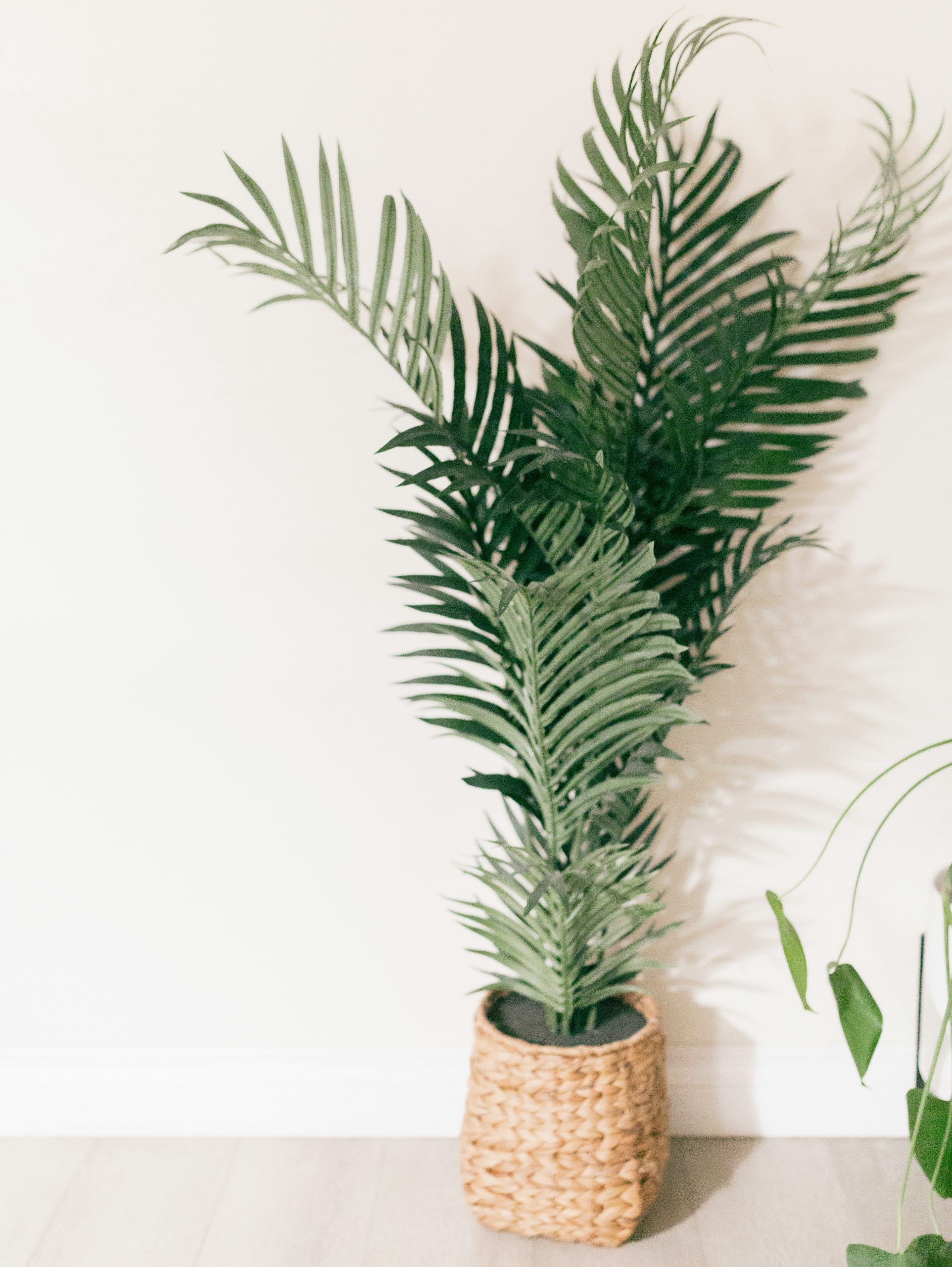
The kentia palm is a slow-growing palm from Lord Howe Island, off the east coast of Australia, and one of the best large houseplants for UK homes. It tolerates lower light and cooler temperatures better than most palms, handles dry air reasonably well, and has an elegant, arching form that suits tall spaces. The main drawback is cost — established specimens are expensive — and slow growth means you will be waiting years for a small plant to fill a room.
Light Requirements
Bright indirect light is ideal, but kentia palms genuinely cope with lower light conditions that would trouble most large houseplants. They will grow in a north-facing room, though growth will be minimal. Avoid direct midday sun through south-facing glass in summer, which can scorch the fronds.
In consistently low light, the plant remains alive but does not grow. If you want a kentia palm to develop, give it as much bright indirect light as possible.
Soil & Growing Medium
Well-draining but moisture-retentive compost. Unlike desert palms, kentia palms prefer consistent moisture at the roots. A mix of standard potting compost with added perlite or horticultural sand works well.
Watering
Water when the top 2-3cm of soil feels dry. In winter, ease off and allow the soil to dry out a bit more between waterings. Brown leaf tips can indicate either underwatering or fluoride/salt build-up — try switching to rainwater and flushing the soil occasionally.
Temperature & Humidity
Kentia palms prefer 16-24°C and are more cold-tolerant than most palms, managing down to about 10°C. They are a practical choice for cool conservatories and hallways.
They prefer moderate humidity and benefit from being away from radiators in winter. Occasional misting or a pebble tray helps.
Fertilising
Feed once a month during the growing season with a balanced liquid fertiliser or a specialist palm fertiliser. Palms are sensitive to fluoride and chlorine in tap water — use rainwater where possible.
Grow Light Compatibility
Kentia palms can be maintained under grow lights in low-light spaces. A full-spectrum LED on a 10-12 hour cycle is sufficient for maintenance. Growth under grow lights is slow but the plant remains healthy.
Toxicity
Kentia palms are non-toxic to cats, dogs, and humans.
Pruning
Remove dead or fully brown fronds at the base. Do not cut off fronds that are only partially brown — they are still photosynthesising. Only remove fronds that are completely dead and dry.
Propagating
Kentia palms are grown from seed commercially and are not practically propagated at home. Seeds are slow to germinate and the plants grow very slowly for the first several years.
Indoor Setup Notes
Kentia palms are one of the most useful large-scale houseplants for UK interiors — they handle the conditions that finish most tropical trees, including moderate cold, moderate shade, and dry air. They suit hallways, corners of large rooms, and conservatories.
Potting & Repotting
Kentia palms dislike root disturbance and should be repotted infrequently — every three to four years. Go up one pot size only. Disturbing the roots excessively causes the plant to drop lower fronds. Spring is the best time.
Common Pests & Problems
- Brown leaf tips: Dry air, fluoride in tap water, or underwatering. Switch to rainwater and move away from radiators.
- Yellow lower fronds: Natural shedding of lower leaves as the plant matures, or overwatering.
- Spider mites: Fine webbing and speckling on fronds. Treat with neem oil and increase humidity.
FAQ
Why are the tips of my kentia palm going brown?
Brown tips are very common in UK homes and usually caused by dry air from central heating or fluoride in tap water. Switch to rainwater, move away from radiators, and trim the brown tips with scissors at an angle.
How fast does a kentia palm grow?
Slowly — typically 10-15cm per year in good conditions, less in lower light. This is one reason established specimens are expensive.
Is kentia palm the same as parlour palm?
No — they look similar but are different species. Kentia palm (Howea forsteriana) grows larger and is more cold-tolerant. Parlour palm (Chamaedorea elegans) stays smaller and tolerates lower light.