| At a Glance | |
| Common Name | String of Pearls, String of Beads |
| Plant Type | Trailing succulent |
| Light Required | Bright direct or bright indirect light; 6+ hours per day |
| Soil / Medium | Fast-draining cactus and succulent compost |
| Difficulty | Intermediate — unforgiving of overwatering |
| Mature Size | Trails to 60–90cm in good conditions |
| Toxicity | Toxic to cats, dogs, and humans if ingested |
| Native Habitat | South Africa (Western Cape and Namaqualand) |
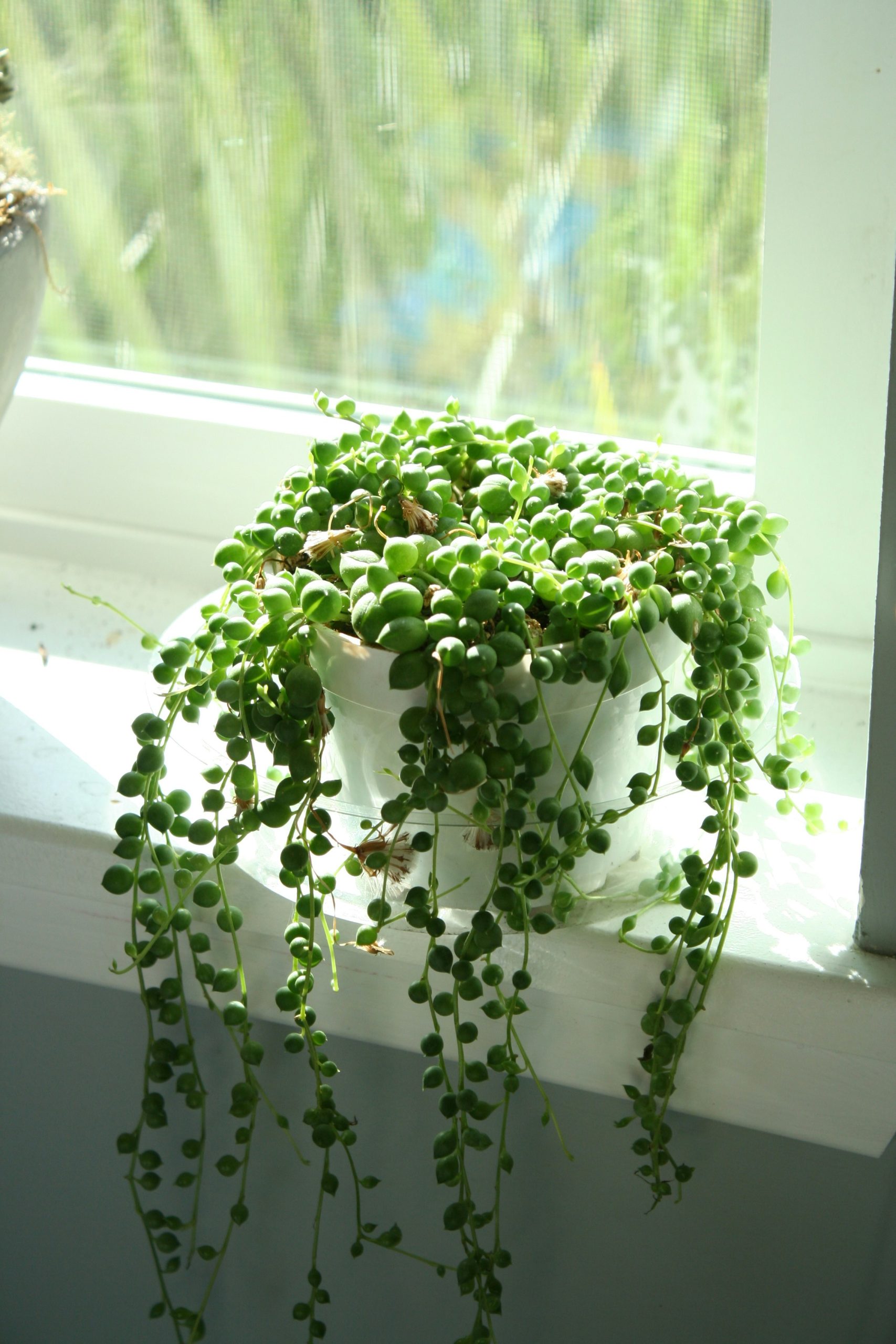
String of pearls is one of the most striking trailing plants available for indoor growing — the cascading strings of spherical, pea-sized leaves have a visual quality unlike any other plant, and a healthy specimen trailing from a high shelf or hanging basket is genuinely eye-catching. The honest caveat is that it is one of the more demanding plants on this list, not because its requirements are complicated, but because it is exceptionally intolerant of overwatering. More string of pearls die from too much water than from any other cause. Get the watering right and the light right, and it is a rewarding and fast-growing plant.
Light Requirements
String of pearls needs bright light — at least six hours of good light per day, ideally including some direct sun. A south-facing windowsill is the best indoor position in the UK. East- or west-facing positions work if the light is bright, but growth is slower and the pearls become less spherical — more elongated — in lower light, which is one of the early signs that the plant needs more light.
Insufficient light is the second most common cause of string of pearls decline after overwatering. In a dim room, the plant stretches, the pearls space out along the strand, and the trailing strings lose the dense, lush quality that makes the plant appealing.
Soil & Growing Medium
This is non-negotiable: string of pearls must be in fast-draining cactus and succulent compost. Standard houseplant compost holds far too much moisture and will cause root rot within weeks. A specialist cactus mix, or standard compost mixed 50/50 with coarse perlite or horticultural grit, is the right medium.
The compost should drain almost instantly after watering and dry out within two to three days in normal room conditions. If it stays damp for more than a week, amend it with more perlite.
Watering
Water when the soil is completely dry and the pearls begin to look very slightly less plump — typically every two to three weeks in summer, once a month or less in winter. The spherical leaves store water efficiently, so the plant can tolerate extended dry periods far better than it can tolerate overwatering.
When you water, water thoroughly until water drains from the bottom, then do not water again until the soil has dried completely. The ‘soak and dry’ method that works for most succulents is correct here. Bottom watering — placing the pot in a tray of water for 20 minutes and allowing the soil to absorb from below — is a popular technique among string of pearls growers because it avoids wetting the pearls and the base of the stems, which can cause rot.
Temperature & Humidity
String of pearls prefers 16-24°C. It tolerates cool temperatures down to around 7°C but is not frost hardy. In a UK home, the main concern is not cold temperatures but the combination of warmth and high humidity that encourages rot — keep it away from steamy kitchens and bathrooms.
Low humidity suits string of pearls. Do not mist it. The spherical leaves store water and high ambient humidity around them encourages fungal issues and rot at the base of the strands. A dry, well-ventilated room is correct.
Fertilising
Feed two to three times during the growing season (April, June, August) with a cactus and succulent fertiliser at half strength. String of pearls is not a heavy feeder and does not benefit from regular monthly feeding. Over-fertilising produces soft, mushy growth that is more susceptible to rot. Skip feeding entirely in autumn and winter.
Grow Light Compatibility
String of pearls needs high light intensity and a modest grow light will not be adequate. If using a grow light, choose a capable full-spectrum LED and position it 20-30cm above the pot. Run for 12-14 hours per day. Under a good grow light, the pearls remain spherical and the trailing strands are dense. Under insufficient grow light, the strands stretch and the pearls elongate — the same symptom as insufficient natural light.
Toxicity
String of pearls is toxic to cats, dogs, and humans. Ingestion causes drooling, vomiting, diarrhoea, and lethargy in pets. In humans, symptoms include skin irritation from the sap and gastrointestinal upset if eaten. The trailing nature of the plant means cats and dogs may find it accessible — positioning in a hanging basket well out of reach is the practical solution.
Pruning
Trim individual strands back if they become bare at the ends — this can happen when the plant does not have enough light or when strands have aged past their productive life. Cut just above a node (the small bump where a pearl meets the strand). The plant will produce new growth from below the cut.
Remove any strands that show signs of rot — mushy, translucent pearls at any point on the strand — immediately at the base. Rot spreads quickly through the crown if not removed promptly.
Propagating
String of pearls is easy to propagate from stem cuttings. Take a strand of 8-10cm, remove the pearls from the bottom 2-3cm to expose the bare stem, and lay it on the surface of dry cactus compost with the bare stem in contact with the soil. Alternatively, poke the bare section gently into the compost. Do not water for a week. Roots develop within two to three weeks, and new pearl growth confirms the cutting has established.
Multiple cuttings planted into a single pot produce a fuller, more impressive display than a single strand. Propagating three to five cuttings into the same pot is common practice.
Indoor Setup Notes
High shelves and hanging baskets are the natural home for string of pearls — the trailing strands need space to hang freely and look best when allowed to cascade at length. A south-facing window is the ideal position.
In a UK home, a sunny kitchen windowsill (provided it is not too humid) or a south-facing bedroom shelf are both practical options. The plant is compact at the crown and takes up minimal horizontal space — only the vertical drop of the strands needs to be accommodated.
Potting & Repotting
String of pearls prefers to be slightly root-bound and is one of the few plants where a small, shallow pot is actively better than a large one. The crown of the plant — from which the strands grow — is vulnerable to rot if surrounded by excess damp compost. A shallow pot one size larger than the root mass, in terracotta, with fast-draining compost, is the right setup.
Repot every two to three years in spring, or when the plant has clearly outgrown its container. Handle with care — the strands detach easily from the crown when the plant is moved.
Common Pests & Problems
- Mushy, translucent pearls: Root or stem rot from overwatering. Remove affected strands immediately. If the crown is affected, the plant may be unrecoverable — take healthy strand cuttings and start fresh.
- Elongated, spaced-out pearls: Insufficient light. Move to a brighter position or upgrade the grow light.
- Shrivelled, wrinkled pearls throughout: Underwatering. Water thoroughly and the pearls should plump up within a day or two.
- Strands going bare at the ends: Natural ageing, insufficient light, or the plant not being fed during the growing season. Trim back and propagate the healthy sections.
- Mealybugs: White cottony deposits at the crown. Treat with isopropyl alcohol swabs and neem oil. The spherical leaves make thorough treatment important — check between the pearls along each strand.
- Fungus gnats: Caused by keeping the soil too moist. Allow the compost to dry completely between waterings; treat with a neem drench.
FAQ
Why are my string of pearls shrivelling?
Shrivelling throughout the plant is almost always underwatering. Water thoroughly and the pearls should recover their shape within a day. If only the lower pearls near the soil are soft and mushy rather than shrivelled, the cause is root rot from overwatering — a different problem requiring a different response.
How do I make string of pearls trail longer?
The strands grow toward the light. A bright position, consistent watering, and feeding during the growing season produce the fastest strand elongation. Positioning the pot at height — on a shelf or in a hanging basket — from an early stage also encourages downward growth.
Can string of pearls survive in low light?
Short-term, yes. Long-term, no — the pearls elongate, the strands stretch, and the plant gradually declines without adequate light. It needs bright light to maintain its characteristic form. A good grow light is the solution for darker rooms.
Why do my string of pearls strands keep dying?
Individual strand death while the crown and other strands remain healthy usually indicates localised rot from overwatering or a physical injury. Remove the affected strand, check the crown for signs of rot, and adjust the watering schedule. If multiple strands are dying simultaneously, check the roots — widespread root rot from overwatering affects the whole plant.
How do I fix a leggy string of pearls?
Move it to a brighter position or improve the grow light. Trim leggy strands back and use the cuttings to propagate new, fuller growth into the same pot. The plant will look better within one growing season under adequate light.