| At a Glance | |
| Common Name | Chinese Money Plant, Pancake Plant, UFO Plant |
| Plant Type | Succulent-like tropical perennial |
| Light Required | Bright indirect light; some direct morning light tolerated |
| Soil / Medium | Well-draining houseplant compost with added perlite |
| Difficulty | Easy |
| Mature Size | 20–30cm tall; spreads with pups |
| Toxicity | Non-toxic to cats, dogs, and humans |
| Native Habitat | Yunnan Province, southern China |
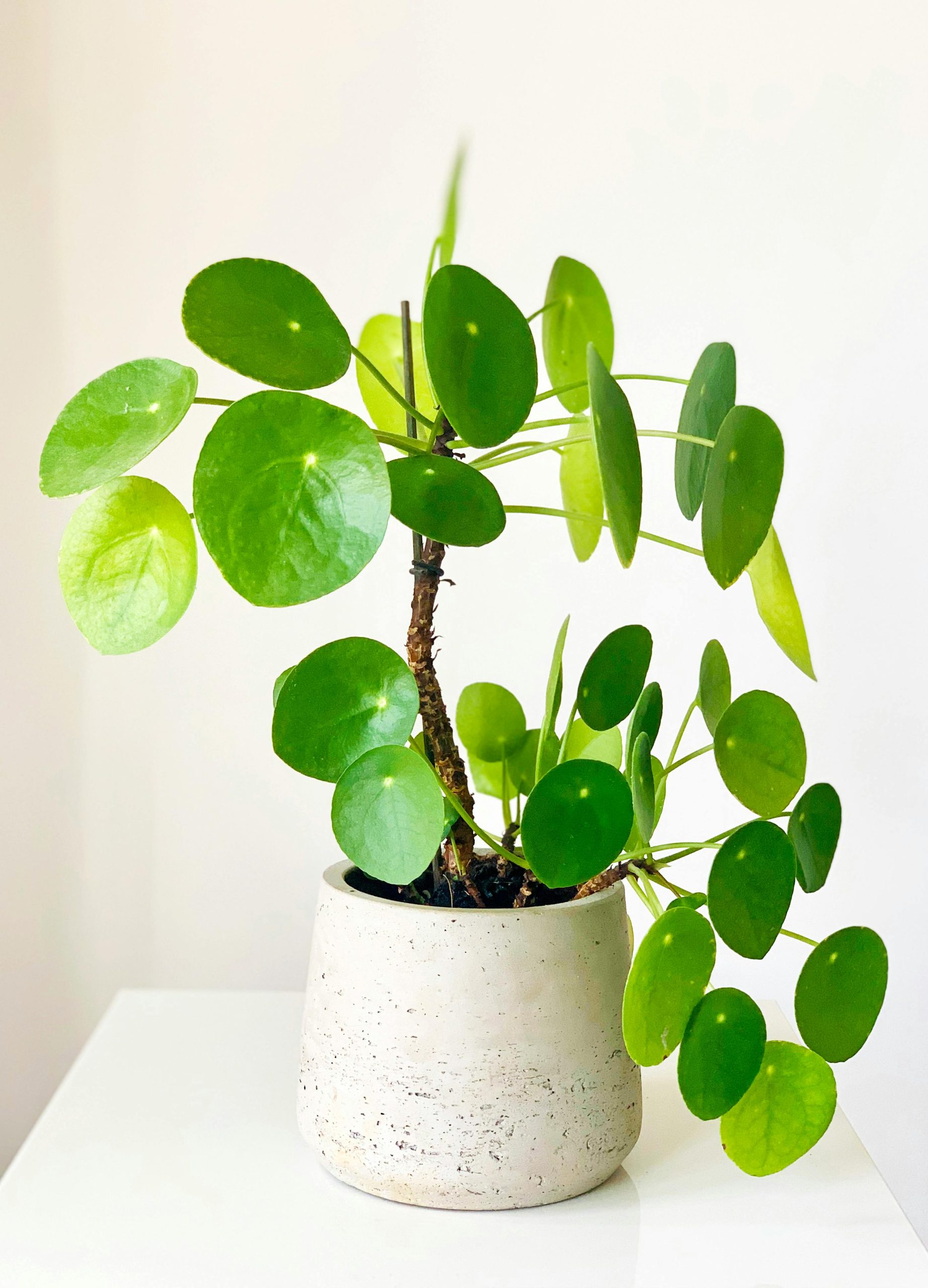
The Chinese money plant arrived in European homes through a single Norwegian missionary who brought a cutting back from Yunnan in 1946, and it spread across the continent almost entirely through cuttings passed between friends and neighbours for decades before commercial cultivation caught up. That propagation story is still part of the plant’s appeal: a healthy pilea produces offsets freely, making it one of the most generous plants you can own. The round, coin-shaped leaves on long petioles have a distinctive graphic quality that photographs exceptionally well, which explains their continued dominance on indoor gardening social media.
Light Requirements
Chinese money plants prefer bright indirect light and perform best near an east- or west-facing window. They tolerate some gentle morning sun but should be kept away from harsh afternoon sunlight, which causes pale, scorched patches on the round leaves.
One characteristic to watch for: pileas grow strongly toward a light source and will lean noticeably if lit from one direction. Rotate the pot a quarter turn every week to maintain an even, upright shape. Without rotation, the plant develops a distinct lean that becomes increasingly difficult to correct as the stem thickens.
Soil & Growing Medium
Use a well-draining houseplant potting mix with 20-30% perlite. Pileas have slightly succulent stems that store water, so the mix should drain quickly and not stay wet. Avoid dense, moisture-retentive composts.
A lean mix is preferable to a rich one — pileas in over-fertilised or very rich soil produce soft, lush growth that is more susceptible to pests and less structurally sound than growth in a more restrained medium.
Watering
Water when the top 3-4cm of compost are dry — roughly every one to two weeks in summer, less frequently in winter. Pileas tolerate slight underwatering well; the leaves will lose a little firmness when the plant is thirsty, giving you a reliable signal before any damage occurs. Overwatering causes yellowing leaves and root rot, which is the more serious risk.
UK tap water is generally fine for pileas. They are not particularly sensitive to fluoride or chlorine the way calatheas or spider plants can be.
Temperature & Humidity
Pileas are comfortable between 13-28°C and are more tolerant of cooler temperatures than many tropicals — they can handle a cool room in winter without significant distress, as long as temperatures stay above 10°C. They are not frost hardy.
Humidity requirements are moderate. They manage in the ambient humidity of a typical UK living room without supplemental moisture, though a slightly more humid environment produces fuller, more vigorous growth.
Fertilising
Feed monthly from March to September with a balanced liquid fertiliser at half strength. Pileas are not heavy feeders and excess nitrogen produces leggy, soft growth. Do not feed in winter. A plant that is growing well and producing regular new leaves rarely needs more than light, consistent feeding.
Grow Light Compatibility
Pileas adapt well to full-spectrum grow lights and make a practical choice for offices and rooms without adequate natural light. They do not need high intensity — a modest LED at 10-12 hours per day maintains good growth and the round leaf shape. Under insufficient light, the stems elongate and the leaves become smaller and more widely spaced.
Toxicity
Chinese money plants are non-toxic to cats, dogs, and humans — a genuine advantage in homes with pets. The plant is safe to handle without gloves and presents no risk if a pet or child chews on the leaves. This, combined with how freely it propagates, makes it one of the better plants to share with households that have animals.
Pruning
Pileas need minimal pruning. Remove yellowed or damaged leaves at the base. If the plant develops a long, bare stem below the leaves, the top can be cut off and rooted as a new plant — this is both a propagation method and a way to renovate a leggy specimen. The original stem will often produce new pups from the base after being cut.
Propagating
This is where the Chinese money plant earns its reputation. Healthy plants produce offshoots — pups — that emerge from the soil around the base of the plant. Once a pup is 4-5cm tall and has developed a few leaves, it can be separated from the mother plant with a clean sharp knife (cutting as close to the base as possible to include some root), potted into moist compost, and kept in bright indirect light. It will establish independently within two to three weeks.
Stem offsets that emerge from the main trunk (rather than the soil) can be removed and rooted in water or moist compost. These take slightly longer to establish than soil-level pups but work reliably.
Indoor Setup Notes
Chinese money plants suit desks, windowsills, and shelves where their round, architectural leaves can be appreciated at close range. They are compact enough for smaller spaces and produce an attractive silhouette that holds up even when the plant is between periods of active growth.
In a UK home, an east-facing window or a position on a south-facing windowsill with light filtering through a sheer curtain are both well-suited. The kitchen windowsill — a classic spot — works well if the light is bright enough.
Potting & Repotting
Repot every one to two years in spring, or when the plant is clearly root-bound or producing pups faster than the pot can accommodate. Go up by one pot size. Pileas in slightly snug pots produce pups more freely than those in oversized containers. Terracotta or ceramic pots suit the aesthetic and dry out at an appropriate rate.
Common Pests & Problems
- Yellow leaves: Usually overwatering. Allow the soil to dry further between waterings.
- Leaf curl or cupping: Underwatering or too much direct sun. Check both before adjusting.
- Leggy growth with long stems and small leaves: Insufficient light. Move closer to a window or add a grow light.
- Lopsided growth: Not rotating the pot regularly enough. A quarter turn with every watering corrects this over time.
- Fungus gnats: Overwatering and consistently moist topsoil. Allow the surface to dry between waterings; treat with a neem oil soil drench.
- Mealybugs: Uncommon but possible. Treat with isopropyl alcohol swabs and neem oil.
FAQ
How do I get more pups from my pilea?
A pilea in bright light, in a slightly snug pot, fed regularly during the growing season, will produce pups most freely. Mature plants (two years old or more) are more productive than young ones. There is no reliable way to force pup production beyond optimising the growing conditions.
Why are my pilea leaves curling?
Upward curling usually indicates underwatering or too much direct sun. Downward curling is less common and may indicate overwatering or cold temperatures. Check the soil and the light position.
Can I keep a Chinese money plant in a low-light room?
It will survive but will become leggy and produce smaller leaves. A grow light is the practical solution for darker rooms. The round leaf shape requires adequate light to develop properly.
How often will my pilea produce pups?
A mature, healthy pilea in good conditions typically produces several pups per growing season. In lower light or with inconsistent care, production slows or stops. Once conditions improve, pup production usually resumes.