| At a Glance | |
| Common Name | Peace Lily, White Sails, Spathe Flower |
| Plant Type | Tropical flowering perennial |
| Light Required | Low to medium indirect light; blooms better with more light |
| Soil / Medium | Rich, well-draining potting compost |
| Difficulty | Easy |
| Mature Size | 30cm to 1m depending on variety |
| Toxicity | Toxic to cats, dogs, and humans if ingested |
| Native Habitat | Tropical Americas and Southeast Asia |
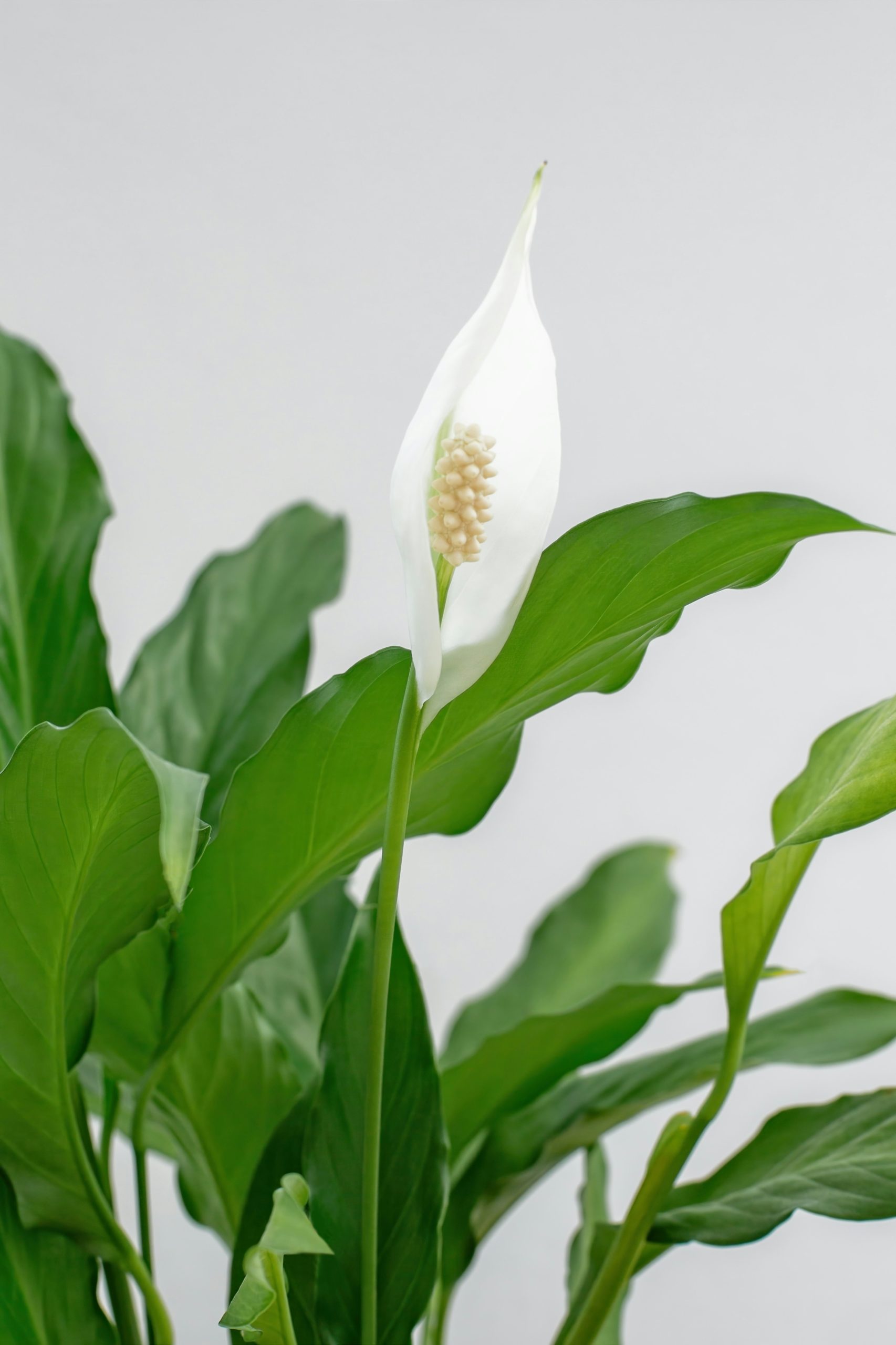
Peace lilies are one of the few flowering plants that genuinely tolerate low light indoors, which makes them unusually versatile. The white spathes (technically modified leaves, not petals) appear reliably once or twice a year under good conditions, and the glossy dark foliage looks good all year round even when the plant is not in bloom. They are also unusually communicative — they wilt dramatically and visibly when they need water, which takes some of the guesswork out of care.
Light Requirements
Peace lilies tolerate low light better than almost any other flowering houseplant, but they bloom best in medium indirect light. In a north-facing room or a dim corner, you will get good foliage but fewer flowers. Move to a brighter position — indirect light from an east or west window — and flowering becomes more frequent and more vigorous.
Avoid direct sun, which bleaches the leaves and causes brown patches. A lightly shaded south-facing spot works well. The key principle: more indirect light means more flowers, but less light does not kill the plant or stop the foliage from looking good.
Soil & Growing Medium
Use a rich, well-draining potting compost. Adding 20-30% perlite improves drainage and reduces root rot risk. Peace lilies prefer a slightly richer, moister medium than succulents or cacti, but the soil should still drain freely and not stay saturated.
Replenishing the compost at repotting time is worth the effort — peace lilies benefit from the fresh nutrients in new compost more visibly than more undemanding plants do.
Watering
Water when the top 2-3cm of compost are dry, or — more reliably — when the leaves begin to droop slightly. Peace lilies are one of the few plants that tolerate (and signal) underwatering in a way that allows you to water reactively rather than on a schedule. If you water immediately when drooping starts, no harm is done and the plant recovers within an hour or two.
That said, chronic underwatering causes stress and reduces flowering. Aim to keep the soil consistently slightly moist in the growing season rather than allowing repeated wilting. Use room-temperature water; cold water from the tap can cause brown spots on the leaves.
Temperature & Humidity
Peace lilies prefer 18-30°C. They are more cold-sensitive than snake plants or ZZ plants and will show leaf damage if temperatures drop below 12°C. Keep away from cold draughts, unheated hallways, and single-glazed windows in winter.
They appreciate higher humidity — 50% or above produces lusher growth and reduces brown leaf tips. A bathroom with decent light is an ideal position. In drier rooms, a humidifier or pebble tray helps.
Fertilising
Feed monthly from March to September with a balanced liquid fertiliser at half strength. A fertiliser with a slight bloom-booster formulation (higher phosphorus) can encourage flowering. Do not feed in winter. Over-fertilising causes brown leaf tips and excess salt in the soil.
Grow Light Compatibility
Peace lilies respond well to full-spectrum grow lights, which can significantly increase flowering frequency in rooms where natural light is limited. Position the light to provide medium intensity — not the maximum output used for fruiting crops — and run for 10-12 hours per day.
Under a grow light, peace lilies in north-facing rooms can produce flowers almost as reliably as those near a bright window. This is one of the better arguments for a grow light in a darker home.
Toxicity
Peace lilies contain calcium oxalate crystals and are toxic to cats, dogs, and humans. Symptoms of ingestion include mouth and throat irritation, drooling, swelling, and vomiting. Despite the name, they are not true lilies (Lilium species), but they share similar toxic compounds. Keep out of reach of pets and children.
Pruning
Remove spent flower spathes once they turn green or brown, cutting the stem at the base. Remove yellowed or damaged leaves the same way. Regular removal of spent flowers encourages the plant to produce new ones. Avoid cutting healthy green leaves — the plant uses them for photosynthesis and removing too many sets back growth.
Propagating
Peace lilies are propagated by division. At repotting time, gently separate the root clump into sections, each with several leaves and healthy roots attached. Pot each section individually in fresh compost and water carefully until established. New growth should begin within a few weeks.
Unlike pothos or monstera, peace lilies cannot be propagated from stem cuttings. Division at repotting time is the standard method.
Indoor Setup Notes
Peace lilies suit living rooms, bedrooms, and bathrooms — anywhere with indirect light and moderate warmth. In the UK, they are a practical choice for east-facing rooms, where morning light provides gentle illumination without the intensity of afternoon sun.
One genuine consideration: peace lilies release pollen from their spadix (the yellow spike inside the white spathe), which some people find irritating. If pollen is a concern, remove the flowers as soon as they open rather than letting them mature.
Potting & Repotting
Repot every one to two years in spring, or when the plant is clearly root-bound and drying out very quickly after watering. Go up by one pot size. Peace lilies in slightly snug pots tend to flower more freely than those in oversized containers.
After repotting, reduce watering slightly for two weeks and hold off on fertilising for a month while the plant re-establishes. Some leaf droop immediately after repotting is normal.
Common Pests & Problems
- Brown leaf tips: Low humidity or fluoride in tap water. Use filtered or rainwater and move away from radiators.
- Yellow leaves: Overwatering or insufficient light. Check soil moisture and move to a brighter spot.
- No flowers: Insufficient light is the most common cause. Move to a brighter indirect light position or add a grow light.
- Black or mushy leaf bases: Root rot from overwatering. Remove affected roots and repot in fresh compost.
- Spider mites: Dry conditions encourage infestations. Treat with insecticidal soap and improve humidity.
- Mealybugs: Remove with isopropyl alcohol; follow with neem oil treatment.
FAQ
Why is my peace lily not flowering?
Usually insufficient light. Move it closer to a window or add a grow light. Flowering also reduces in winter and with age — a plant that has been in the same pot for several years may benefit from division and fresh compost.
Why does my peace lily droop even after watering?
If drooping persists after watering, the cause is usually root rot rather than thirst. Check the roots — if brown and mushy, the plant needs repotting into fresh compost with the damaged roots removed.
Can I put a peace lily in my bathroom?
Yes, and it is often one of the better spots — peace lilies appreciate the humidity from a shower, and most UK bathrooms have enough indirect light near a frosted window to keep them healthy.
Is peace lily safe around cats?
No. Peace lilies are toxic to cats and can cause oral irritation, vomiting, and difficulty swallowing if eaten. Keep out of reach, particularly in homes where cats are active climbers.