A personal guide to nineteen tropicals worth recommending — with care notes, UK availability, and the rules that prevent most beginner failures.
By Nathaniel · Last updated May 2026 · 12 min read
If you’ve walked into a UK plant shop in the last few years and felt slightly overwhelmed by the row of tropicals all promising to thrive on your windowsill, this guide is for you. I’ve spent years reading horticultural sources, talking to UK plant retailers, and yes – killing the occasional houseplant – to work out which tropicals are genuinely beginner-friendly and which are quietly pretending.
The truth most plant marketing skips: tropical houseplants vary enormously in how forgiving they are. Some for example the pothos or snake plant will live happily in a north-facing kitchen with weekly watering and almost no other attention. Others such as the fiddle leaf fig or calathea will quietly decline in the same conditions and leave you wondering what you did wrong. The answer is usually nothing. You just bought the wrong plant for your home.
Below: nineteen tropicals worth recommending, sorted into four tiers from beginner-easy to expert-only. Each one comes with a short care brief covering light, watering rhythm, and the most common thing to watch for. There’s a UK retailer guide at the end and a few rules of thumb for choosing what’s right for your specific flat. Before we get to the plants themselves, three quick things about indoor plant care that prevent most beginner failures.
Three things that prevent most houseplant failures
1. Overwatering kills more houseplants than anything else
The single most common cause of houseplant death isn’t neglect – it’s love. Most beginners water too often, drowning the roots and causing rot the plant can’t recover from. The honest rule: most tropical houseplants want the top 2–3cm of soil to dry out between waterings. Stick a finger in the soil; if it feels damp, wait. Almost every plant on this list recovers faster from a missed week than from soggy roots.
2. Your room is probably darker than you think
UK rooms in 2026 are mostly darker than tropical plants want. A “bright” north-facing room is a low-light room by tropical-plant standards. A south-facing window with a sheer curtain is genuinely bright. If you’re unsure, a £10 light meter app on your phone takes the guesswork out – point it at the spot the plant will sit and check the reading at midday. Most failures from the “best all-rounders” tier below trace back to a buyer overestimating the light in their room.
3. Humidity matters – for some plants, not all
Roughly half the plants on this list don’t care about humidity. The other half mostly ferns, calatheas, anthuriums and gardenias will brown at the leaf edges if your home is dry, which most UK homes are in winter when the heating is on. A simple humidifier or a bathroom shelf solves it. Spraying a plant’s leaves with a mister is mostly aesthetic – the humidity bump lasts about ten minutes.
The best practice that beats every other rule
A weekly five-minute check beats a daily watering schedule. Look at the soil, check the leaves for stress, water only what needs watering, raise or rotate anything that’s reaching for the light. A reliable Sunday ritual prevents almost every failure on this list and removes the guilt of forgetting because there’s nothing scheduled to forget.
Easiest to care for
These five plants forgive almost everything. Skip waterings, low light, cold draughts — they tolerate it. If you’ve killed a houseplant before, start here.
Pothos — Epipremnum aureum
The classic beginner trailing plant. Heart-shaped leaves on long vines that drape happily over shelves or bookcases. Three popular UK varieties: Golden (yellow-marbled), Marble Queen (cream-streaked), and Neon (lime-bright). All are equally easy to care for.
How to keep it: tolerates bright indirect light down to genuinely dim corners. Water when the top 2–3cm of soil feels dry — typically every 7–14 days. Yellow leaves usually mean overwatering; brown tips mean dry air, but most pothos shrug it off. Roots from cuttings in plain water within a week, which is why so many UK plant-shop staff have multiple pots they didn’t pay for.
Quick reference — Light: bright indirect to low. Water: every 7–14 days. Mature size: 1–2m trailing.

Snake plant — Dracaena trifasciata (formerly Sansevieria)
Architectural sword-shaped leaves in deep green or the yellow-edged “Laurentii” cultivar. Survives weeks of neglect and the kind of UK winter light most tropicals can’t cope with. The most forgiving plant on this list, full stop.
How to keep it: prefers being underwatered to overwatered — soggy soil is the only reliable way to kill it. Water once every 2–3 weeks in summer, monthly in winter. Tolerates everything from bright direct sun to a dim hallway. Yellow leaves usually mean overwatering; wrinkled leaves mean it’s finally thirsty. Mildly toxic to pets if chewed.
Quick reference — Light: anything from bright to dim. Water: every 2–4 weeks. Mature size: 60cm–1.2m upright.

ZZ plant — Zamioculcas zamiifolia
Glossy, waxy leaflets on upright stems. Stores water in underground rhizomes the size of small potatoes, which is why it shrugs off missed waterings. Slow-growing — buy the size you want, because it won’t change much for a year.
How to keep it: water every 2–3 weeks; less in winter. Bright indirect light is ideal but it tolerates surprisingly low light. The most common failure is overwatering, which rots the rhizomes — let it dry out fully between waterings. Mildly toxic to pets and humans if any part is chewed.
Quick reference — Light: bright indirect to low. Water: every 2–3 weeks. Mature size: 60cm–1m upright.
Spider plant — Chlorophytum comosum
Striped green-and-white foliage with cascading babies on long stems. Adapts to almost any light or watering rhythm. Produces plantlets within months that you can pot up, gift, or simply ignore.
How to keep it: water when the top of the soil dries — roughly weekly in summer, fortnightly in winter. Brown leaf tips are usually fluoride sensitivity from UK tap water in some areas; switch to filtered or rainwater if it bothers you. Otherwise almost impossible to kill, and pet-safe if your cat treats houseplants as snacks.
Quick reference — Light: bright indirect to part shade. Water: weekly. Mature size: 30–60cm with longer trailing offsets.

Heartleaf philodendron — Philodendron hederaceum
Slightly more refined than pothos — smaller heart-shaped leaves, more compact growth. The classic UK office plant for a reason. The Brasil cultivar adds a lime-green stripe down each leaf if you want a touch more interest.
How to keep it: care is essentially identical to pothos — bright indirect light preferred, water when the top of the soil feels dry. Fast-growing — pinch the tips back every couple of months to keep it bushy rather than scraggly. Roots in water just as easily as pothos for propagation.
Quick reference — Light: bright indirect. Water: weekly. Mature size: 1–2m trailing.

Best all-rounders
A balance of beauty and ease. These plants take a little more attention than the easiest tier but reward it with more visual impact. None require humidity domes or filtered water; all are widely available in the UK.
Monstera — Monstera deliciosa
The iconic “Swiss cheese plant” with deeply split fenestrated leaves. Adapts well to UK indoor conditions and is more forgiving than its statement appearance suggests. Develops the famous leaf holes as it matures — usually from year two onward.
How to keep it: bright indirect light produces the best fenestrations; lower light is tolerated but the leaves come out smaller and less split. Water when the top 3–4cm of soil dries — about weekly. Provide a moss pole or stake by year two, otherwise the plant sprawls horizontally and looks scruffy. Aerial roots are normal — let them find the pole.
Quick reference — Light: bright indirect. Water: weekly. Mature size: 1–2m+ with support.

Rubber plant — Ficus elastica
Glossy oval leaves in deep green (“Robusta”) or burgundy (“Tineke”, “Burgundy”). More tolerant of inconsistency than the fiddle leaf fig and a much easier statement plant for a UK living room. Grows tall over years — a long-term commitment to a corner of the room.
How to keep it: bright indirect light is ideal; lower light is tolerated but growth slows. Water when the top 3–4cm of soil dries — typically every 1–2 weeks. Yellowing lower leaves are normal as the plant ages; if all leaves drop suddenly, it’s usually a sudden change (a move, a draught, a heating change). Wipe leaves monthly to keep them glossy.
Quick reference — Light: bright indirect. Water: weekly to fortnightly. Mature size: 1–2m+ over years.

Chinese money plant — Pilea peperomioides
Round coin-shaped leaves on slender stems. Loved as much for the photogenic shape as for the toughness. Once established, produces baby plants prolifically — which is why most UK households got their first Pilea as a gift rather than buying one.
How to keep it: bright indirect light brings out the best leaf shape; too little light makes leaves curl and grow leggy. Water when the top 2–3cm of soil dries — about weekly. Rotate the pot a quarter-turn each week to keep growth even, otherwise the plant leans dramatically toward the light source. Pet-safe.
Quick reference — Light: bright indirect. Water: weekly. Mature size: 30–50cm.

Bird’s nest fern — Asplenium nidus
Bright green wavy fronds arranged in a rosette. Genuinely easier than most ferns because it tolerates lower humidity than maidenhair or Boston ferns. A good fit for a UK bathroom or a kitchen with reasonable indirect light.
How to keep it: bright indirect light only — direct sun scorches the fronds. Keep soil consistently slightly damp; water about weekly, less in winter. Don’t water into the central rosette where new fronds emerge; it rots easily. Brown crispy fronds usually mean low humidity — move to a damper room or add a humidifier.
Quick reference — Light: bright indirect, no direct sun. Water: weekly. Mature size: 50cm–1m wide rosette.

Parlour palm — Chamaedorea elegans
Delicate arching fronds — a tropical look without the demands of larger palms. Tolerates low light better than almost any other palm and grows slowly to a manageable 1–1.5m over several years.
How to keep it: bright indirect light preferred but tolerates genuinely low light. Water when the top 2–3cm of soil dries — typically every 1–2 weeks. Brown frond tips usually mean low humidity or dry soil; trim them off if they bother you. Beginner-friendly despite the exotic look, and pet-safe if anyone in the house is curious about nibbling.
Quick reference — Light: bright indirect to part shade. Water: weekly to fortnightly. Mature size: 1–1.5m over years.

Prettiest when blooming
Foliage-only plants dominate UK houseplant collections, but a small set of tropicals produces flowers that earn their place on aesthetic grounds alone. The picks below balance bloom impact against how much trouble they cause along the way.
Anthurium — Anthurium andraeanum
The longest-blooming tropical on this list. Heart-shaped red, pink, or white spathes — the “flowers” are technically modified leaves — can last 2–3 months individually, with a healthy plant in near-continuous bloom through the year. Genuinely worth its reputation.
How to keep it: bright indirect light is essential for continuous flowering. Water when the top 2–3cm of soil dries; the plant likes consistent moisture without being soggy. Moderate humidity helps — consider it a kitchen or bathroom plant rather than the dry winter living room. Wipe leaves monthly to keep them glossy.
Quick reference — Light: bright indirect. Water: weekly. Mature size: 40–60cm.

Bromeliads — Guzmania, Vriesea, Aechmea
Intensely coloured bracts (the flower-like structures) in red, pink, yellow, or orange. A single bloom lasts months, but each plant typically flowers once in its lifetime — then produces “pups” (offsets) that bloom in turn.
How to keep it: bright light is ideal. Water into the central cup of the rosette, not the soil — empty and refill the cup weekly to prevent stagnation. After the main bloom fades, the parent plant slowly dies but produces offsets you can pot up. Treat as a striking but one-and-done aesthetic statement rather than a long-term plant.
Quick reference — Light: bright indirect to direct. Water: weekly into the cup. Mature size: 30–60cm.

Peace lily — Spathiphyllum
White spathes appear several times a year on a healthy plant. The most forgiving flowering tropical on this list and a useful indicator plant — it droops dramatically when thirsty and recovers within hours of watering.
How to keep it: bright indirect light is ideal; it will tolerate low light but flowers less. Water when the leaves just start to droop, typically weekly. Brown leaf tips usually mean tap-water sensitivity or low humidity. Mildly toxic if pets eat the leaves — worth knowing if you have cats or dogs that show interest.
Quick reference — Light: bright indirect to low. Water: weekly. Mature size: 40–60cm.

Moth orchid — Phalaenopsis
The orchid you see in every UK supermarket. Blooms last 2–3 months; with the right care they rebloom annually. Genuinely easier than their reputation suggests — most failures come from overwatering, not under.
How to keep it: bright indirect light, never direct sun. Water once a week by drenching the transparent slot pot, then letting all the water drain — never let the roots sit in standing water. Repot every 2–3 years into orchid bark mix, not soil. After the flowers fall, cut the bloom spike just above a node to encourage a second flush.
Quick reference — Light: bright indirect. Water: weekly drench-and-drain. Mature size: 30–60cm.

Hibiscus — Hibiscus rosa-sinensis
Dramatic 10–15cm trumpet flowers in red, orange, pink, or yellow. The trade-off: needs more direct sun than most tropicals and can be reluctant to bloom in a darker UK flat. When it does flower, no other plant on this list compares for sheer flower size.
How to keep it: bright direct light is essential — a south-facing windowsill or supplementary grow light. Water regularly; the plant is thirsty when flowering. Yellowing leaves usually mean inconsistent watering. Prune lightly in spring to encourage bushier growth and more flower buds the following season.
Quick reference — Light: bright direct. Water: 2–3 times per week when active. Mature size: 1–1.5m if pruned.

Most challenging (buy carefully)
These four plants are famous for failure as much as for beauty. Each one is genuinely demanding. Buy them if you’re ready for the work; skip them if you wanted easy.
Fiddle leaf fig — Ficus lyrata
Tall and sculptural, with violin-shaped leaves the size of dinner plates. Notoriously fussy about light, watering rhythm, and especially being moved — brown spots, leaf drop, and sudden unexplained decline are common failure modes.
How to keep it: bright indirect light, ideally a consistent spot you don’t move it from. Water when the top 5cm of soil dries — typically every 1–2 weeks, less in winter. Almost every problem this plant develops traces back to a change in conditions. Buy from a UK seller (acclimatised to UK light) rather than imported stock, pick the spot in advance, and resist the urge to rearrange. Wipe leaves monthly.
Quick reference — Light: bright indirect, consistent spot. Water: every 1–2 weeks. Mature size: 1.5–2.5m over years.

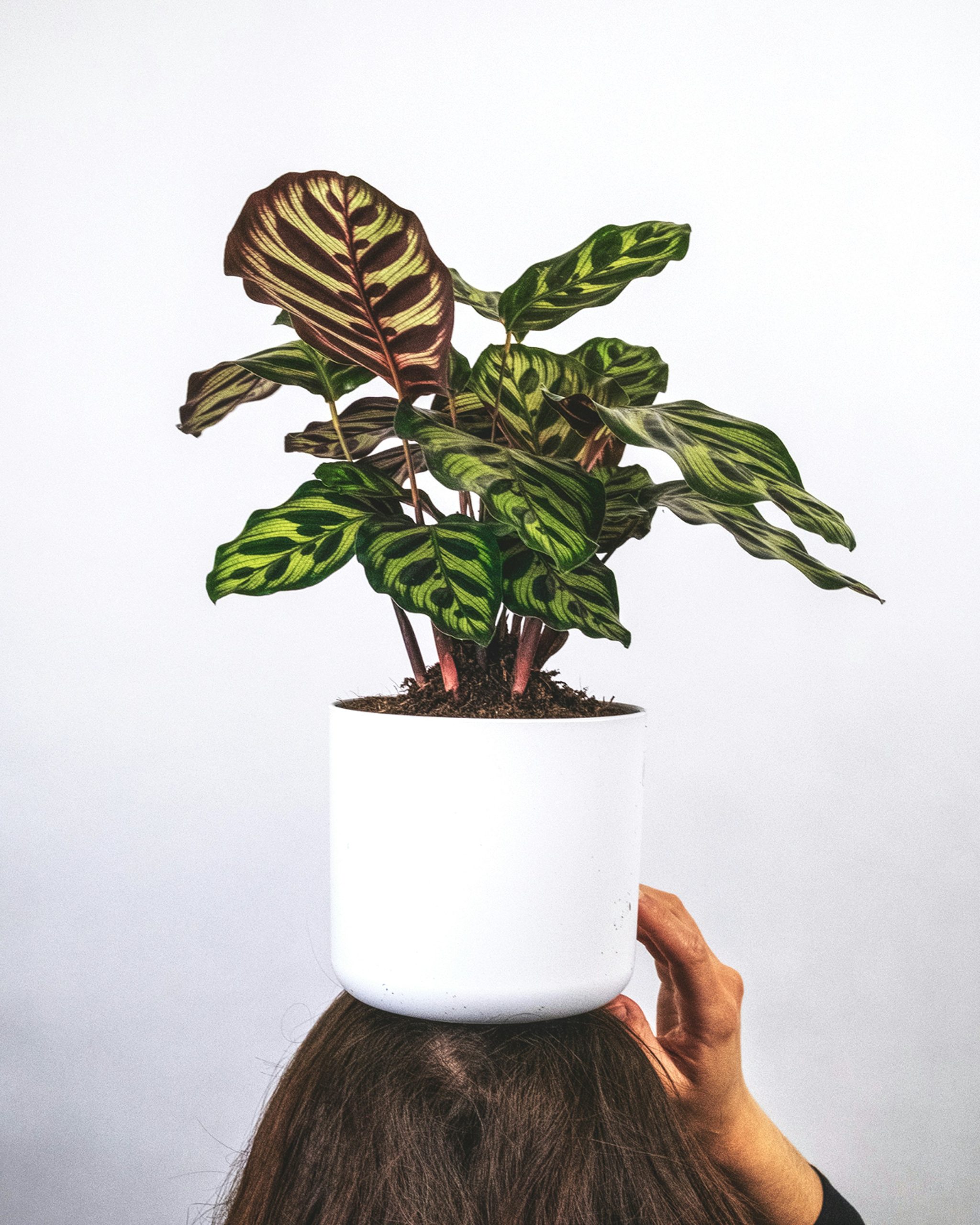
Calathea — Calathea orbifolia, C. ornata, C. medallion
Striking patterned foliage that folds upward at night (the family’s common name is “prayer plants”). Beautiful when happy; quick to decline when not.
How to keep it: bright indirect light only, never direct sun. Use filtered or rainwater — tap water in southern England causes brown leaf edges quickly. Demands consistent 60%+ humidity; consider a humidifier or a steamy bathroom. Soil should be consistently slightly damp, neither dry nor soggy. The most demanding plant on this list per inch of foliage.
Quick reference — Light: bright indirect, no direct sun. Water: 1–2 times per week with filtered water. Mature size: 40–90cm depending on species.

Maidenhair fern — Adiantum raddianum
Delicate lace-like fronds. The most demanding plant on this list — turns crispy brown within days of underwatering or low humidity. The reward is a genuinely unique foliage texture; the price is constant attention.
How to keep it: bright indirect light, never direct sun. Keep soil consistently damp — never dry, never soggy. Daily misting if not in a high-humidity room. Best treated as a bathroom plant or accept that crispy fronds will be a recurring issue. Brown fronds can be trimmed off and the plant produces new growth if conditions improve.
Quick reference — Light: bright indirect. Water: every 2–3 days, keep damp. Mature size: 30–50cm.

Gardenia — Gardenia jasminoides
Intensely fragrant white blooms. Famously difficult indoors — needs acidic soil, bright indirect light, consistent moisture, and high humidity all at once. Bud drop before flowering is the most common failure.
How to keep it: bright indirect light is essential for flowering. Use rainwater or filtered water; tap water raises soil pH and causes yellowing leaves. Keep soil consistently moist. Cool nights (15–18°C) help bud set. Best treated as a seasonal flowering purchase rather than a permanent collection piece — the cost-per-bloom is high but the scent is genuinely unmatched.
Quick reference — Light: bright indirect. Water: 2–3 times per week with filtered water. Mature size: 50cm–1m.

Where to buy in the UK
UK plant retail has improved dramatically over the past five years. The short version: easiest-tier plants are fine to buy anywhere; the prettier and more challenging tiers reward going to a specialist.
Online
- Specialist (best for all-rounders, blooms, and unusual varieties): Patch Plants (patchplants.com), Beards & Daisies (beardsanddaisies.co.uk), Bloombox Club (bloomboxclub.com), Leaf Envy (leafenvy.co.uk), Happy Houseplants (happyhouseplants.co.uk), and Hortology (hortology.co.uk) for large statement specimens. Plants ship acclimatised; care guides are UK-specific.
- Mass-market (best for easy-tier classics at lowest prices): Crocus (crocus.co.uk), Thompson & Morgan (thompson-morgan.com), and Amazon UK for common species. Quality is variable; sort by recent reviews and check the leaves on arrival.
In person
- Mass-market: IKEA is the surprise of UK houseplant retail — large pothos and monstera at supermarket prices. B&Q and the garden centre chains (Dobbies, Notcutts, Blue Diamond, Hillier, Squires) cover the wider range. Supermarkets (M&S, Waitrose, Tesco) handle orchids and the most common easy-tier plants.
- Independent specialist: Particularly important for the challenging tier — you want to choose a healthy specimen in person. London has the densest indie scene: Conservatory Archives (Hackney), Forest London (Dalston), Botany (Hackney), N1 Garden Centre (Islington), Petersham Nurseries (Richmond). Outside London, most UK cities now have at least one independent plant shop — searching “houseplant shop [your city]” is the most reliable way to find them.
Three working rules: buy the easiest tier wherever is most convenient; buy the prettiest-when-blooming and all-rounder tiers from an online specialist (the difference in plant quality is real); and buy anything from the challenging tier in person from an independent shop, where you can choose a healthy specimen and ask about its provenance.
How to choose for your home
A simple rule of thumb: match the plant to your home, not the other way around. Three rough recommendations:
- Never kept a houseplant alive: start with a pothos and a snake plant. Both forgive everything and grow visibly within weeks.
- Want something striking and you’ve grown houseplants before: any of the best all-rounders. Monstera and rubber plant are the obvious starting points.
- Want flowers: anthurium for the lowest-risk reward; orchids for the more dedicated; hibiscus only if your home has genuinely bright direct light.
Tropical houseplants reward consistency more than they reward expertise. Almost every plant on this list will thrive if it’s given the right light and a weekly check-in — and almost every plant on this list will die if it isn’t. Pick from the tier that matches your bandwidth, not your ambition, and you’ll have something growing on the windowsill within a month rather than another empty pot in six.
If you only buy one plant from this guide and aren’t sure where to start: get a pothos. It will live almost regardless of what you do, propagate itself within weeks, and quietly teach you what indoor growing actually feels like before you commit to anything more demanding. Once you’ve kept one alive for six months, the rest of this list is open to you.
About the author
Nathaniel is the founder of Grow Metropolis. His degree in Sustainability Sciences and 10+ years in professional kitchens and hospitality give him a unique perspective on food systems and where our ingredients come from. He writes about indoor growing and smart-garden hardware as practical solutions tested in real kitchens – backed by research, reader conversations, and years of understanding how chefs and home cooks actually work.