| At a Glance | |
| Common Name | Queen of the Night, Orchid Cactus |
| Plant Type | Epiphytic cactus |
| Light Required | Bright indirect light |
| Soil / Medium | Cactus compost with orchid bark and perlite |
| Difficulty | Intermediate |
| Mature Size | Trailing stems to 1m+ |
| Toxicity | Non-toxic to cats, dogs, and humans |
| Native Habitat | Mexico and South America |
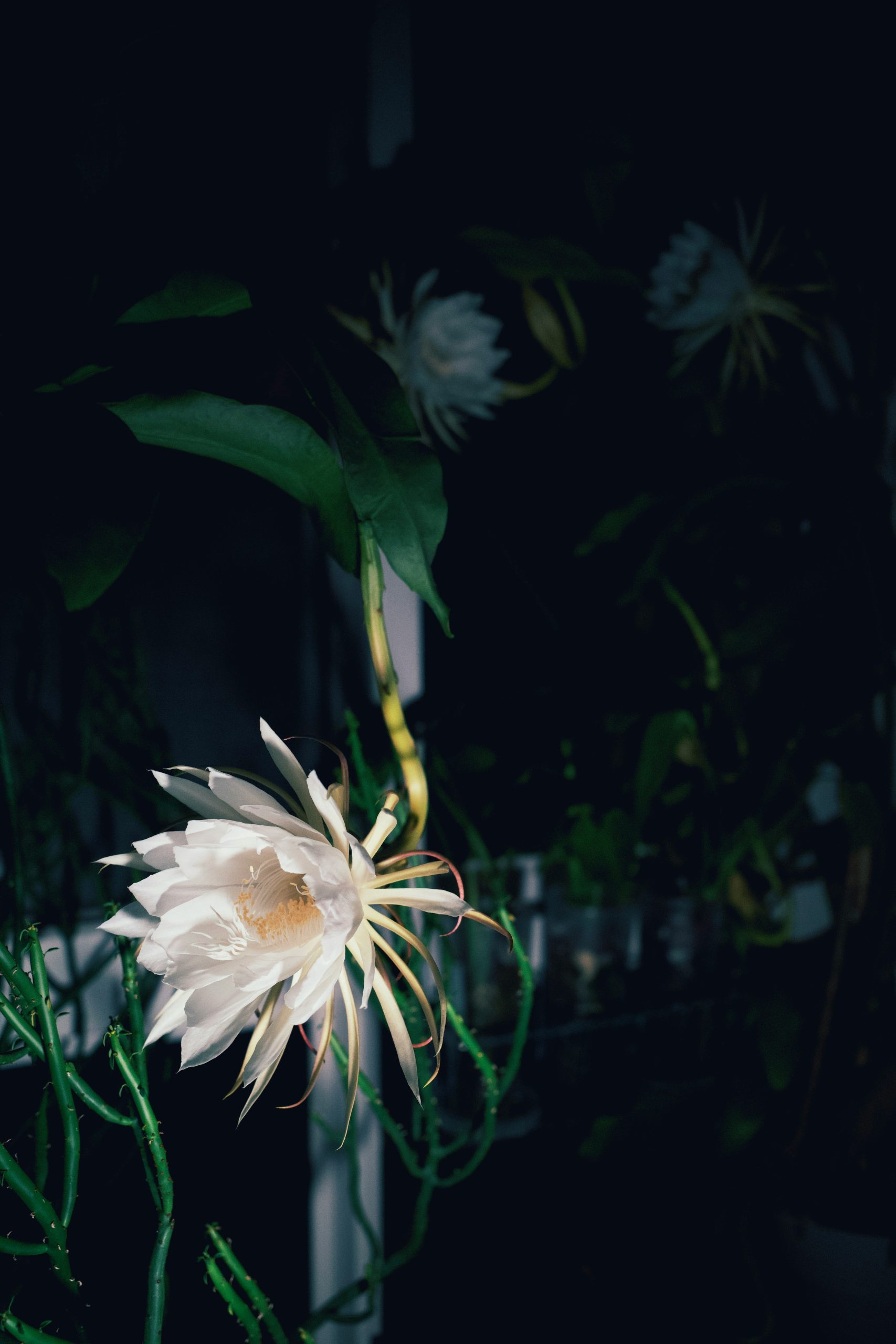
Queen of the night is an epiphytic cactus from Mexico and South America that produces enormous, intensely fragrant white flowers — but only at night, and only for a single night. Each bloom opens after dark and is gone by morning. This dramatic lifecycle makes it one of the most talked-about houseplants, even if it spends most of its life as an unremarkable green hanging plant.
Light Requirements
Bright indirect light is ideal. Queen of the night tolerates some direct morning sun but should be protected from strong afternoon sun, which scorches the flat, leaf-like stems. An east or west-facing window works well.
In summer it benefits from being moved outside to a sheltered, partially shaded spot. The outdoor period builds up the energy reserves that support flowering.
Soil & Growing Medium
A loose, free-draining mix that still retains some moisture — the plant is an epiphyte from rainforest environments, not a desert cactus. A mix of cactus compost with added perlite and a little orchid bark works well. Standard cactus mix on its own can be too dry.
Watering
Water moderately during the growing season, allowing the top third of the soil to dry between waterings. In winter, reduce to occasional watering once a month or less — a dry rest period in winter helps trigger flowering the following season.
Use room-temperature water. Avoid very cold water, which shocks the roots.
Temperature & Humidity
Queen of the night prefers 18-27°C during the growing season. The winter rest period at 10-15°C is important for triggering flower bud formation. It handles moderate humidity and appreciates occasional misting in very dry conditions.
Fertilising
Feed every two weeks from spring to late summer with a high-potash fertiliser (tomato feed works well). Stop feeding in autumn to allow the plant to prepare for its rest period. Resume in spring.
Grow Light Compatibility
Grow lights can supplement natural light during winter but the cool, dry rest period is still needed for flowering. Running grow lights on a 12-hour cycle in winter without reducing temperature may prevent flowering.
Toxicity
Queen of the night is generally considered non-toxic to cats, dogs, and humans.
Pruning
Remove damaged or dead stems at the base. The plant can be pruned to manage size — cut back stems to a healthy joint. New stems grow from the cut points. Pruning heavily can delay flowering, so prune lightly unless necessary.
Propagating
Stem cuttings root easily. Cut a section of stem 15-20cm long, allow it to callous for one to two days, then insert into barely moist cactus mix. Keep warm and do not water until you see signs of new growth. Roots develop in three to six weeks.
Indoor Setup Notes
Queen of the night is typically grown in a hanging basket or allowed to trail from a high shelf, as the flat stems can reach several feet long. If you want to witness the flowers — which open after dark — keep an eye on developing buds. A bud takes one to two weeks to develop and the change in the bud’s angle is a sign that flowering is imminent within a day or two.
Potting & Repotting
Repot every two to three years in spring. The plant flowers more reliably when slightly root-bound, so do not rush to a larger pot.
Common Pests & Problems
- No flowers: The most common issue. Usually caused by insufficient light, lack of a cool dry winter rest, or the plant being too young (it needs to be at least two to three years old to flower).
- Corky or scarred stems: Normal in older stems — this is not a problem.
- Rot at stem base: Overwatering. Allow the soil to dry more and improve drainage.
- Mealybugs: Treat with isopropyl alcohol on a cotton bud.
FAQ
How do I get queen of the night to flower?
Three things: give it a cool, dry rest in winter (10-15°C, minimal watering), provide maximum bright indirect light during the growing season, and feed with a high-potash fertiliser in spring and summer. The plant also needs to be at least two to three years old before it flowers reliably.
How long do the flowers last?
A single night only. The flowers open after dark and are closed and wilting by morning. If you want to see them, watch developing buds closely — the bud angle changes in the day before flowering.
Can queen of the night flower indoors?
Yes, and it does so regularly with good care. The flowers are produced on the flat, leaf-like stems and can appear anywhere along their length.