The cheapest, fastest indoor-farming format. No electricity, no app, no pod refills. Just a tray, some seeds, and ten days.
By Nathaniel · Last updated May 2026 · 6 min read
If you want to start indoor farming for £15 and have something to harvest by next weekend, this is the answer. No app, no pod refills, no electricity bill. Just a tray, some seeds, and ten days.
I came to microgreens late. For two years I treated them as a smart-garden afterthought – something professional chefs put on plates to look fancy. Then I grew my first tray of pea shoots in a south-facing kitchen window and changed my mind about the whole format. The economics are better than a smart garden, the time-to-harvest is faster, and there’s almost nothing to go wrong. It’s foolproof.
What microgreens actually are
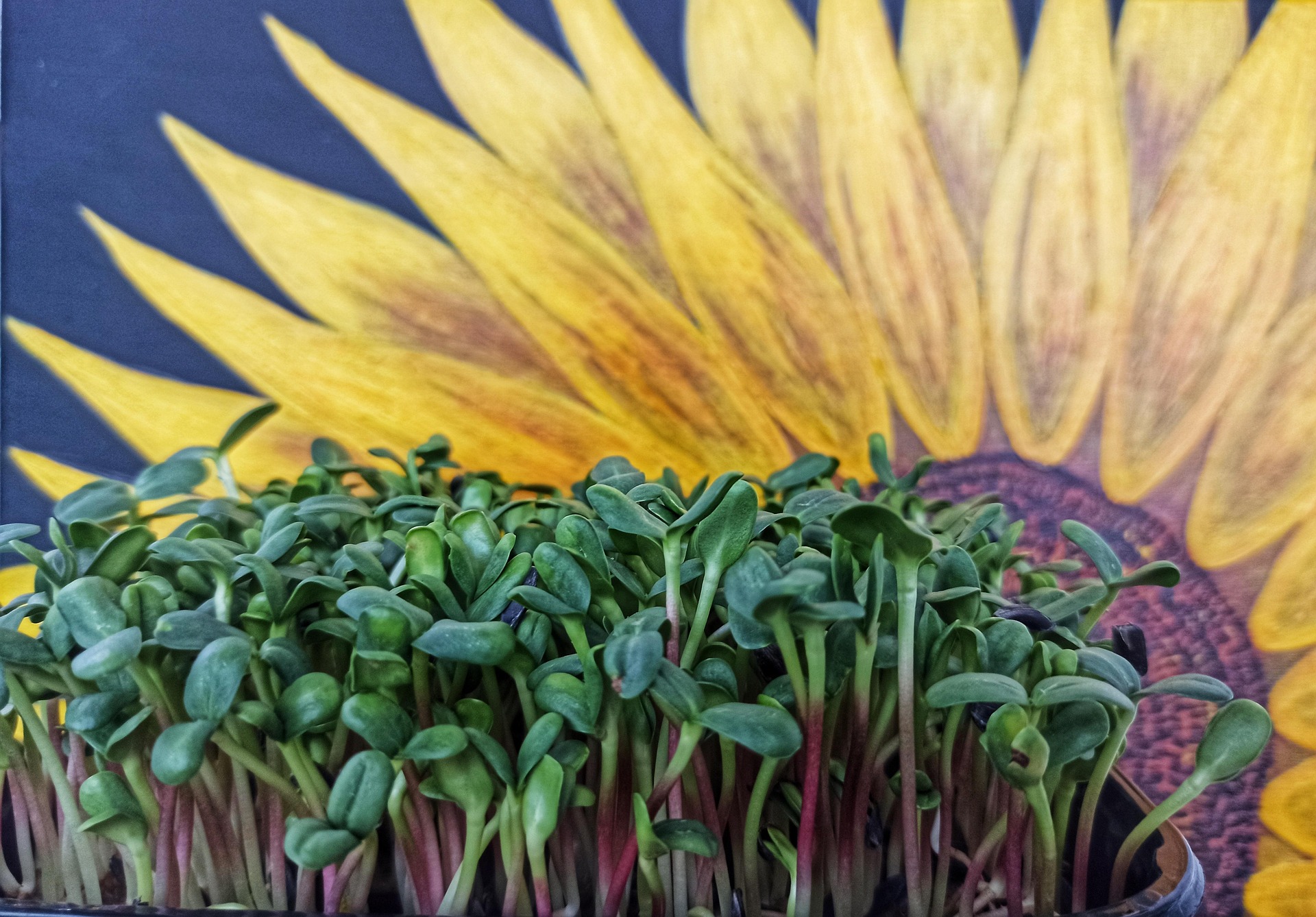
Microgreens are young seedlings, usually 7 to 14 days old, they are regular plants that are harvested just after their first true leaves appear. Common microgreens include pea shoots, radish, broccoli, sunflower, kale, mustard. You’re eating the plant at its most nutrient-dense stage, before it has put energy into stems, roots, or flowers.
They’re not sprouts (which are eaten earlier, seed and all, after just a few days of soaking and rinsing — different format, covered separately). They’re not “baby greens” (which are eaten a few weeks later, after several sets of leaves). Microgreens sit in the sweet spot: long enough to develop flavour, short enough that there’s nothing tough or bitter.
The £15 setup
Everything you need, with UK pricing as of May 2026:
- One nursery tray with humidity dome (10″ × 20″, available from any UK garden centre or via Amazon) ~£8 for a 5-pack, so well under £2 per tray once you’re running a rotation.
- A bag of seed-starting compost or coco coir ~£4 from a UK garden centre. One bag does many trays.
- A packet of microgreen seeds such as pea shoots, radish, broccoli, or sunflower are the easiest starters. ~£3-5 per pack from a UK supplier like Sky Sprouts or Sutton Seeds. One pack seeds several trays.
Total first-time cost: about £15. After the first tray, you’re just buying seeds — the tray and the compost bag last for many cycles.

How to do it
The whole process is five steps. None of them are hard.
- Soak (for some seeds only) – Pea shoots and sunflower benefit from a 4–8 hour soak in water before sowing. Radish and broccoli don’t need soaking. The seed packet will tell you.
- Fill the tray with 2–3cm of compost. Level the surface gently.
- Spread the seeds densely, much denser than you’d plant a normal seed bed. The goal is a near-carpet of seeds, just not piled on top of each other. Press them lightly into the compost; don’t bury them.
- Cover and water – Mist the surface with a spray bottle until just damp. Cover with the humidity dome. Keep on a kitchen counter, a windowsill is fine, but artificial light works too.
- Uncover when they’re standing up (usually day 3 or 4). Mist daily. Harvest with kitchen scissors when the first true leaves appear, around day 7 to 10.
That’s the whole method. Failure modes are almost entirely about over-watering — keep the compost damp, never sodden, and most beginner trays succeed first time.

Why this often beats a smart garden
Three honest comparisons, with the maths.
- On time-to-harvest: microgreens generally take 7 to 10 days. Whereas, a smart garden’s first basil pinch is 4 to 6 weeks. If you want a fast win, microgreens are an order of magnitude faster.
- On cost per gram: a 50g punnet of supermarket microgreens runs £3 to £5 in May 2026 ( call it £80 per kg ). A home tray produces 100–200g of microgreens for £1 in seed and a few pence of compost (call it £5–10 per kg ). The break-even point is about one tray.
- On nutrient density: this is the one most often misquoted, so I’ll be careful. Microgreens can contain 4 to 40 times the concentration of certain vitamins and minerals (vitamin C, K, E, beta-carotene) compared to mature plants of the same species, the figures come from a USDA-backed 2012 study. Whether you eat enough microgreens for that to matter nutritionally is a separate question, but it’s an honest reason the format gets attention beyond the convenience case.
When the smart garden still wins
Microgreens aren’t a replacement for a smart garden. They’re a complement, and worth being clear about which format does what.
Smart gardens win on continuous yield (a basil plant produces for months; a microgreen tray is one-and-done), on aesthetic presence (the kitchen-counter look is part of the value), and on hands-off operation (microgreens want daily misting attention; smart gardens want weekly). If you cook with fresh basil three nights a week year-round, the smart garden’s constant supply is worth its sticker price. If you want fast bursts of fresh, peppery, or sweet greens to throw on salads and sandwiches, microgreens win.
Best beginner microgreens
- Pea shoots: sweet, mild, easy. Soak overnight, sow densely, harvest at 5–7cm. Probably the most forgiving starter crop. Ready to harvest in 10 days.
- Radish: peppery and fast (often ready in 7 days). Good for tossing in salads.
- Broccoli: mild and nutty. The nutrient-density darling of microgreens. Ready in about 10 days.
- Sunflower: rich, crunchy, substantial. Slower (12 days) but worth the wait.
If you’ve never grown anything indoors and you want a 10-day win, microgreens are it. Once you’ve done one successful tray, the conversation about whether a smart garden is worth it becomes a lot clearer, you’ll know what fresh-grown actually tastes like, and you’ll know whether the daily-attention requirement of microgreens or the weekly-attention requirement of a smart garden fits your kitchen better.
About the author
Nathaniel is the founder of Grow Metropolis. His degree in Sustainability Sciences and 10+ years in professional kitchens and hospitality give him a unique perspective on food systems and where our ingredients come from. He writes about indoor growing and smart-garden hardware as practical solutions tested in real kitchens – backed by research, reader conversations, and years of understanding how chefs and home cooks actually work.