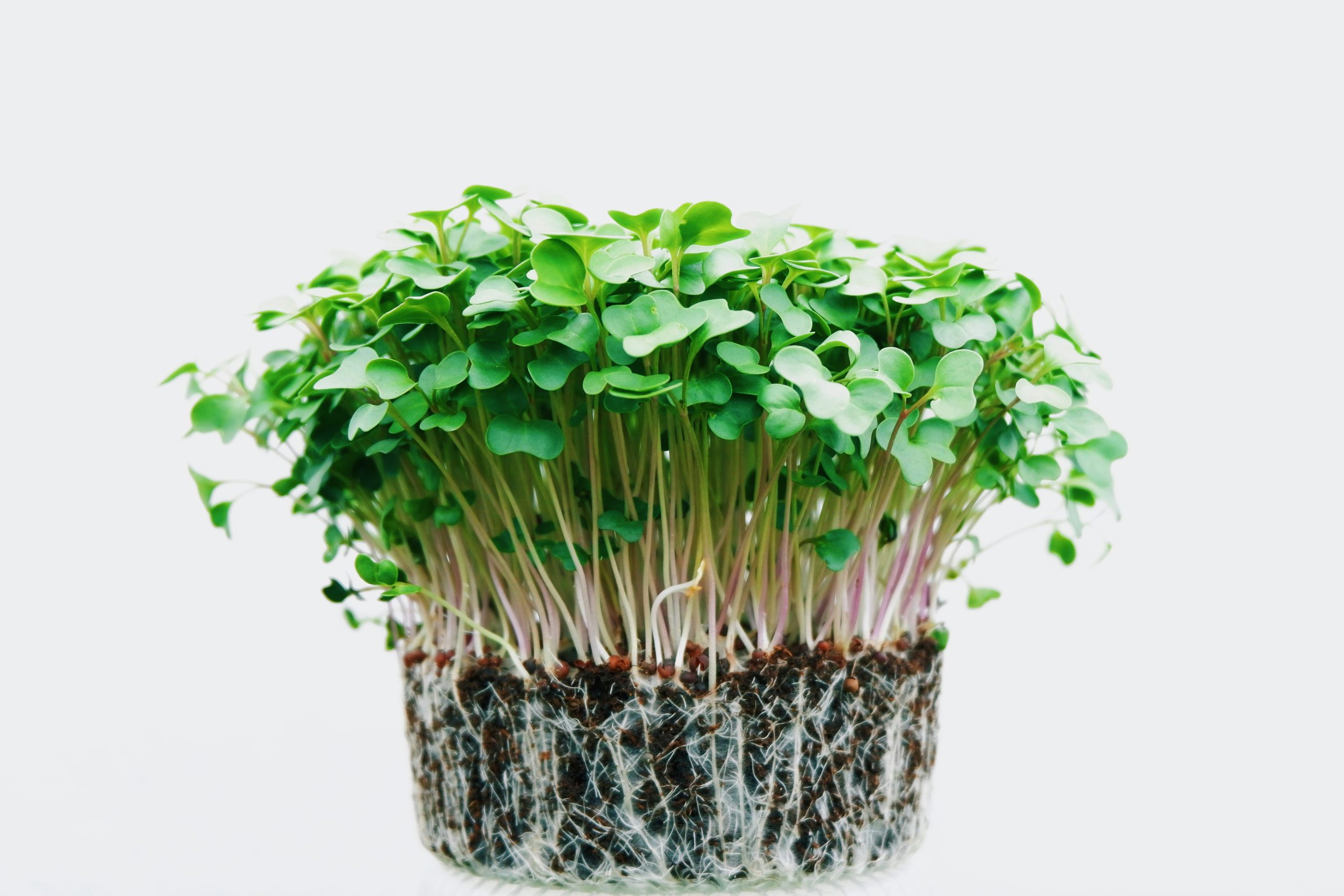
A variety-by-variety care guide for ten of the best seeds: what each one needs, how long it takes, and how good it actually tastes.
By Nathaniel · Last updated May 2026 · 8 min read
The question most people ask after reading a basic microgreens guide isn’t “how do I grow them.” It’s “which seeds should I actually buy.”
The answer depends on what you want: speed, flavour, nutrition, or a low-effort first attempt. Each variety behaves differently in the tray, and the care differences matter. Some seeds need a soak before they’ll even bother germinating. Others rot if you look at them with a full watering can. A few need warmth that most UK kitchens don’t reliably provide.
This guide runs through ten of the most widely grown microgreen seeds in detail: what they need, how they taste, and where they rank against each other. The setup basics (tray, growing medium, light) are covered separately in our Microgreens in 10 Days guide. This one starts after you’ve chosen your seeds.
Two Things That Vary Most Between Seeds
Before going variety by variety, it’s worth naming the two care variables that differ most across seeds: pre-soaking and temperature.
Pre-soaking matters for large-seeded varieties (sunflower, peas, wheatgrass) where the hard seed coat slows germination. These benefit from 8-12 hours in cool water before sowing. Small-seeded brassicas (broccoli, kale, mustard, radish) don’t need it and germinate fine dry. Basil actively shouldn’t be soaked: it forms a mucilaginous gel that makes even sowing nearly impossible.
Temperature is often overlooked. Most brassicas and peas grow well at 15-20°C, which covers most UK kitchens year-round. Basil is the exception as it needs 21-24°C consistently and slows to a crawl below 18°C. If your kitchen is cold in winter, plan your basil growing for summer, or invest in a small heat mat or lamp.
The Seeds, One by One
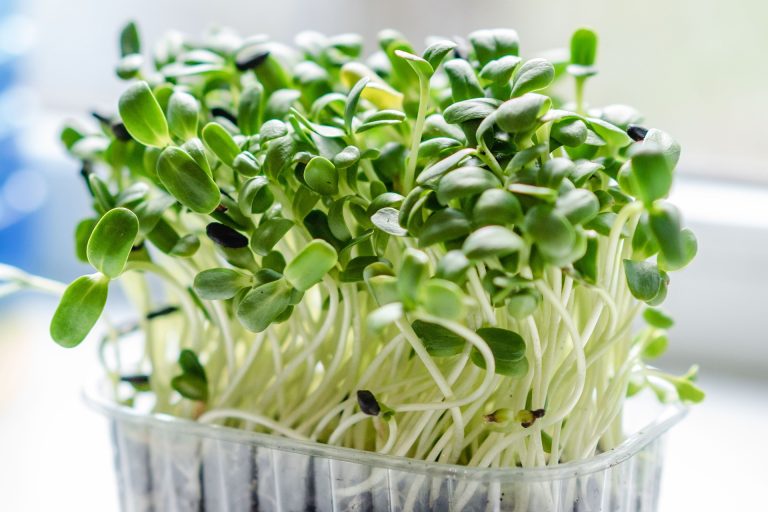
Sunflower
Pre-soak | 8-12 hours. Remove any floating seeds – they won’t germinate. |
Blackout | 3-4 days under a second tray weighted with a water-filled jar. |
Daily misting | Once or twice daily. Sunflower is forgiving – err on the side of moist rather than wet. |
Days to harvest | 10-14 days. Harvest at 5-8 cm when the first pair of leaves has fully opened. |
Taste | Nutty, slightly sweet, satisfyingly crunchy. The crowd-pleaser of the microgreens world. |
Nutrition | High in Vitamin E, zinc, and healthy unsaturated fats. One of the more calorie-dense varieties. |
Ease | Medium. The main fuss: unhulled seeds leave shells on the leaves. Use hulled seeds or rinse harvested greens. |
Tip: Buy hulled (shell-off) sunflower seeds if possible. They sprout faster and save you picking shells off your salad.
Pea Shoots
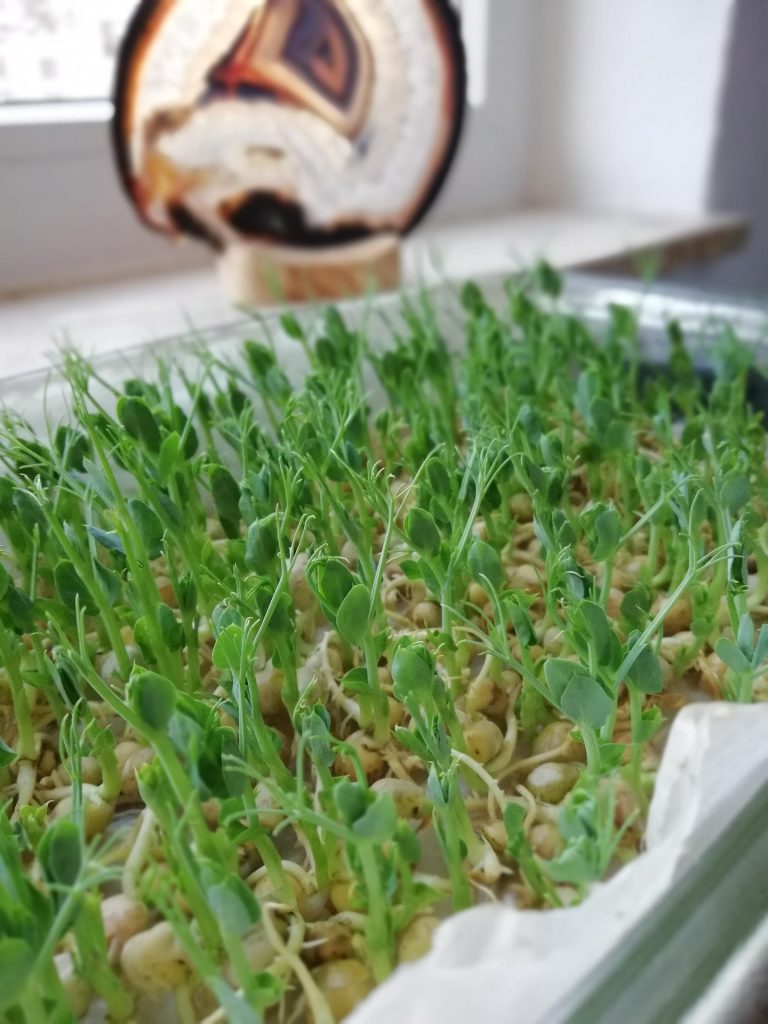
Pre-soak | 8-12 hours in cool water. They’ll visibly plump up – a good sign. |
Blackout | 3-4 days. Peas need a decent dark period to develop good stem length. |
Daily misting | Once or twice daily. Peas are moisture-tolerant and rarely rot. |
Days to harvest | 10-14 days. Cut at 10-15 cm – they’ll often regrow for a second smaller cut. |
Taste | Sweet, fresh, unmistakably garden-pea. The most universally liked microgreen. Good raw or briefly wilted. |
Nutrition | Good source of Vitamin C, folate, and plant protein. Lower in some micronutrients than brassicas, but solid overall. |
Ease | Excellent. Large seeds, strong germination, tolerant of minor care mistakes. The best starting point for beginners. |
Tip: Leave 1-2 cm of stem when you harvest and water again – most trays will give you a second cut within a week.
Radish
Pre-soak | None needed. Radish germinates fast without help. |
Blackout | 2-3 days. Shorter than most – these move quickly. |
Daily misting | Twice daily. Radish can handle it and benefits from consistent moisture. |
Days to harvest | 6-8 days. One of the fastest microgreens you can grow. |
Taste | Bold and peppery – closer to horseradish heat than a mild green. Not for everyone plain, but excellent in sandwiches or alongside fatty foods. |
Nutrition | A reliable source of Vitamin C and folate. Glucosinolates are present, though in smaller concentrations than broccoli. |
Ease | Very easy. Fast germination, low disease pressure, minimal attention required. |
Tip: Mix radish with mild greens like pea shoots to balance the heat. Daikon varieties are slightly milder than standard red radish seed.
Broccoli
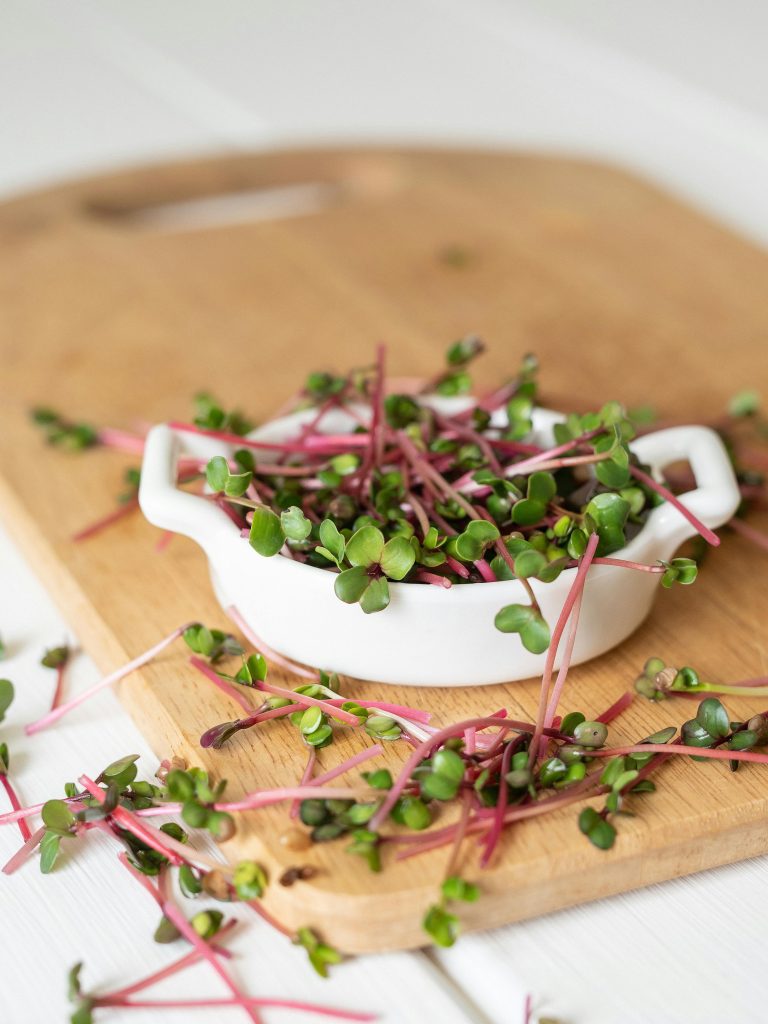
Pre-soak | None needed. Brassica seeds germinate reliably without soaking. |
Blackout | 2-3 days. |
Daily misting | Twice daily. Broccoli doesn’t like to dry out but also doesn’t tolerate sitting in water. |
Days to harvest | 8-12 days. Harvest when the cotyledons are open but before the first true leaves appear. |
Taste | Mild, very slightly earthy. Pleasant rather than exciting – works as a neutral base in a mix. |
Nutrition | The standout. Broccoli microgreens are one of the most studied crops for sulforaphane – a compound associated with antioxidant activity. Also high in Vitamins C and K. |
Ease | Easy. Reliable germination, few failure modes, quick enough to stay motivating. |
Tip: If you’re growing microgreens for nutritional reasons rather than flavour, broccoli is the first seed to put in your rotation.
Kale
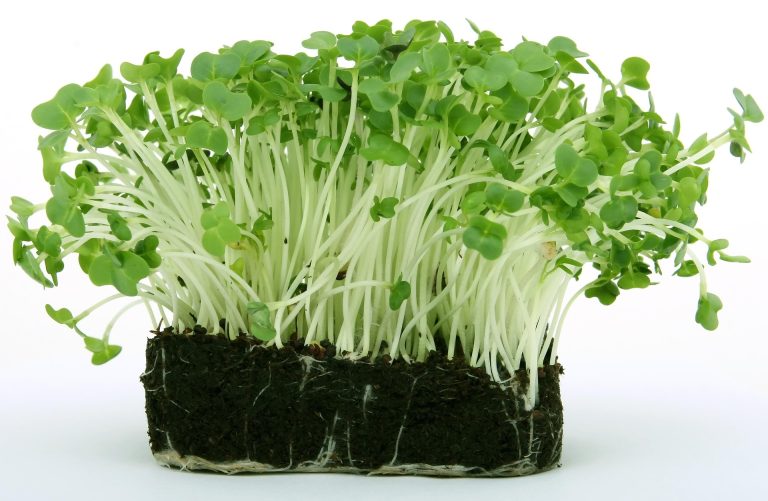
Pre-soak | None needed. |
Blackout | 2-3 days. |
Daily misting | Twice daily. Same care routine as broccoli – they’re close relatives. |
Days to harvest | 8-12 days. |
Taste | Mild and slightly earthy with a gentle bitterness. Noticeably less bold than full-grown kale – approachable for most palates. |
Nutrition | Excellent. High in Vitamins K, C, and A; meaningful iron content for a leaf crop. |
Ease | Easy. Near-identical to broccoli in care, with similarly reliable results. |
Tip: Red Russian kale is slightly milder and more visually striking than standard curly kale seed – worth trying once you’ve got the basics down.
Wheatgrass
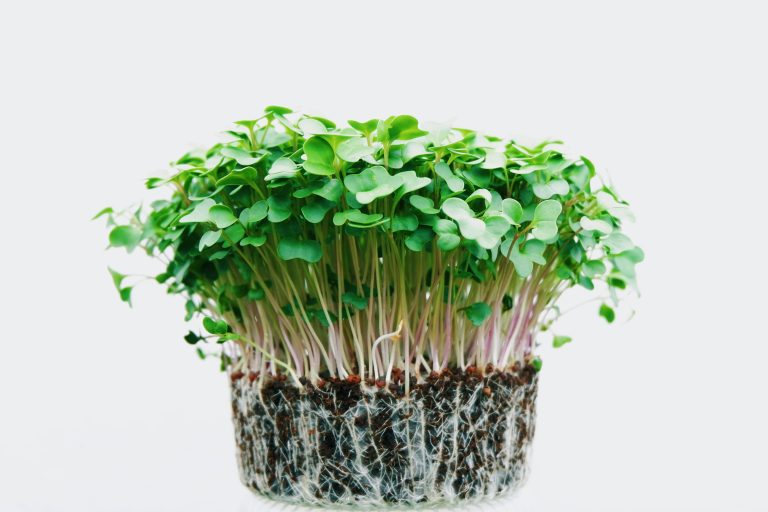
Pre-soak | 8-12 hours. Wheatgrass benefits from soaking more than most grains. |
Blackout | 2-3 days. |
Daily misting | Twice daily, carefully – wheatgrass sits densely and poor airflow causes mould. Avoid overwatering. |
Days to harvest | 7-10 days. Cut when the grass reaches 15-18 cm, just before the blade splits. |
Taste | Intensely grassy, earthy, and slightly sweet. Rarely eaten whole – best juiced or blended. |
Nutrition | High in chlorophyll, iron, Vitamins A, C, E, and K. Often cited as one of the most nutrient-dense crops you can grow, though many claims outpace the evidence for solid-food consumption. |
Ease | Moderate. The main challenge is mould, especially in humid kitchens. Good drainage, spacing, and airflow are essential. |
Tip: A manual wheatgrass juicer costs around £25 and makes the harvest actually usable. Without one, wheatgrass microgreens are mostly decorative.
Mustard
Pre-soak | None needed. |
Blackout | 2-3 days. |
Daily misting | Twice daily. Mustard is robust and hard to overwater at the misting stage. |
Days to harvest | 6-8 days. One of the quickest varieties alongside radish. |
Taste | Spicy, peppery, and sharp – even more assertive than radish in some varieties. Good for anyone who likes heat. |
Nutrition | Vitamin A, C, and K; glucosinolates similar to other brassicas. A useful nutritional addition without being a standout. |
Ease | Very easy. Fast, reliable, and hard to fail. |
Tip: Golden or yellow mustard seed is slightly milder than brown mustard. Useful if you want the speed without maximum heat.
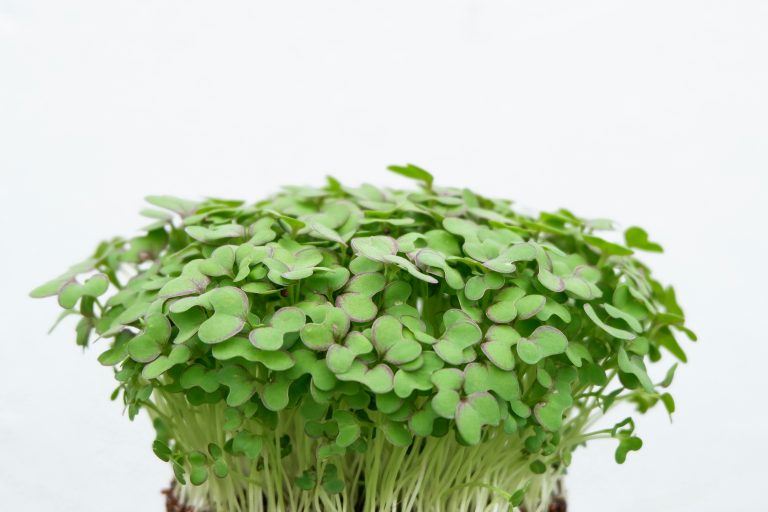
Amaranth
Pre-soak | None. Seeds are very small – soaking makes them difficult to handle. |
Blackout | 2-3 days. |
Daily misting | Once daily with a gentle mist. Tiny seeds can be disturbed by heavy spray – keep the bottle nozzle broad. |
Days to harvest | 8-12 days. Stunning deep pink and red stems make this one of the most visually striking crops. |
Taste | Mild, slightly earthy, with a gentle sweetness. More approachable than brassicas for cautious palates. |
Nutrition | Notably high in protein and iron for a leaf crop. Good calcium content. |
Ease | Moderate. Tiny seeds tend to clump and can germinate unevenly. Worth persisting with – the second or third tray is usually much better than the first. |
Tip: Don’t sow too densely – amaranth seeds expand significantly on the medium and dense sowings quickly become a soggy mat. Aim for visible space between seeds.
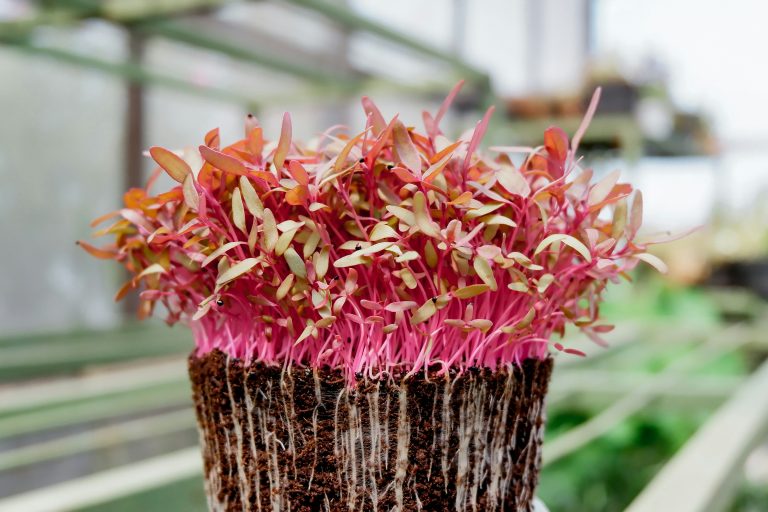
Beetroot
Pre-soak | 4-8 hours. Beet seeds are actually seed clusters with a corky casing – soaking softens the coating and speeds germination. |
Blackout | 3-4 days. |
Daily misting | Once or twice daily. Keep consistently moist but not waterlogged. |
Days to harvest | 12-16 days. The slowest of the common varieties. |
Taste | Earthy, mildly sweet, with a gentle beet flavour. The deep red stems are visually dramatic and impressive on a plate. |
Nutrition | Good folate and iron content; betaine gives beetroot its characteristic red pigment and is associated with cardiovascular and anti-inflammatory activity. |
Ease | Moderate. Slower and patchier than brassicas. The germination rate is lower – seed density needs to go up to compensate. |
Tip: Expect uneven germination – it’s normal, not failure. Sow 20-25% more densely than you think you need to.
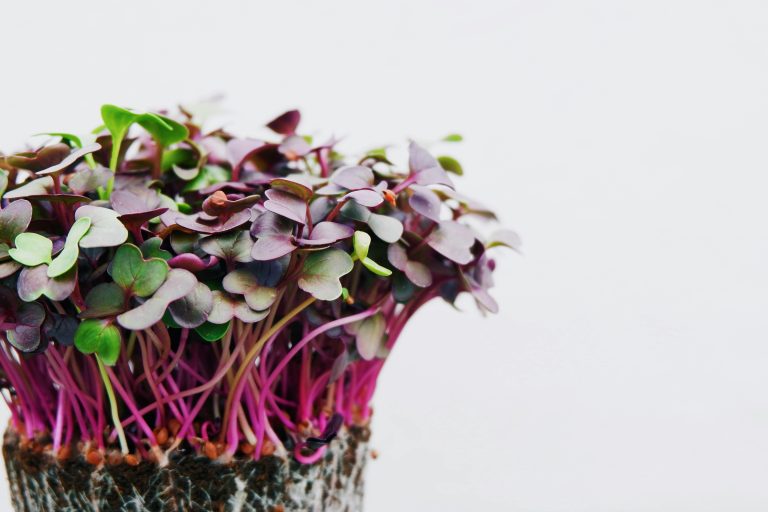
Basil
Pre-soak | Do not soak. Basil seeds form a mucilaginous gel when wet, making them nearly impossible to spread evenly on a tray. |
Blackout | Skip it. Basil needs light from the start – remove any dome as soon as germination begins. |
Daily misting | Once daily, very gently. Basil is the most moisture-sensitive variety here – standing water invites damping off quickly. |
Days to harvest | 12-16 days. Needs warmth to thrive: below 20°C and growth slows noticeably. |
Taste | Intensely sweet and aromatic – concentrated basil flavour in every bite. Outstanding on pizza, pasta, or any dish where full-grown basil would work. |
Nutrition | Good Vitamin K content; contains the essential oils (linalool, eugenol) associated with fresh basil’s flavour and antioxidant properties. |
Ease | Tricky. Needs warmth (ideally 21-24°C), careful watering, and good airflow. Not a beginner crop. |
Tip: A small heat mat under the tray makes a significant difference. Without one, basil microgreens in a UK kitchen are a slow and patchy crop for much of the year.
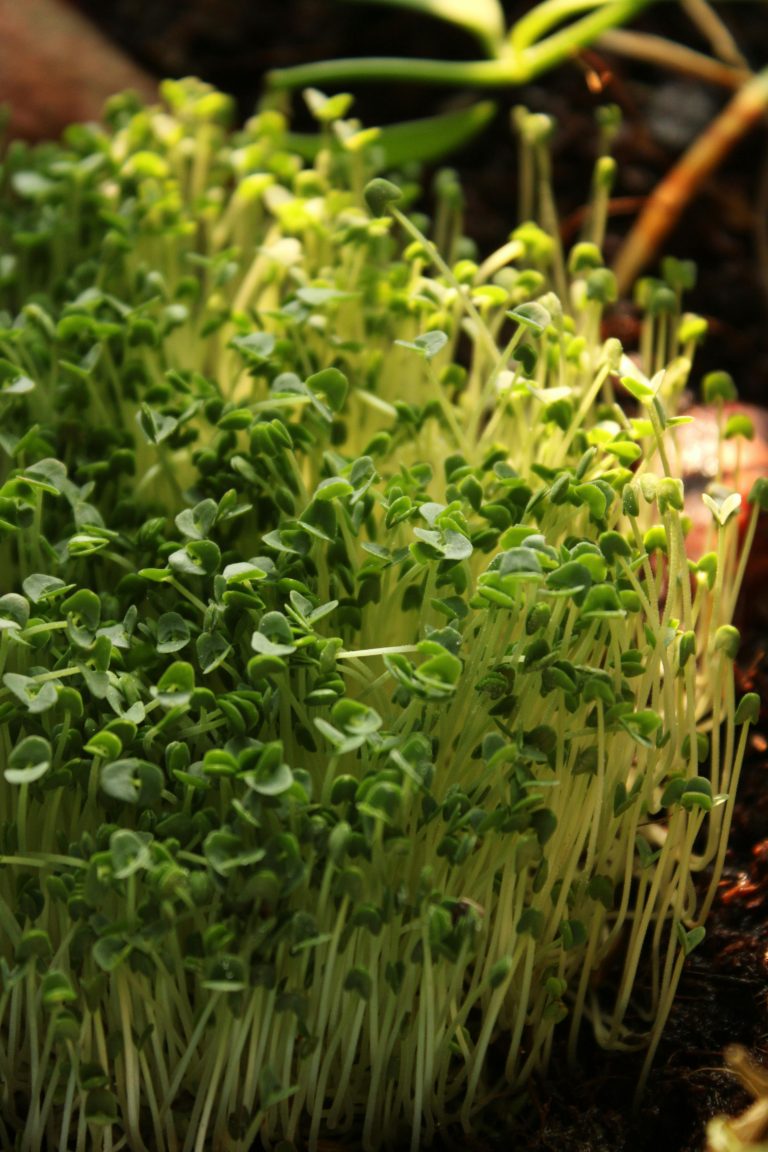
At a Glance: How the Seeds Compare
Ratings are out of 5 stars. Taste reflects versatility and palatability for most palates — not peak intensity. Ease covers the whole grow cycle, not just germination. Speed scores higher the faster the harvest window. Nutrition reflects concentration of micronutrients in the peer-reviewed literature, not marketing claims.
|
Seed |
Taste |
Ease |
Speed |
Nutrition |
|
Sunflower |
★★★★★ |
★★★☆☆ |
★★★☆☆ |
★★★★☆ |
|
Pea Shoots |
★★★★★ |
★★★★★ |
★★★☆☆ |
★★★★☆ |
|
Radish |
★★★☆☆ |
★★★★★ |
★★★★★ |
★★★☆☆ |
|
Broccoli |
★★★☆☆ |
★★★★☆ |
★★★★☆ |
★★★★★ |
|
Kale |
★★★☆☆ |
★★★★☆ |
★★★★☆ |
★★★★★ |
|
Wheatgrass |
★★☆☆☆ |
★★★☆☆ |
★★★★☆ |
★★★★★ |
|
Mustard |
★★★☆☆ |
★★★★★ |
★★★★★ |
★★★★☆ |
|
Amaranth |
★★★★☆ |
★★★☆☆ |
★★★★☆ |
★★★★☆ |
|
Beetroot |
★★★☆☆ |
★★★☆☆ |
★★☆☆☆ |
★★★★☆ |
|
Basil |
★★★★★ |
★★☆☆☆ |
★★☆☆☆ |
★★★☆☆ |
A few things the matrix doesn’t fully capture: radish and mustard score high on ease and speed but their assertive flavour means you’ll almost always mix them with something milder. Broccoli and kale score identically across the board, they’re interchangeable in the tray, so buy whichever you can get as untreated seed from a UK supplier. Basil’s low ease score is genuinely deserved; save it for once you have a few successful trays behind you.
Where to Start if You’re New to This
If you’re growing for the first time: peas and radish. They’re at opposite ends of the flavour spectrum but both are hard to fail at, and having one sweet variety and one peppery variety means you can start mixing and using your harvest straight away.
If you want maximum nutrition: add broccoli to your rotation as soon as you’re comfortable with the process. It’s barely more demanding than radish and the nutritional return is significantly higher.
If you want to impress at dinner: sunflower for crunch and amaranth for colour. Both are visually striking and carry enough flavour to hold their own on a plate rather than just disappear into a bowl.
Save basil and beetroot for later. Both reward patience and experience in the tray. There’s nothing wrong with either, they’re just less forgiving of the small mistakes everyone makes in the first few grows.
A Note on Seed Sources
In the UK, buy seeds sold specifically for sprouting or microgreens use, not standard garden seeds. Garden seeds are sometimes treated with fungicide coatings that aren’t intended for food crops at the seedling stage.
Reliable UK suppliers as of 2026 include Sky Sprouts, Suttons, and The Seed Collection, all stock untreated seed and sell in quantities suitable for a home setup. Buying in bulk from a wholefoods supplier (for sunflower or wheatgrass in particular) is fine once you know you’ll use the volume; just confirm the seed is food-grade and untreated.
About the author
Nathaniel is the founder of Grow Metropolis. His degree in Sustainability Sciences and 10+ years in professional kitchens and hospitality give him a unique perspective on food systems and where our ingredients come from. He writes about indoor growing and smart-garden hardware as practical solutions tested in real kitchens – backed by research, reader conversations, and years of understanding how chefs and home cooks actually work.