| At a Glance | |
| Common Name | Weeping Fig, Benjamin Fig |
| Plant Type | Tropical tree |
| Light Required | Bright indirect light |
| Soil / Medium | Well-draining, nutritious houseplant compost |
| Difficulty | Intermediate |
| Mature Size | 2–3m indoors |
| Toxicity | Toxic to cats and dogs |
| Native Habitat | South and Southeast Asia |
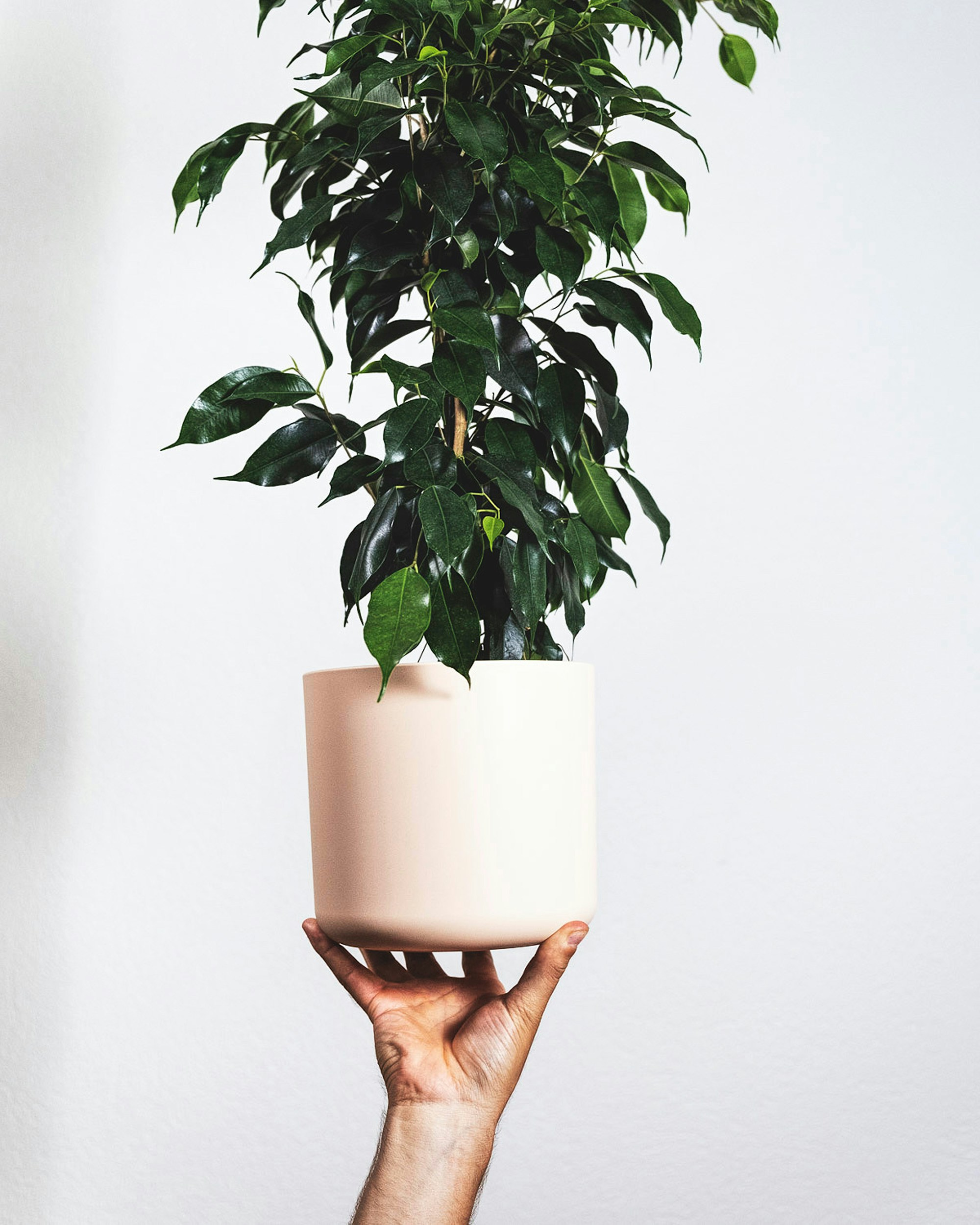
The weeping fig was the UK’s most popular houseplant tree through the 1980s and 1990s, and it remains one of the best choices for filling a large indoor space with elegant, arching foliage. Its reputation for dropping leaves is deserved — it is sensitive to any change in conditions — but once it has settled into a position and routine, it is a long-lived, attractive plant that can grow to ceiling height over many years.
Light Requirements
Bright indirect light is ideal. Weeping figs tolerate moderate light but grow noticeably faster and produce denser foliage in brighter conditions. Avoid direct midday sun, which scorches the leaves.
Critically, do not move the plant once it has settled. Moving a weeping fig to a different position — even across the same room — frequently triggers a significant leaf drop. Place it where it will stay.
Soil & Growing Medium
Well-draining, nutritious houseplant compost with added perlite. Weeping figs are vigorous growers in good conditions and benefit from a compost that retains some moisture while draining freely.
Watering
Keep the soil consistently moist during the growing season but not waterlogged. Allow the top 2-3cm to dry before watering. In winter, reduce frequency — the plant uses less water. Both overwatering and underwatering cause leaf drop, which makes diagnosis tricky.
Use room-temperature water. Cold water can shock the roots and trigger leaf drop.
Temperature & Humidity
Weeping figs prefer 16-24°C and do not tolerate cold draughts or temperatures below 10°C. Cold draughts from external doors or windows in winter are a leading cause of sudden leaf drop.
Moderate humidity suits them. They tolerate the typical humidity of UK homes but benefit from being kept away from radiators in winter.
Fertilising
Feed every two weeks during the growing season with a balanced liquid fertiliser. Reduce to monthly in early autumn and stop in winter. Resume as new growth appears in spring.
Grow Light Compatibility
Weeping figs maintain well under grow lights in lower-light spaces. A moderate-to-bright full-spectrum LED on a 12-hour cycle supports healthy growth and leaf density.
Toxicity
Weeping figs are toxic to cats and dogs — ingestion causes oral irritation, drooling, vomiting, and diarrhoea. The sap can also cause skin irritation in sensitive people. Keep out of reach of pets.
Pruning
Prune in spring to control shape and size. Weeping figs respond well to pruning and can be shaped into standards (a clear stem with a round canopy at the top) or kept as a multi-stemmed bush. Wear gloves when pruning — the sap is a skin irritant.
Propagating
Stem tip cuttings taken in summer root readily in moist propagating compost at 20-22°C. Take 10-15cm cuttings from new growth, remove lower leaves, and dip in hormone rooting powder. Keep humid until rooted. Air layering works well for larger stems.
Indoor Setup Notes
Weeping figs are best treated as permanent fixtures once placed. Choose a bright position away from draughts and radiators and leave them there. The leaf drop response to movement is well documented and real — most people who lose a weeping fig have moved it at some point. Once settled, they are remarkably long-lived and can grow into impressive specimen trees.
Potting & Repotting
Repot every two to three years in spring. Weeping figs tolerate being slightly root-bound and do not need repotting the moment roots appear at the drainage holes. Go up one pot size. Root disturbance also causes leaf drop — repot carefully.
Common Pests & Problems
- Leaf drop: The plant’s primary response to stress. Causes include: moving the plant, cold draughts, overwatering, underwatering, low light, or repotting. Stabilise conditions and wait — the plant usually recovers.
- Scale insects: Very common on weeping figs. Brown waxy bumps on stems and leaves. Scrape off and treat with neem oil.
- Spider mites: Fine webbing and pale stippled leaves in dry conditions.
- Red-brown spots on leaves: Fungal leaf spot. Remove affected leaves and improve air circulation.
FAQ
Why is my weeping fig dropping all its leaves?
Weeping figs drop leaves in response to almost any stress: being moved, cold draughts, changes in temperature or light, overwatering, or underwatering. Identify what changed recently, stabilise conditions, and wait — the plant usually regrows its leaves if the roots are healthy.
Can I move my weeping fig?
You can, but expect significant leaf drop afterwards. This is temporary — the plant typically regrows its leaves once it adapts to the new position. Move it in spring if possible, and do not move it again once it has settled.
How big will a weeping fig get indoors?
In a large pot with good conditions, it can reach 2-3 metres over many years. Regular pruning controls the size.
Is weeping fig the same as a rubber plant?
No — both are Ficus species but different ones. Weeping fig is Ficus benjamina; rubber plant is Ficus elastica. They have different growth habits and care requirements.