| At a Glance | |
| Common Name | Bromeliad, Guzmania |
| Plant Type | Tropical epiphyte |
| Light Required | Bright indirect light |
| Soil / Medium | Orchid bark and perlite mix |
| Difficulty | Easy to Intermediate |
| Mature Size | 30–60cm |
| Toxicity | Non-toxic to cats, dogs, and humans |
| Native Habitat | Tropical Americas |
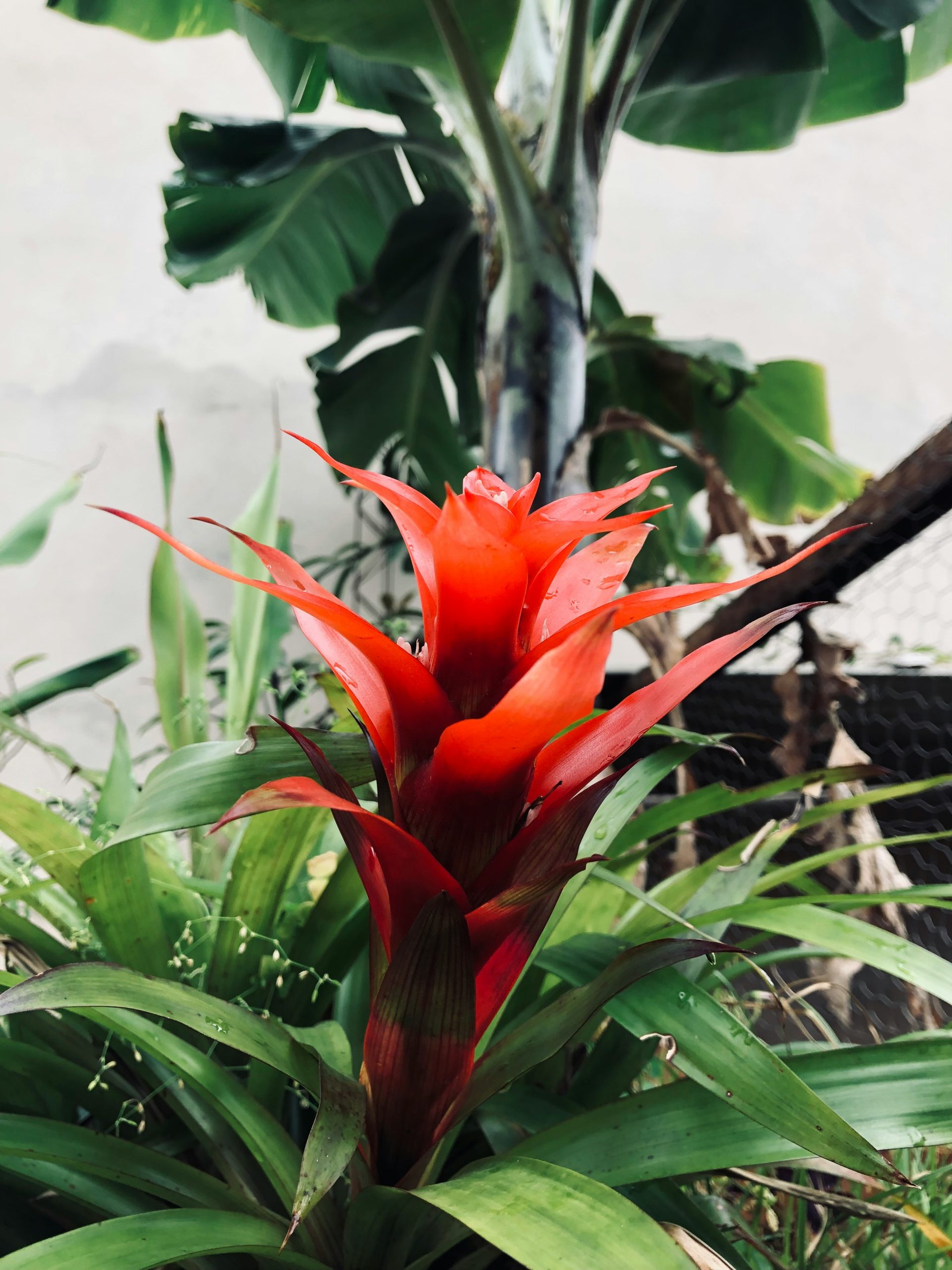
Bromeliads are a large family that includes pineapple, and the guzmania is the variety most commonly sold in UK houseplant shops — typically as a compact plant with a long-lasting coloured flower spike. They are epiphytes from tropical American rainforests, evolved to collect water in their central cup rather than rely on roots in the ground. This changes how you water them compared to almost every other houseplant.
Light Requirements
Bright indirect light. Guzmanias will not tolerate direct sun, which bleaches and scorches their leaves. An east or north-facing window with good natural light suits them well.
The coloured parts most people think of as flowers are actually bracts — modified leaves. The true flowers are small and emerge from inside the bract. The bracts remain colourful for several months.
Soil & Growing Medium
A loose, fast-draining mix — orchid bark combined with perlite and a small amount of compost works well. Standard houseplant compost is too dense for a plant adapted to epiphytic conditions.
Watering
Keep the central cup filled with water at all times. Empty and refill it every one to two weeks with fresh water to prevent bacterial build-up. Keep the soil slightly moist but not waterlogged.
Use rainwater or filtered water if possible — bromeliads are sensitive to fluoride and hard tap water.
Temperature & Humidity
Bromeliads prefer 18-27°C and do not tolerate temperatures below 13°C. They enjoy moderate to high humidity and do well in bathrooms and kitchens with natural light.
Fertilising
Feed sparingly — monthly during the growing season at quarter strength, added to the central cup. Over-fertilising a bromeliad causes more harm than good.
Grow Light Compatibility
Bromeliads maintain well under moderate grow lights. A full-spectrum LED on a 10-12 hour cycle works well for interior spaces without adequate natural light.
Toxicity
Most ornamental bromeliads, including guzmanias, are non-toxic to cats, dogs, and humans.
Pruning
Once the central flower spike has finished, cut it off at the base. The parent rosette will not flower again, but it will produce offsets (pups) at the base which can be grown on to flower. This is the normal lifecycle of a bromeliad.
Propagating
Bromeliads reproduce by producing pups (offsets) at the base of the parent plant after flowering. Allow pups to reach about a third of the parent plant’s size before removing. Twist or cut them off with a sharp knife, allow the cut to callous, and pot into loose bromeliad mix. They will flower in one to three years.
Indoor Setup Notes
Bromeliads are useful because the flower spike lasts far longer than almost any cut flower — often two to three months. They add architectural interest and vivid colour to bright indoor spaces.
Potting & Repotting
Bromeliads do not need large pots — they are epiphytes with limited root systems. Pot up pups into small pots of bromeliad mix.
Common Pests & Problems
- Brown leaf tips: Low humidity or fluoride in water. Use rainwater.
- Rotting centre cup: Bacterial rot from stagnant water. Empty and refill more frequently.
- Scale insects: Brown bumps on leaves. Remove manually and treat with neem oil.
FAQ
Will my bromeliad flower again?
The parent rosette only flowers once. After flowering it produces pups at the base — these are the next generation and will flower in one to three years if well cared for.
How do I speed up flowering in a bromeliad pup?
Expose the plant to ethylene gas. Seal the plant in a clear plastic bag with a ripe apple for two to four days — the apple releases ethylene which triggers flowering in one to three months.
How long do bromeliad flowers last?
The coloured bracts typically remain attractive for two to four months. The true flowers inside the bract last only a few days.