| At a Glance | |
| Common Name | Yucca, Spineless Yucca |
| Plant Type | Tropical succulent tree |
| Light Required | Bright to direct light |
| Soil / Medium | Free-draining cactus compost with perlite |
| Difficulty | Easy |
| Mature Size | 1–2m+ indoors |
| Toxicity | Toxic to cats and dogs |
| Native Habitat | Mexico and Central America |
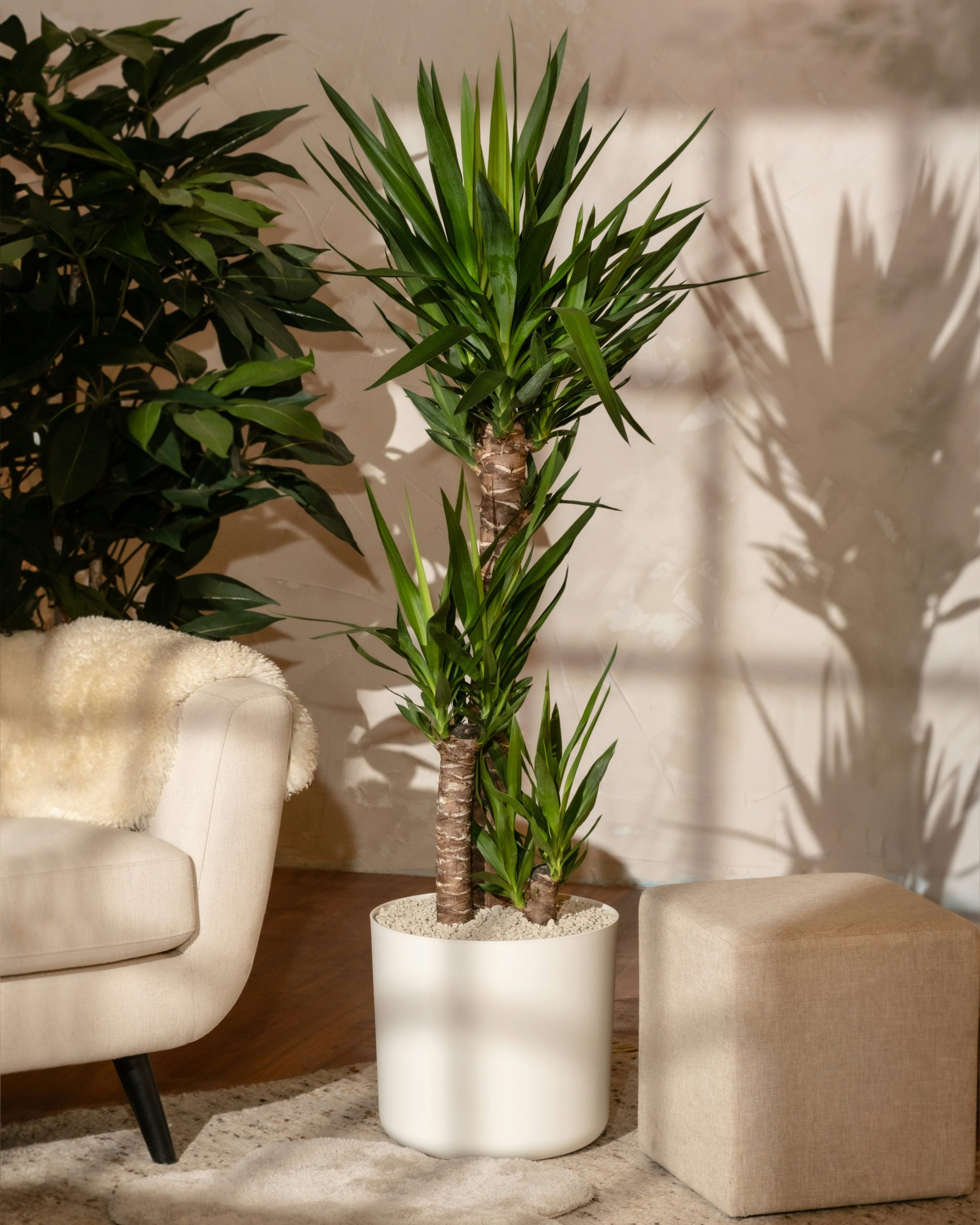
Yucca elephantipes is the most common indoor yucca, sold as a bare-stemmed cane that pushes out a crown of sword-like leaves from the top. It is one of the most forgiving large houseplants available: it tolerates bright to direct light, handles drought well, copes with dry air, and is difficult to kill through neglect. The main hazard is overwatering, which rots the stem from the inside.
Light Requirements
Yuccas prefer maximum light — a south-facing windowsill or a position close to a large south-facing window. They tolerate bright indirect light but thrive in direct sun, making them one of the few large houseplants genuinely suited to very sunny spots.
In lower light, growth becomes slow and etiolated. If the plant is leaning strongly toward the light source, rotate it regularly or move it closer to the window.
Soil & Growing Medium
Free-draining compost is essential. Cactus and succulent mix, or standard houseplant compost with significant added perlite or grit. The stem stores water and is prone to rot if the soil remains wet for extended periods.
Watering
Water thoroughly, then allow the soil to dry out almost completely before watering again. In summer this might be every two to three weeks. In winter, once a month or less. Yuccas tolerate drought far better than waterlogging.
The most reliable test: push your finger to the bottom of the pot. Water only when it feels completely dry. Do not water on a fixed schedule — water based on soil conditions.
Temperature & Humidity
Yuccas prefer 16-27°C but are tolerant of a wider range than most houseplants. Some species are frost-hardy outdoors, though the indoor Yucca elephantipes should not be exposed to frost. They handle the dry air of centrally heated homes very well — no humidity supplementation needed.
Fertilising
Feed once a month during the growing season with a balanced liquid fertiliser. Yuccas are not heavy feeders. Stop feeding in autumn and winter.
Grow Light Compatibility
Yuccas benefit from supplemental lighting in winter to maintain their compact form and prevent etiolation. A strong full-spectrum LED placed close to the plant works well.
Toxicity
Yuccas are toxic to cats and dogs. Ingestion causes vomiting, diarrhoea, and lethargy. Keep out of reach of pets. The sharp leaf tips are also a physical hazard — position away from high-traffic areas and children.
Pruning
Yuccas can be pruned by removing the main growing cane — new growth will emerge from dormant buds on the remaining stem. Cut the cane to the desired height in spring. The cut top can also be potted up as a cutting. Remove dead lower leaves as the cane matures and they brown off naturally.
Propagating
Propagate by potting up the cut-off top section of the cane. Allow the cut end to callous for a day or two, then plant in cactus compost. Keep at 18-21°C and do not water until new growth appears. Offsets (pups) that appear at the base can also be removed and potted separately.
Indoor Setup Notes
Yuccas are a good choice for very bright rooms, conservatories, and sunny hallways where other plants fail. Their architectural, sculptural form suits contemporary interiors. The sharp leaf tips are worth noting — position the plant where people will not walk into it.
Potting & Repotting
Repot every two to three years in spring. Yuccas become top-heavy as they grow — use a heavy pot (ceramic or terracotta) to provide ballast. Go up one pot size at most.
Common Pests & Problems
- Soft, rotting stem: Overwatering. Remove from pot, cut away rotten tissue, dust with fungicide, and allow to dry for several days before repotting in dry cactus mix.
- Brown leaf tips: Very common and usually caused by dry air, physical damage, or low humidity. Minor brown tips can simply be trimmed.
- Scale insects: Brown waxy bumps on the stem. Scrape off and treat with neem oil.
- Yellow lower leaves: Normal ageing as the cane matures. Remove dead leaves cleanly.
FAQ
How do I prune a yucca that has got too tall?
Cut the main cane to the desired height in spring. New shoots will emerge from dormant buds below the cut within a few weeks. The cut-off top can be potted up as a new plant.
Why is my yucca going soft at the base?
Root or stem rot from overwatering. Remove from the pot and check the roots and base of the stem. Cut away any soft, brown tissue, dust with cinnamon or fungicide, allow to dry, and repot in fresh dry cactus mix.
Can yucca go outside in summer?
Yes — yuccas do well outside in a sunny, sheltered spot during the UK summer. Bring back inside before the first frost.
How often should I water my yucca?
Less often than you think. In summer, every two to three weeks at most. In winter, once a month or less. Water only when the soil is almost completely dry.