| At a Glance | |
| Common Name | Jade Plant, Money Plant, Friendship Tree |
| Plant Type | Succulent shrub |
| Light Required | Bright direct or bright indirect light; 4+ hours per day |
| Soil / Medium | Fast-draining cactus and succulent compost |
| Difficulty | Easy |
| Mature Size | 60cm–1m+ indoors; very slow-growing |
| Toxicity | Toxic to cats and dogs; mildly toxic to humans |
| Native Habitat | South Africa and Mozambique |
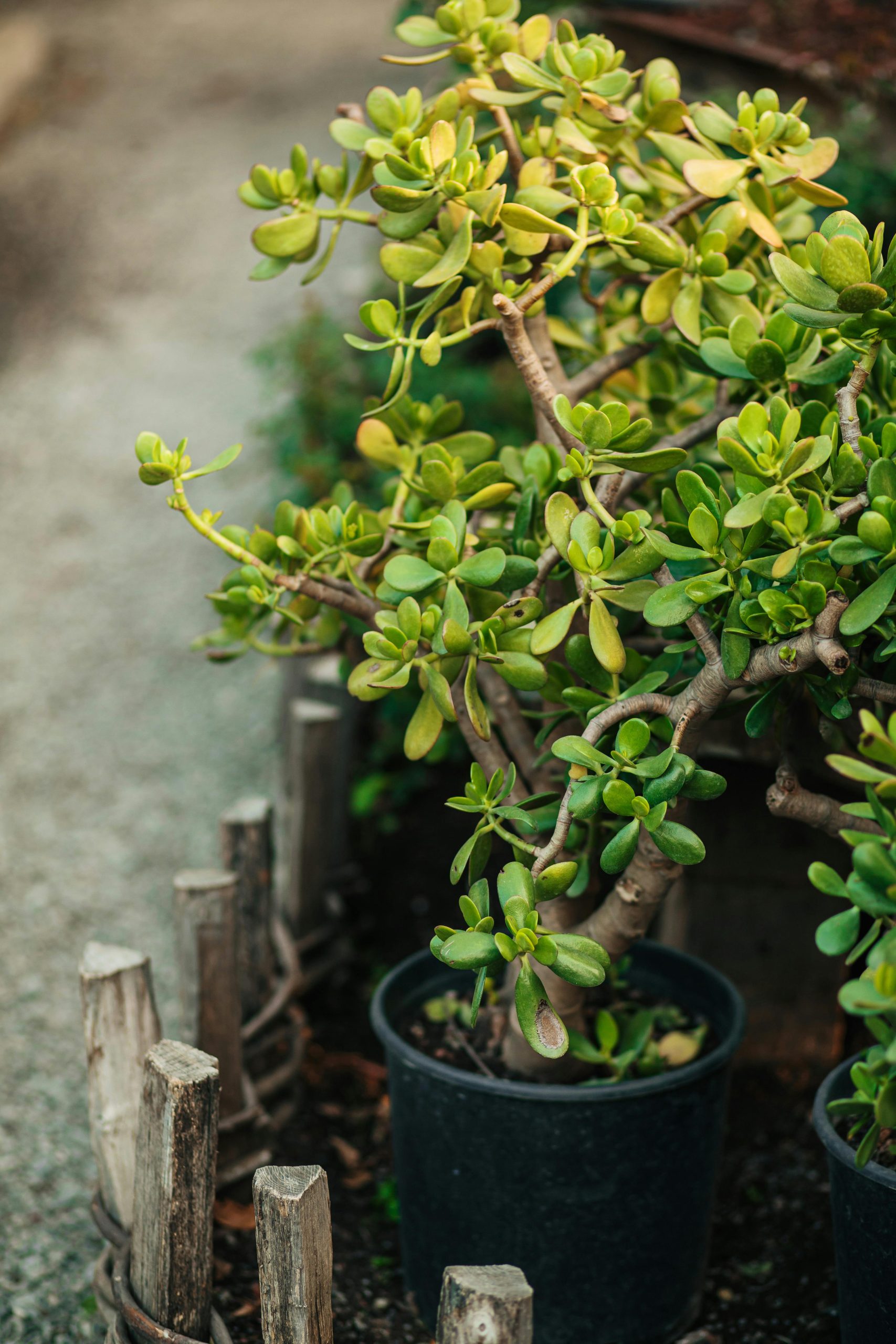
Jade plants are one of the most rewarding long-term houseplants you can own. They grow slowly, live for decades, and develop a distinctive gnarled trunk and bonsai-like structure with age that no faster-growing plant can replicate. A well-kept jade plant passed down through a household can genuinely be a family heirloom. They are also among the easiest succulents to keep — their principal requirement is adequate light, and their tolerance for neglect is remarkable. The main way people fail with jade plants is overwatering them, treating them like thirsty tropicals when they are very much desert plants.
Light Requirements
Jade plants need bright light. A south-facing windowsill with several hours of direct sun per day produces the best growth and the reddish leaf margins that indicate a well-lit, healthy plant. An east- or west-facing position with bright indirect light and some direct sun works; north-facing positions are rarely adequate without supplemental lighting.
Insufficient light causes the jade plant to etiolate — producing long, weak stems with widely spaced, small leaves as the plant stretches toward the light source. This is one of the clearest signs that the position needs to change. Once a jade plant becomes leggy, the growth cannot be reversed, but pruning and moving to a brighter spot arrests further decline.
Soil & Growing Medium
Use a specialist cactus and succulent compost, or mix standard potting compost 50/50 with coarse perlite or horticultural grit. The medium must drain very quickly after watering and dry out within a few days. Heavy, moisture-retentive composts cause root rot — the most common cause of jade plant decline in UK homes where the plant is cared for too attentively.
Terracotta pots are strongly recommended. The porous nature of terracotta helps moisture evaporate from the sides of the pot as well as the surface, keeping conditions drier around the roots.
Watering
Water thoroughly, then allow the soil to dry out completely before watering again. In summer, this typically means every two to three weeks. In winter, once a month or less — jade plants enter a partial rest and need very little moisture. Push your finger all the way to the bottom of the pot before watering; if there is any residual moisture, wait another week.
The leaves are a reliable indicator of water status. Firm, plump leaves indicate good hydration; slightly soft or wrinkled leaves indicate the plant is ready for water. Yellowing, mushy leaves with a soft base are the classic sign of overwatering and root rot.
Temperature & Humidity
Jade plants prefer 15-24°C. They tolerate a cool winter rest down to around 7°C without damage, and some growers deliberately keep them cool in winter (10-15°C) to encourage spring flowering on mature plants. They are not frost hardy.
Low humidity suits jade plants perfectly. They are native to arid conditions and dislike the high humidity that tropical plants prefer. A dry, well-ventilated room is better than a damp, humid one. Do not mist jade plants.
Fertilising
Feed two to three times during the growing season (April, June, and August) with a cactus and succulent fertiliser, or a balanced liquid fertiliser at quarter strength. Jade plants are very light feeders and do not need or benefit from regular monthly feeding. Over-fertilising produces weak, soft growth and disrupts the slow, compact growth pattern that makes mature jade plants so attractive.
Grow Light Compatibility
Jade plants benefit from grow lights in north-facing rooms or darker UK homes where natural light is limited. They need moderate to high light intensity — a modest grow light will not provide enough output. A capable full-spectrum LED positioned 20-30cm above the plant and run for 12-14 hours per day produces growth comparable to a good south-facing window.
Without adequate light — from either the sun or a grow light — jade plants become leggy and lose the compact, structured form that makes them appealing. Light is non-negotiable for this plant.
Toxicity
Jade plants are toxic to cats and dogs, causing vomiting, lethargy, and coordination issues if significant amounts are ingested. Mildly toxic to humans. Keep out of reach of pets — cats in particular sometimes chew on the succulent, fleshy leaves. The toxicity mechanism is not fully characterised, but the effects in pets are well-documented.
Pruning
Jade plants can be pruned to shape and to encourage branching. Cut back stems just above a node — new growth emerges from below the cut, producing a more branched, fuller structure. Regular pruning from early in the plant’s life produces the bonsai-like branching structure that makes older specimens so striking.
Pruning is best done in spring. Allow cut surfaces to callous for a day or two before exposing the plant to high humidity or direct watering. Pruned sections can be propagated as stem or leaf cuttings.
Propagating
Jade plants are among the easiest succulents to propagate. Stem cuttings of 8-10cm can be taken, allowed to callous for 48 hours, and then placed in dry cactus compost. Water sparingly — just enough to keep the compost from desiccating — until roots establish, which typically takes three to four weeks. Then water normally.
Individual leaves can also be propagated: remove a healthy leaf with a clean pull (ensuring the base is intact), allow to callous, and lay on the surface of dry cactus compost. Tiny new plants emerge from the leaf base over several weeks. Leaf propagation is slower than stem propagation but works reliably.
Indoor Setup Notes
A south-facing windowsill is the classic position for jade plants in UK homes, and it is the right one. The combination of direct light and the warmth of a south-facing window suits them well. They also look at home in a bright conservatory and can spend summer outside in a sheltered, sunny position.
Because they grow slowly, jade plants are well-suited to small spaces and do not quickly outgrow a chosen position. A specimen that has been in the same spot for five years will look significantly more structured and characterful than a newly purchased plant — the investment of time is part of the reward.
Potting & Repotting
Repot every two to three years in spring, or when the plant is clearly root-bound. Go up by one pot size only — jade plants in oversized pots are at increased root rot risk because the excess compost holds moisture for too long. Terracotta pots one to two sizes larger than the root ball are the practical standard.
After repotting, wait ten days to two weeks before watering. This allows any root damage from the repotting process to heal before moisture is introduced.
Common Pests & Problems
- Soft, mushy leaves and stem base: Root rot from overwatering. Remove from pot, cut away all damaged roots, dry for 48 hours, repot in fresh dry cactus mix, and do not water for a week.
- Leggy, weak stems with small leaves: Insufficient light. Move to a brighter position or add a high-output grow light.
- Leaf drop: Natural ageing of lower leaves is normal. Widespread leaf drop combined with soft stems indicates overwatering. Sudden leaf drop after a move is stress-related and usually temporary.
- Brown, shrivelled leaves at the base: Natural ageing or underwatering. Check the soil; if completely dry, water thoroughly.
- Mealybugs: White cottony deposits on stems and in leaf joints. Treat with isopropyl alcohol swabs and neem oil.
- Scale: Brown bumps on stems. Treat with isopropyl alcohol and neem oil.
FAQ
How long do jade plants live?
Decades, with good care. Jade plants in the right conditions live for 50-100 years and become increasingly impressive specimens with age. They are genuinely long-term companions rather than plants you replace every few years.
Why is my jade plant dropping leaves?
Overwatering is the most common cause of widespread leaf drop. Natural ageing of lower leaves is normal. A recently moved plant may drop leaves temporarily as it adjusts to its new position.
Can jade plants flower indoors?
Yes, but only on mature plants (typically five years or older) that experience a cool winter rest with reduced watering. The small white or pink star-shaped flowers appear in late winter or early spring. Most indoor jade plants in UK homes never flower because they are kept too warm in winter.
Do jade plants need direct sunlight?
Yes — they perform best with several hours of direct sun per day. A south-facing window is ideal in the UK. Without adequate direct light, growth becomes leggy and the plant loses its characteristic compact form.